Rhinoplasty
The Cost of Nasal Tip Repair and Small Corrections After a First Rhinoplasty

Quick answer
There is no confirmed public figure for a small correction after a first operation and Se Rokh has not published a separate one, because the phrase ranges from waiting to filler to limited revision surgery. The starting figure for full revision rhinoplasty is about 100 million toman (Dr. Yousefian) and 130 million toman (Dr. Hashemi) and is not an estimate for a limited correction. Before the figure, ask whether it is still too early.
- Se Rokh starting figure for full revision
- About 100 million toman (Dr. Yousefian) and 130 million toman (Dr. Hashemi); no separate figure published for limited correction
- Judging the tip
- Tip swelling settles later; the final shape of the nose settles at 9 to 12 months
- Ask first
- Is it still too early? What is the cause? What is the financial policy for a minor correction, and is it in writing?
- Service page
- Revision Rhinoplasty
Do not treat a breathing problem as a small correction or wait on it; warning signs need early examination.
Key points
- There is no confirmed public figure for a small correction after a first operation; the phrase ranges from waiting and filler to limited revision surgery.
- The tip of the nose settles later than the rest of the nose and the final shape settles at 9 to 12 months, so early judgement about the tip can mislead.
- Do not treat a breathing problem as a small correction or wait on it, and before the first operation ask what the financial policy for a minor correction is and have it in writing.
What Nasal Tip Repair and Small Corrections After a First Rhinoplasty Cost: The Short Answer
The short answer: there is no confirmed public figure for a "small correction after the first operation", and Se Rokh has not published a separate one. The reason is that the phrase is not one thing; it covers everything from "you simply need to wait" to "a small injection" to "limited revision surgery". The cost of each depends on the scope of the work, the facility and the anaesthesia. More important than the figure is the decision question: does this problem need correcting at all, or is it still too early?
For reference, the starting figure for a full revision rhinoplasty at Se Rokh is about 100 million toman with Dr. Yousefian and 130 million toman with Dr. Hashemi; these are figures for full revision surgery and not an estimate for a limited correction. Revision surgery is harder than a primary operation because it deals with scar tissue, previously removed cartilage and an altered structure.
This article is educational. It explains what counts as a "small correction" after a first operation, why you should not rush, what options exist without surgery or with limited surgery, which rows make up the cost, and what to ask before you go back to your first surgeon or see another one.

What a "Small Correction" After the First Operation Actually Includes
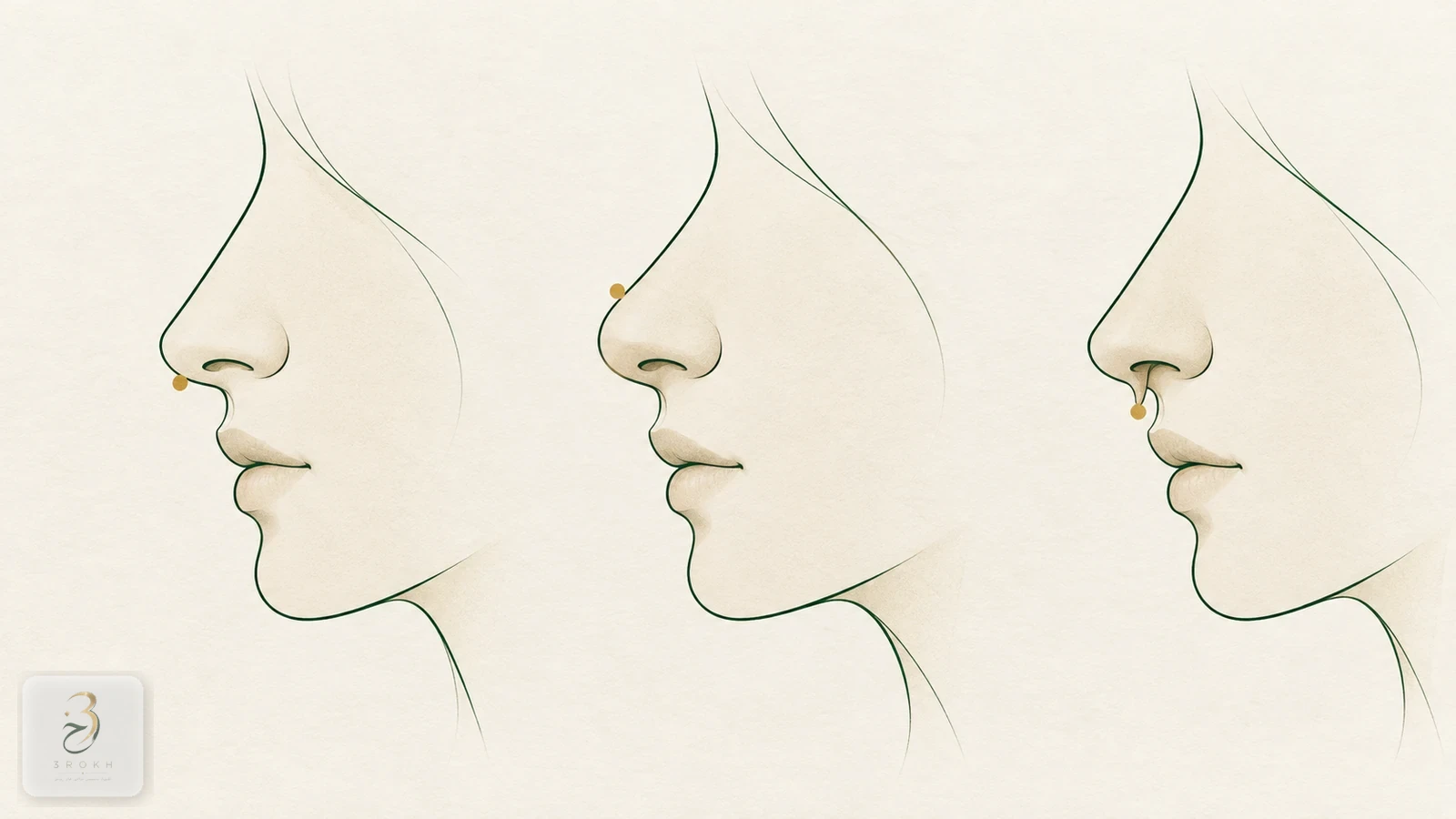
Most dissatisfaction after a first operation falls into a few specific patterns. In a study of 252 patients who needed aesthetic revision after open rhinoplasty, the three commonest aesthetic reasons were insufficient nasal tip rotation (37.7%), a hanging columella (30.2%) and a supratip deformity (28.6%). Some of these are truly small and some are not; telling them apart is the surgeon's job.
| What the patient sees | Is it often still too early? | Usual options (the surgeon decides) |
|---|---|---|
| A tip with too little rotation or drooping | Yes, until tip swelling settles | Wait; if it persists, limited tip correction or revision |
| A hanging columella | Sometimes | Wait; then consider limited surgical correction |
| Fullness above the tip (supratip) | Yes, often swelling | Wait and follow up; the next step is the surgeon's call |
| A small surface irregularity on the bridge | Sometimes | Filler to fill a small hollow, or limited surgical correction |
| Small asymmetry of the tip or nostrils | Sometimes | Wait; then limited correction |
| Difficulty breathing | No, do not wait | Examination; sometimes functional correction |
The last column is deliberately general. Which option suits your nose can only be told by an examination. The important point in the table is the last row: do not treat a breathing problem as a "small correction". In a review of 100 revision patients, airway obstruction was the commonest complaint before surgery (65%); so if your breathing is worse after the first operation, say so at the first visit, not only the appearance. More is in our article on what revision rhinoplasty actually fixes.
How Common Is It
Needing a correction after a first operation is not unusual, but the figures vary a great deal with the population and the definition. None of them gives your personal probability.

| Source and population | Reported figure | Note |
|---|---|---|
| One plastic-surgery group, 369 consecutive cosmetic rhinoplasties | Revision 9.8%, dissatisfaction 15.4%, complications 7.9% | One centre, retrospective; not addressing the tip in the primary operation was associated with more dissatisfaction |
| US state databases, 175,842 septorhinoplasties with at least 3 years of follow-up | Overall 3.3%; primary 3.1%; secondary 11.0%; cosmetic 7.9% | Counts recorded repeat surgery in databases, not every small correction |
| 252 revision patients after open rhinoplasty | Revision rate 10.8% | Single centre; commonest tip causes (insufficient rotation, hanging columella, supratip) |
The gap between the figures (about 3% to about 11%) exists because each study counts something slightly different: some only recorded repeat surgery, some the patient's request and some every small correction. One point worth noting: in the database study, patients who had already had surgery had a higher revision rate (11%), and surgery for cosmetic reasons (7.9%) more than the rest; this suggests secondary and cosmetic cases carry on average a greater risk of further correction. We give the fuller numbers in our article on revision rhinoplasty.
Wait First: When It Is Too Early to Judge
Most "tip problems" in the first months are swelling and not the final result. The tip of the nose settles later than the rest of the nose; our article on the nasal tip and tip-plasty also reminds us that tip swelling may settle later. Our service page says about 70% of swelling subsides in 2 to 3 months, but the final shape settles at 9 to 12 months.

A few practical points:
- Judging in the first weeks and months is too early. A tip that looks higher, under-rotated or full in this period may be swelling; an over-projected nose after surgery: swelling or the final result? examines the same question.
- Take periodic photographs. From a fixed angle, at regular intervals, so that you see the trend and not a passing feeling.
- Do not touch or rub the nose. Read touching the nose after rhinoplasty.
- Do not wait on warning signs. New redness, severe pain, discharge or fever need early examination; see causes of nasal discharge after surgery.
For the timing of a decision about repeat surgery, read revision rhinoplasty: when is it too early?. The general rule is to decide about repeat surgery once swelling has settled and with the surgeon's opinion, not out of first-week worry.
A Simple Timing Guide for Deciding
This table is a general framework and not a treatment plan. We took the intervals from Se Rokh's service page and the sources above, and your own surgeon gives the exact plan.
| Period after surgery | Usual situation | A reasonable step |
|---|---|---|
| First weeks to first month | Swelling and bruising; the shape is not yet final | Follow the surgeon's instructions, take periodic photos, do not judge the tip |
| Months two and three | A large part of the swelling (about 70%) subsides | Record changes and raise concerns at the follow-up visit |
| Months four to nine | Remaining swelling, especially in the tip, gradually lessens | Review again; if the problem is fixed, discuss the options |
| About 9 to 12 months and after | The final shape of the nose settles | Final decision about any elective correction, with the surgeon's opinion |
| At any time | Difficulty breathing, new redness, severe pain, discharge or fever | Early examination; do not wait for the final result |
The rule of "wait" does not mean ignoring a concern. If something worries you, say so at the follow-up visit; the surgeon can tell you whether the pattern is usual.
How to Show the Problem to the Surgeon
Before any visit, a few simple things make the discussion more precise. Take photographs in similar light from the front, in profile and from below, and note the date of each. Write the concern in one sentence: "the tip is lower than expected in profile" is better than "my nose didn't turn out well". Note when you noticed it and whether it has changed. Remember that what you see may not be all that the surgeon sees, and the reverse; listen to the full explanation before you draw conclusions.
If Your First Surgeon Is Not Available to You
Your first operation may have been in another city or country, and reaching the first surgeon may be hard. In that case keeping your documents matters more: the operative report, the type of anaesthesia, the list of grafts and the photographs. With these, another surgeon can understand the cause of the problem sooner. If you come from another city, the cost of travel and accommodation for several visits must also be counted; the real cost for an out-of-town patient explains it.
The Cost of Haste and the Cost of Waiting
Haste in repeat surgery can carry two costs: if swelling has not yet settled the surgeon cannot see the true result and may decide too early; and if a correction is made on the basis of swelling, a further correction may be needed later. On the other side, waiting indefinitely is not an answer either; a breathing problem or warning signs should not wait. The balance is set by the surgeon through examination. Financially, a badly timed correction, whether surgery or filler, costs as much as a well-timed one; so the real saving is in correct timing and not in speed.
Options Without Surgery for Small Irregularities
Some small surface irregularities, such as a slight hollow or a palpable edge, may be camouflaged by injecting hyaluronic acid gel (filler). A few findings:
- A review of 2,088 cases of filler after rhinoplasty: the commonest reasons for treatment were collapse or asymmetry of the bridge (49%), an under-projected tip (44%) and irregularity or scarring (35.4%). The mean volume was 0.49 mL, median satisfaction 9 out of 10, the commonest adverse event was redness (36.4% at two weeks) and three cases had skin necrosis (0.47%), all transient and self-resolving. The first author declared past paid consultancy for a filler company, and the study is from one practitioner.
- 800 rhinoplasty patients from one surgeon's experience: 10.6% later had hyaluronic acid filler for post-surgery imperfections, at a mean volume of 0.2 mL and with no reported complications; most (82.3%) in the rhinion area. Repeat filler was needed in 11.8% and a third round in 3.5%.
- A 2025 systematic review of 2,048 filler patients after rhinoplasty: hyaluronic acid was the commonest material (67%); satisfaction was high and major complications were few, but an increased risk of skin necrosis was reported.
The fair conclusion: filler after surgery can be a reasonable option for small, specific defects, but a nose after surgery may have scar tissue and altered blood supply, and the systematic review reported an increased risk of skin necrosis; so it should be done only by an injector who knows the vascular anatomy of the nose and not by just any facility. Filler removes nothing, it is temporary, and it cannot correct a protruding or under-rotated tip. We also write about filler's limits in fixing a crooked nose without surgery and rasping and minor nose correction.
Limited Surgical Correction: What Can Be Kept Small
When waiting and filler are not enough, a more limited correction than a full revision is sometimes possible, for example correcting one part of the tip or one defined area rather than rebuilding the whole structure. Whether such an option exists for your nose only the surgeon can say.
A few points for the decision:
- The surgeon must see the whole nose. In the study of 369 cases, failing to address the tip in the primary operation was associated with more dissatisfaction; that is, even if your complaint is the tip, the cause may lie in another structure, and the reverse.
- What the patient sees is sometimes not the whole problem. In the review of 100 revision patients, the surgeon saw significantly more defects than the patient (for example bridge asymmetry 65% against 33%). So hearing "besides the tip, something else can be seen" is not surprising and should not by itself make you suspect a "big project"; just ask for an explanation.
- If the problem is projection, read reducing nose projection and revision surgery.
- If the nose has already had revision surgery, the case may be harder; see the cost of revision rhinoplasty.
In a review of 199 selected patients, limited facial procedures (including three tip corrections and 15 "minor revisions") were done with oral sedation and local anaesthesia in an outpatient facility without major complications. That study does not cover full revision rhinoplasty and cannot be generalised, but it shows that some truly limited corrections, in a suitable facility and for a suitable patient, may go more lightly than assumed. Patient selection, the facility and the anaesthesia are conditions; see our comparison of a hospital and a limited surgery centre.
What Rows Make Up the Cost of a Correction After the First Operation
Because there is no public figure, the logic of the rows matters. This list is not any facility's figure.

- Nearly fixed rows: the surgeon's examination and planning, the presence of an anaesthesiologist or sedation provider, sterile space and monitoring, recovery and follow-up visits. Even a small correction needs them.
- Rows that may shrink: operating-room time, consumables and sometimes the type of anaesthesia.
- Rows that may grow: if scar tissue from the first operation makes the correction harder, or a graft is needed; see the cost of cartilage, grafts and implants.
- The first surgeon's policy row: the most important factor, which can be asked only of the surgeon.
To see how to read these rows on an invoice, see how to read a rhinoplasty invoice.
Two Wrong Impressions About the Figure
The first impression is that a "small correction" means cheap and low-risk. It does not; the same fixed rows exist and scar tissue can make even a small job delicate. The second is the opposite: some assume any work after the first operation is "revision" and costs twice a primary operation. The approximate "about double" rule the clinic uses for the starting figure of full revision rhinoplasty describes full revision surgery, not every injection or small correction. The truth is usually between the two and is clarified only by examination and a written estimate.
The Most Important Financial Question: The First Surgeon's Policy
Ask: "If the result needs a small correction, what are the financial terms?" Answers differ, and we cannot state any facility's answer. What matters is to ask before the first operation and in writing: is a minor correction inside the package within a set period? What counts as "minor"? Does it include the facility and anaesthesia fees or only the surgeon's fee? If you ask late, the answer you hear may not be what you expected.
Should I Go Back to My First Surgeon or Get Another Opinion
The Patients' Rights Charter in Iran says a patient may choose their doctor and treatment facility and seek a second doctor's opinion. Both routes are legitimate, and each has advantages.
- Returning to the first surgeon: they know their own structure and technique and hold the operative record. It has an advantage if you have a good relationship and they give a clear explanation of the cause.
- Another surgeon's opinion: it gives an independent view, especially if the cause is unclear or the first explanation was not convincing. It does not mean you distrust the first surgeon.
If you get a second opinion, take or ask for: the operative report, a list of grafts and materials placed (if any), the type of anaesthesia, before-and-after photographs and the date of surgery. Our guide to reading a rhinoplasty invoice explains which documents to keep. The general logic of revision is in what revision rhinoplasty actually fixes.
Questions to Ask Before Any Step
- Should this problem be corrected now, or is it still too early? How long should I wait?
- What is the cause: swelling, cartilage structure, scar tissue or a technical shortfall?
- What are my options: waiting, filler, limited surgical correction or revision? What are the limits and risks of each?
- If filler is suggested, what material, what volume, who injects it and what is the plan for complications?
- Is the figure the total or only the fee? What is inside it and what is separate?
- If the correction is surgical, what anaesthesia, in which facility and with what follow-up?
- What is the financial policy for a small correction, and is it in writing?
When to Consult a Doctor
An in-person consultation is needed if:
- After your first operation you are unhappy with the shape of the tip or part of the nose and want to know whether it is time to decide.
- Your breathing has become worse since the operation; do not treat this as a "small correction".
- You have been offered filler or a limited correction and want to know whether it suits your nose.
- You have new redness, severe pain, discharge, fever or skin discolouration on the nose; these signs need early examination, and you should not wait for the final result.
- You want to decide between your first surgeon and another, and to prepare the necessary documents.
To book, use the booking form or the contact page. You can meet the surgeons on the doctors page and read about repeat surgery on the revision rhinoplasty page.
Sources
- Sibar S et al. — Revision Rhinoplasty after Open Rhinoplasty: Lessons from 252 Cases and Analysis of Risk Factors, Plast Reconstr Surg 2021
- Neaman KC et al. — Cosmetic rhinoplasty: revision rates revisited, Aesthet Surg J 2013
- Spataro E et al. — Revision Rates and Risk Factors of 175 842 Patients Undergoing Septorhinoplasty, JAMA Facial Plast Surg 2016
- Lee M, Zwiebel S, Guyuron B — Frequency of the preoperative flaws and commonly required maneuvers to correct them, Plast Reconstr Surg 2013
- Harb A, Abdul-Razzak A — Nonsurgical Correction of Surgical Rhinoplasty Complications with Hyaluronic Acid Fillers: A Retrospective Review of 2088 Cases, Plast Reconstr Surg Glob Open 2024
- Khan M et al. — Postoperative Fillers Reduce Revision Rates in Rhinoplasty, Aesthet Surg J Open Forum 2023
- Santamaría-Gadea A et al. — Non-Surgical Rhinoplasty After Rhinoplasty: A Systematic Review, Facial Plast Surg Aesthet Med 2025
- Butz DR et al. — Facial Aesthetic Surgery: The Safe Use of Oral Sedation in an Office-Based Facility, Aesthet Surg J 2016
- American Society of Plastic Surgeons — Rhinoplasty Risks and Safety
- Patients' Rights Charter in Iran — Baharloo Hospital (Tehran University of Medical Sciences)
Frequently asked questions
How much does a small correction of the nasal tip after a first operation cost?
There is no confirmed public figure and Se Rokh has not published a separate one. A small correction ranges from waiting and filler to limited revision surgery and its cost depends on the scope of work, the facility and the anaesthesia. The starting figures for full revision are about 100 and 130 million toman and are not an estimate for a limited correction.
How long should I wait to see whether my nasal tip has reached its final result?
About 70% of swelling subsides in 2 to 3 months, but the tip settles later than the rest of the nose and the final shape at 9 to 12 months. Decide about repeat surgery once swelling has settled and with the surgeon's opinion.
What are the commonest tip problems that lead to correction after a first operation?
In a study of 252 revision patients after open rhinoplasty the commonest aesthetic reasons were insufficient tip rotation (37.7%), a hanging columella (30.2%) and a supratip deformity (28.6%). Some of these are only swelling in the first months.
Can filler cover a small irregularity after rhinoplasty?
It may be a reasonable option for small, specific defects, but it removes nothing, is temporary and a systematic review reported more skin necrosis, so it should be done only by an injector who knows the nose's vascular anatomy. A protruding or under-rotated tip cannot be corrected with filler.
What is the most important financial question for the first surgeon?
What the financial terms are if the result needs a minor correction: is it inside the package, within what period, what counts as minor, and does it include the facility and anaesthesia? Ask this before the first operation and in writing.
My breathing is worse since the operation; is that a small correction too?
No. Do not treat a breathing problem as a small correction or wait on it. In a review of 100 revision patients, airway obstruction was the commonest complaint (65%). Say so at the first visit.
Related services
Comments
No comments yet. Be the first to write one.
Related articles
Revision Rhinoplasty: What It Can Fix, What It Cannot, and When You Actually Need It
Not every disappointment after a nose job needs a second operation. A map of the real post-rhinoplasty problems and their causes, the non-surgical options, and the situations where revision surgery is the wrong answer.
Read moreThyroid Disease and Anaesthesia Before Rhinoplasty: When Is It Actually Risky?
Hypo- and hyperthyroidism don't rule out rhinoplasty, but they do affect anaesthesia. The real reference TSH number, the difference between thyroid storm and myxedema coma, and whether to take your medication on surgery day.
Read moreWhat Is Preservation Rhinoplasty, and How Is It Different from the Classic Technique?
Preservation rhinoplasty lowers the entire dorsal complex as one unit instead of shaving down the hump. This article explains the technical difference from the classic technique, the pushdown and letdown sub-methods, and who is a realistic candidate for each, with scientific sourcing.
Read moreWhy Rhinoplasty Surgeon Prices Differ Up to Threefold — and Which Differences Are Real
A rhinoplasty price has several components, and two quotes can only be compared when those match. This article separates real differences (training, experience, case mix, facility) from cosmetic ones (brand, advertising).
Read moreMedications and Supplements to Stop Before Surgery: What, and How Many Days Before
Aspirin, herbal supplements, birth control pills, isotretinoin — which ones really need to stop, how many days before surgery, and which must never be stopped on your own, sourced from Mayo Clinic, Cleveland Clinic and an independent scientific review.
Read moreCost of Semi-Fantasy, Fantasy and Doll Rhinoplasty: Does the Chosen Shape Affect Price?
"Fantasy" and "doll" are everyday terms, not medical categories, and have no standard price. This article explains which factors really affect the work and cost and why a more dramatic shape is not simpler.
Read more