

مراقبت بعد از جراحی
Touching Your Nose After Rhinoplasty: When Is It Actually Safe?

Quick answer
For the first two to three weeks after rhinoplasty, no touching or inserting a finger into the nose is allowed; even after the external splint comes off, around day seven, contact should be limited to a saline rinse as your surgeon taught, not a finger. The main reason is the bleeding risk from fresh scabs and the risk of introducing bacteria into tissue that hasn't fully healed.
- Touching / inserting a finger
- Avoid for at least 2-3 weeks after surgery
- External splint removal
- Usually around day 7
- Internal splint removal (septoplasty)
- Best window is day 4-7
- Full taping and massage guide
- /blog/rhinoplasty-recovery-guide
Key points
- For at least the first two to three weeks after rhinoplasty, inserting a finger or directly touching the nose is not recommended.
- The external splint is usually removed around one week, while the internal silicone splint is typically removed between four and seven days.
- Heavy bleeding, sudden one-sided swelling, fever, or foul-smelling discharge are signs that call for contacting the surgeon the same day.
Why You Shouldn't Touch or Insert a Finger Into Your Nose After Rhinoplasty
For the first weeks after nose surgery, the tissue under the skin is still healing: the repositioned nasal bones haven't fully fused, the septum (if it was operated on) is still fragile, and the inside of the nose is covered in fresh scabs. Hands — even freshly washed ones — introduce bacteria into tissue whose natural barrier isn't intact yet. Beyond the infection risk, picking at the crusts inside the nose can cause bleeding; that's exactly why the UK's National Health Service tells septoplasty patients not to pick at the scabs inside their nose, since doing so causes bleeding. Direct finger pressure on the tip or bridge can also shift cartilage and bone that hasn't set yet.

From Surgery to Safe Touch: A Realistic Timeline
| Stage | Timeframe | What's okay | What's still off-limits |
|---|---|---|---|
| Before external splint removal | Day 0 to about day 7 | Only the surgeon: changing dressings, saline rinse as instructed | Any touching or pressure by the patient, blowing the nose |
| After external splint removal | Day 7 to about day 14 | Patient-performed saline rinse as taught, taping as instructed | Inserting a finger, picking at scabs, pressing to check the shape |
| Internal splint removal (if septoplasty) | Usually day 4-7 | Removed by the surgeon at a visit | Removing it yourself at home |
| Gentle massage | From about week 2 | Only with direct surgeon instruction, clean fingers | Unsupervised self-massage |
| Ordinary daily contact | From about week 6 onward | Light, brief contact, e.g. adjusting glasses | Impact, deliberate pressure, contact sports |
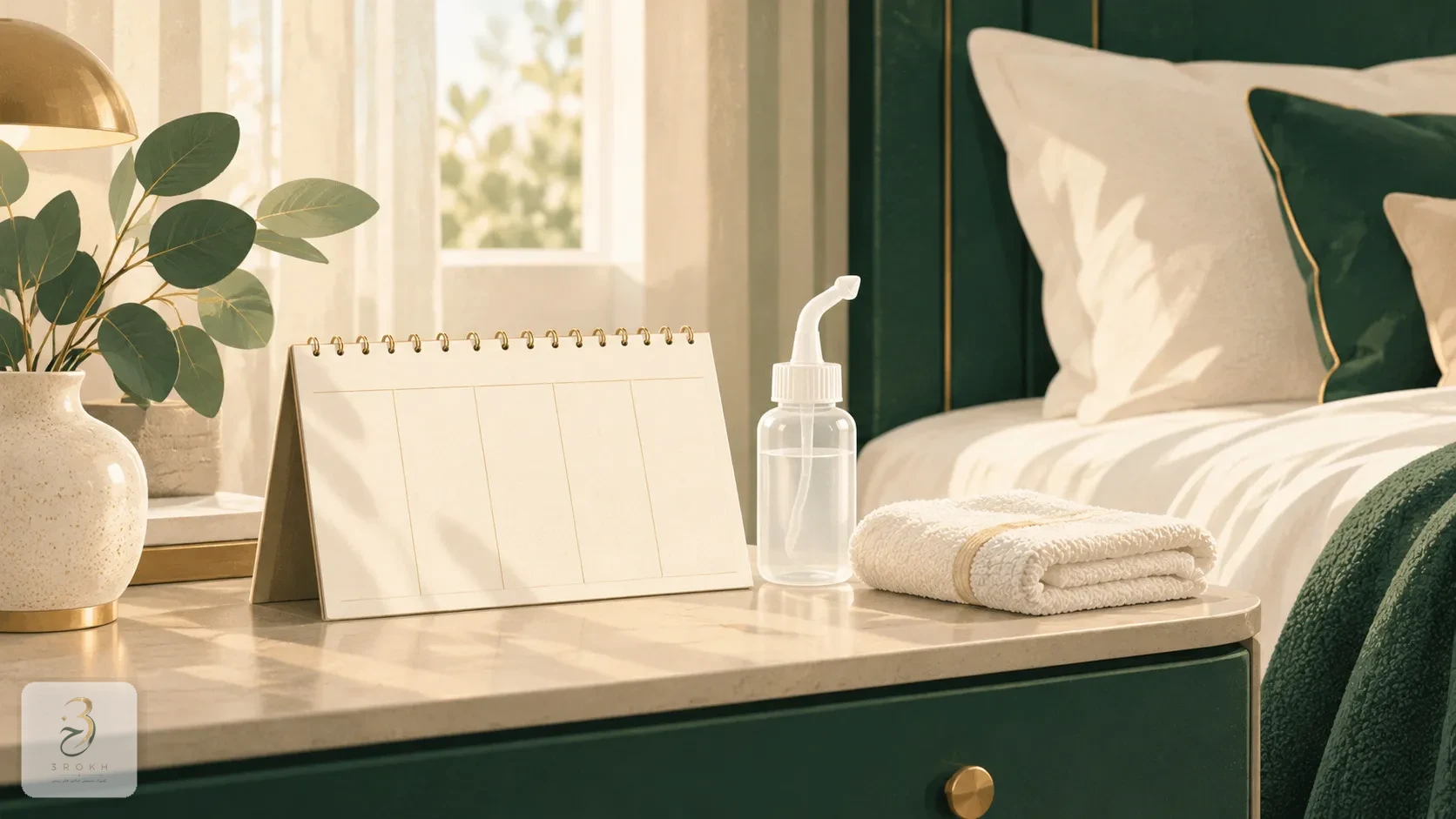
External vs. Internal Splints: Why Removal Timing Differs
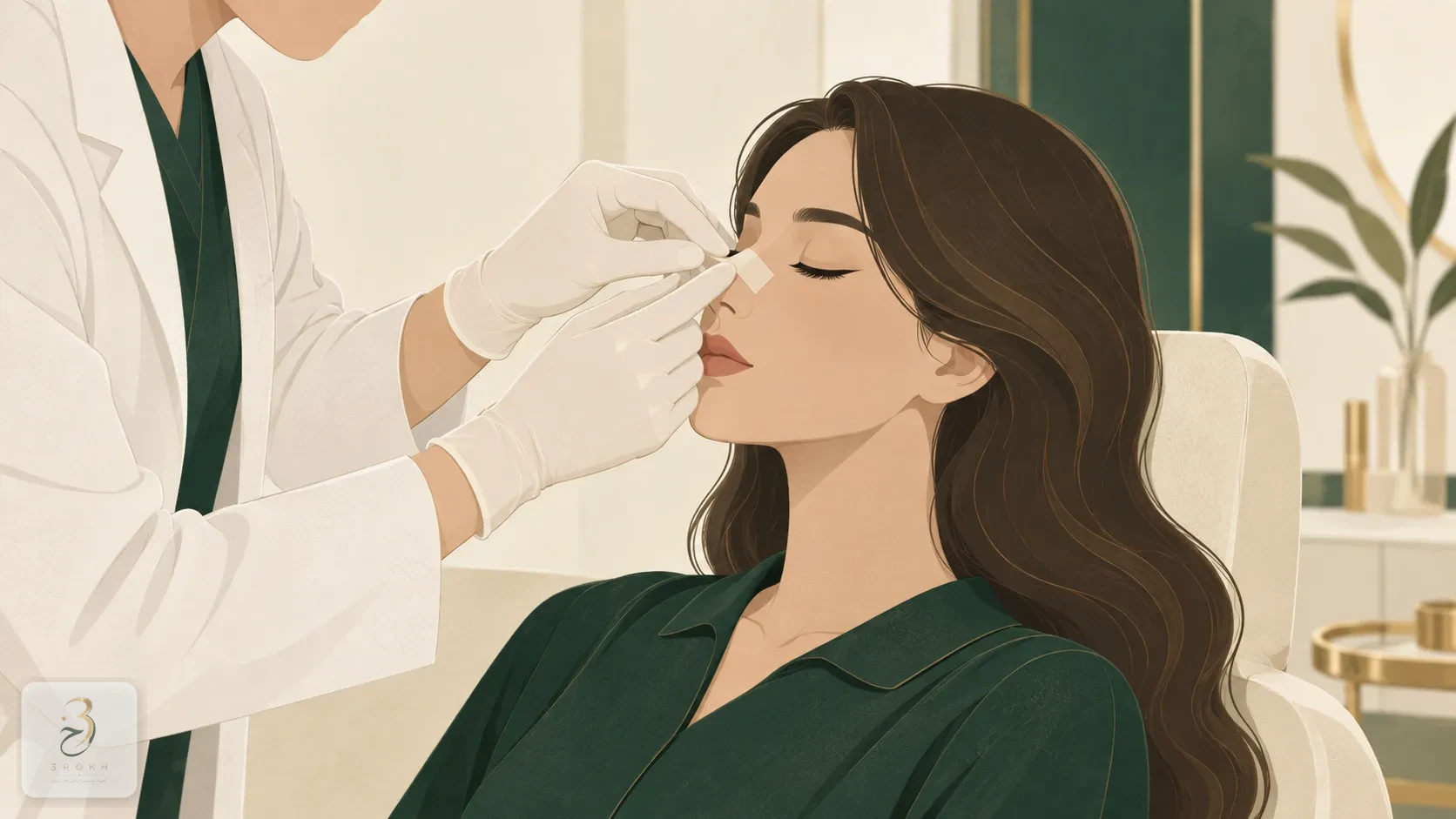
There are two splints, and each is removed for a different reason. The external splint, the cast or thermoplastic shell on the bridge, protects the freshly repositioned bones from impact and, per NHS guidance, typically stays on for one to two weeks; most Iranian rhinoplasty clinics, including Se Rokh, remove it around day seven, once the bones are stable enough in their new position.
The internal splint, silicone sheets placed inside both nostrils, usually with septoplasty, is a separate question. A 2026 systematic review and meta-analysis in Cureus, pooling six clinical trials and 516 septoplasty patients, found that removing it on an intermediate schedule, day four to seven, struck the best balance between pain control, nasal airflow, and preserved sense of smell. Removing it very early, day one to three, temporarily impaired smell and trended, without reaching clear statistical significance, toward a higher risk of septal perforation. Worth stating plainly: all six studies were conducted in Turkey, so the findings should be generalized cautiously. Either way, the internal splint comes out at a clinic visit, not something to remove yourself.

Does Taping After Splint Removal Actually Help?
Many surgeons start taping once the external splint is off, but the evidence on how much it actually does is mixed. A randomized trial that measured nasal skin thickness by ultrasound (JAMA Facial Plastic Surgery, 2016) found that four weeks of taping significantly reduced measured swelling in thick-skinned noses, with no measurable effect in thin-skinned ones. A separate study (Aesthetic Surgery Journal, 2014) found that regardless of the physical effect, taping right after splint removal measurably improved most patients' immediate satisfaction with how their swollen nose looked, 86 percent of an initially unhappy group felt better once taped. For the exact taping and massage schedule by skin type, the full rhinoplasty recovery guide walks through it week by week.
If You Already Touched It or Put a Finger In
A brief, accidental contact, scratching an itch, a sudden sneeze, rarely causes real harm and isn't something to lose sleep over. What matters is what happens afterward: if you saw a little blood that stopped on its own within a few minutes, mentioning it at your next check-in is usually enough. If the bleeding was heavy and wouldn't stop, if swelling suddenly appeared on one side only, or if the shape visibly changed, call your surgeon the same day rather than waiting for your scheduled visit.

When to Call Your Surgeon
A few signs shouldn't wait for a routine appointment: heavy bleeding that cold compresses and rest don't control, a fever above 38°C, foul-smelling or pus-like discharge, sudden one-sided swelling or redness, and pain that's getting worse instead of better. These are uncommon, but early attention in exactly these rare cases is what protects the final result. This list isn't for self-diagnosis and doesn't replace an exam by your surgeon.
Frequently Asked Questions
How many days after rhinoplasty can I touch inside my nose?
Not at all for at least the first two to three weeks. Even after the external splint comes off, around day seven, the only contact allowed is a saline rinse as your surgeon taught you, not a finger. Your surgeon confirms the return to ordinary contact at your follow-up visits, usually from around week six.
What happens if I accidentally touched my nose once?
A brief, accidental contact usually causes no real harm. Call your surgeon the same day only if it's followed by heavy, ongoing bleeding, sudden one-sided swelling, or a visible change in shape.
Why is the internal splint removed at a different time than the external one?
The two splints serve different purposes. The external splint protects the nasal bones and typically needs one to two weeks. The internal silicone splint supports the septum, and evidence suggests removing it on day four to seven gives the best balance between pain, breathing, and preserved sense of smell.
Does taping after splint removal actually reduce swelling?
In thick-skinned noses, clinical trials have shown a measurable reduction in swelling. In thin-skinned noses, no physical effect was measured, though taping still helps most patients feel better about how their swollen nose looks at first.

Sources
- Gloucestershire Hospitals NHS Foundation Trust — Septoplasty aftercare advice
- Alansari et al., Timing of Nasal Splint Removal After Septoplasty: A Systematic Review and Meta-Analysis, Cureus, 2026
- Ozucer et al., Effect of Postrhinoplasty Taping on Postoperative Edema and Nasal Draping: A Randomized Clinical Trial, JAMA Facial Plastic Surgery, 2016
- Belek & Gruber, The beneficial effects of postrhinoplasty taping: fact or fiction?, Aesthetic Surgery Journal, 2014
- American Society of Plastic Surgeons — Rhinoplasty Recovery
Frequently asked questions
How many days after rhinoplasty can I touch inside my nose?
Not at all for at least the first two to three weeks. Even after the external splint comes off, around day seven, the only contact allowed is a saline rinse as your surgeon taught you, not a finger. Your surgeon confirms the return to ordinary contact at your follow-up visits, usually from around week six.
What happens if I accidentally touched my nose once?
A brief, accidental contact usually causes no real harm. Call your surgeon the same day only if it's followed by heavy, ongoing bleeding, sudden one-sided swelling, or a visible change in shape.
Why is the internal splint removed at a different time than the external one?
The two splints serve different purposes. The external splint protects the nasal bones and typically needs one to two weeks. The internal silicone splint supports the septum, and evidence suggests removing it on day four to seven gives the best balance between pain, breathing, and preserved sense of smell.
Does taping after splint removal actually reduce swelling?
In thick-skinned noses, clinical trials have shown a measurable reduction in swelling. In thin-skinned noses, no physical effect was measured, though taping still helps most patients feel better about how their swollen nose looks at first.
Related services
Comments
No comments yet. Be the first to write one.
Related articles
Removing Splint and Taping: What to Expect
The external splint usually comes off 7–10 days after surgery and internal splints at 10–14 days. Removal takes minutes, and taping continues for 3–6 weeks afterwards to control swelling.
Read moreRhinoplasty Recovery: A Week-by-Week Guide to the Final Result
Why healing happens in phases, normal versus worrying bleeding, medication and nutrition, taping and massage, tip numbness and the swelling timeline — each claim referenced to an authoritative source, from the first hours to month twelve.
Read moreEye Swelling and Bruising After Rhinoplasty: Why, and For How Long?
Swelling and bruising around the eyes happens because of that tissue's structure, not the surgical site. This article explains the real cause, the bruise colour timeline, and which pattern is abnormal, sourced from medical literature.
Read moreEyes Looking Rounder or Different After Rhinoplasty: Reality or Swelling?
Rhinoplasty does not touch eyelid tissue, so it cannot structurally change eye shape. What most patients notice is either temporary swelling or a visual effect from the nose's new profile. A true change in eyelid shape, when it exists, is unrelated to a nose operation.
Read moreAppetite-Stimulant Pills After Rhinoplasty: Are They Safe?
Temporary appetite loss after rhinoplasty is normal and usually resolves on its own. This article explains what appetite-stimulant pills typically contain, why they don't fit the recovery period well, and when weight loss genuinely needs evaluation.
Read moreNasal Discharge After Rhinoplasty: Normal or a Warning Sign?
Pale-pink discharge in the first few days is normal. This article separates the four types of discharge, gives a real recovery timeline, and explains which pattern warrants an urgent call to your surgeon.
Read more