Rhinoplasty
What Is the Nasolabial Angle and Why Do Surgeons Care About the Number

Quick answer
The nasolabial angle is the angle between the columella and the upper lip in profile, and shows how far the nasal tip is rotated upward. Studies report preferred values from about 90 to about 110 degrees, depending on population, sex and measurement method. Surgeons care because a few degrees change the look of the tip, the apparent length of the nose and how much of the nostrils show, and excessive rotation is hard to correct.
- Definition
- Angle of the columella to the upper lip in profile
- Range reported in studies
- About 90 to 110 degrees, depending on population and method
- Why it matters
- It shapes rotation, apparent length and nostril show
The right number is set by the surgeon from your upper lip, nose length and structure, not from a table.
Key points
- The nasolabial angle is the angle between the columella and the upper lip in profile.
- Its preferred value in studies varies with population, sex and measurement method.
- Surgeons care because a few degrees change the look of the tip and the length of the nose.
What is the nasolabial angle?
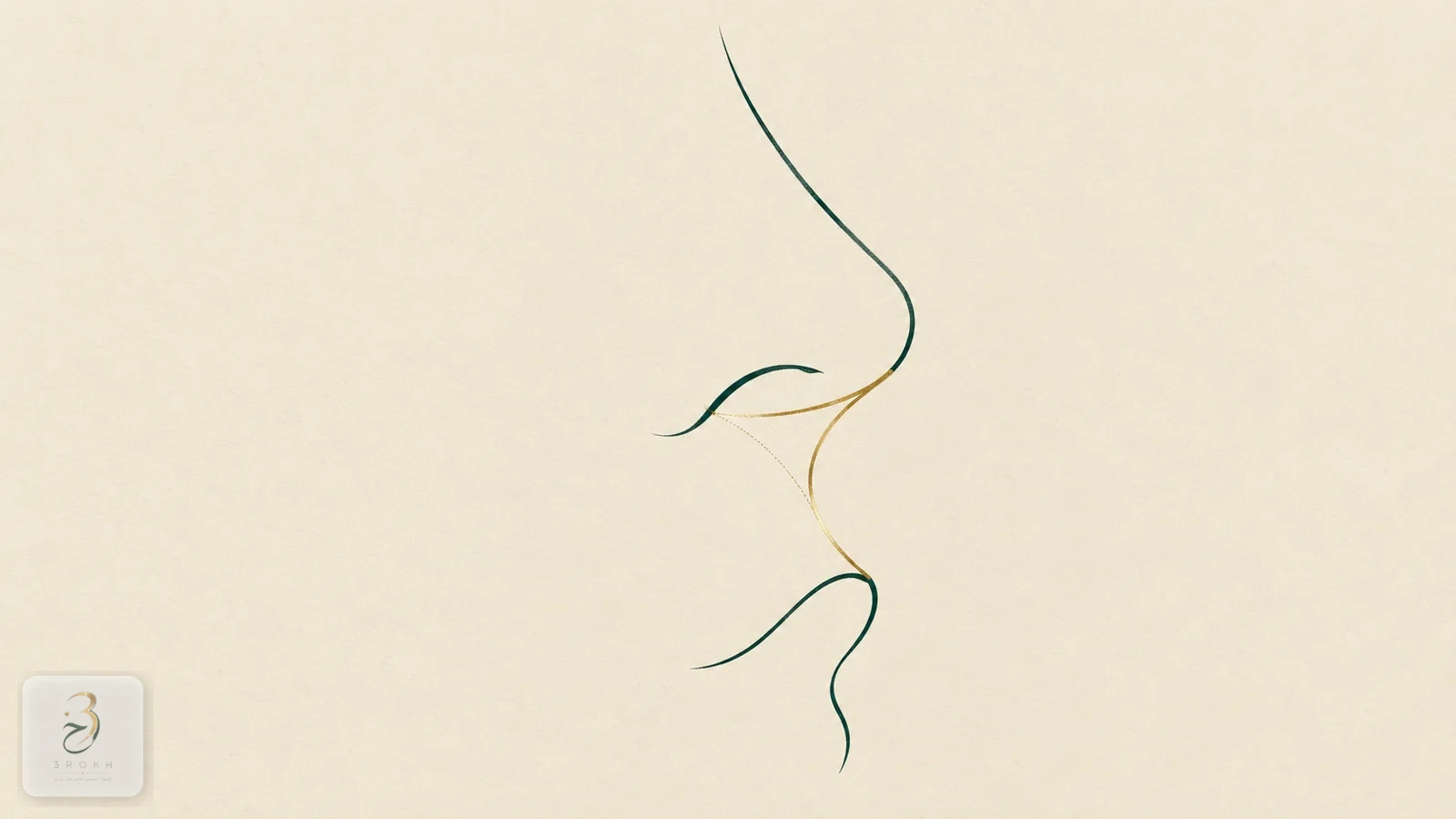
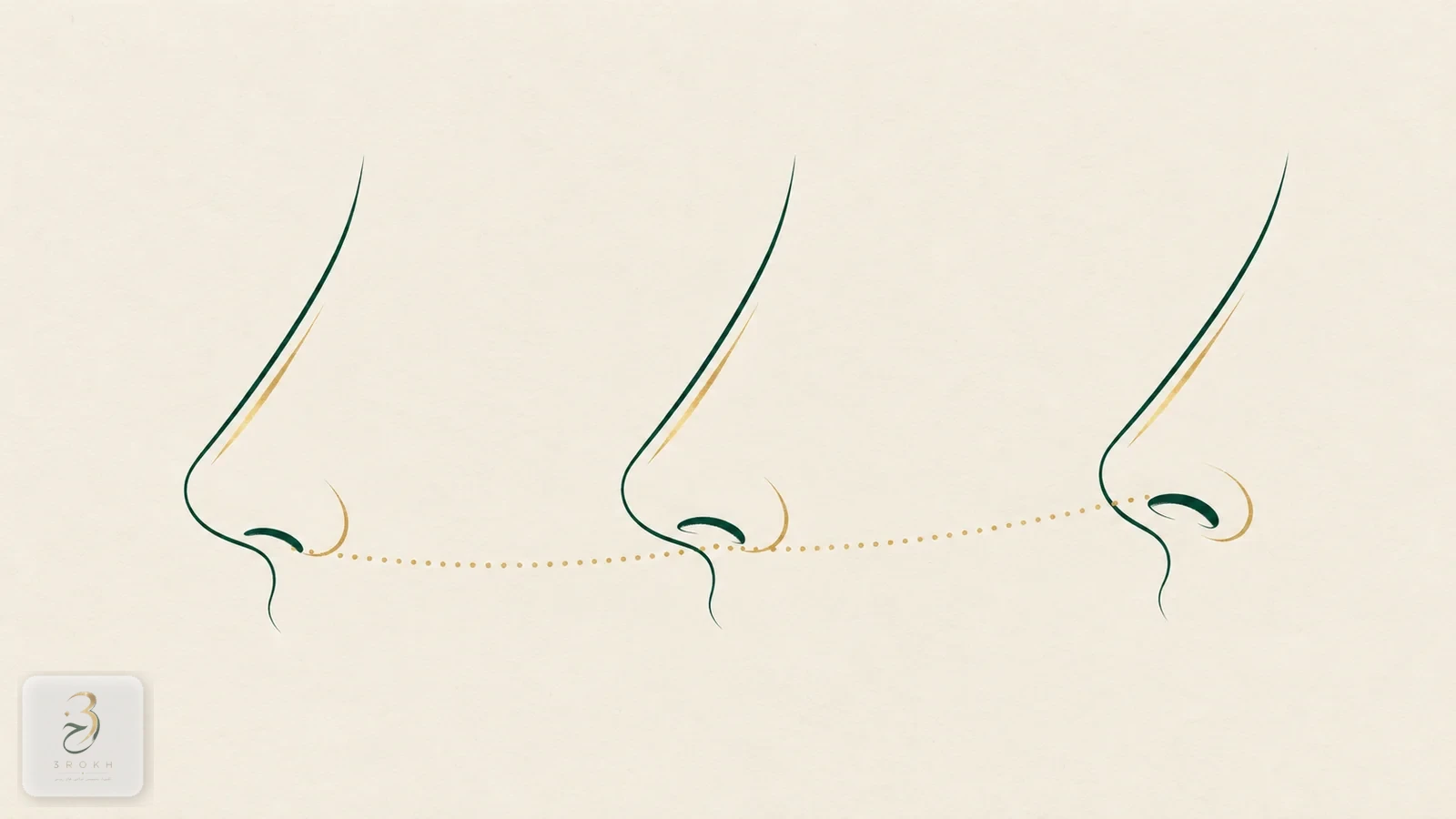
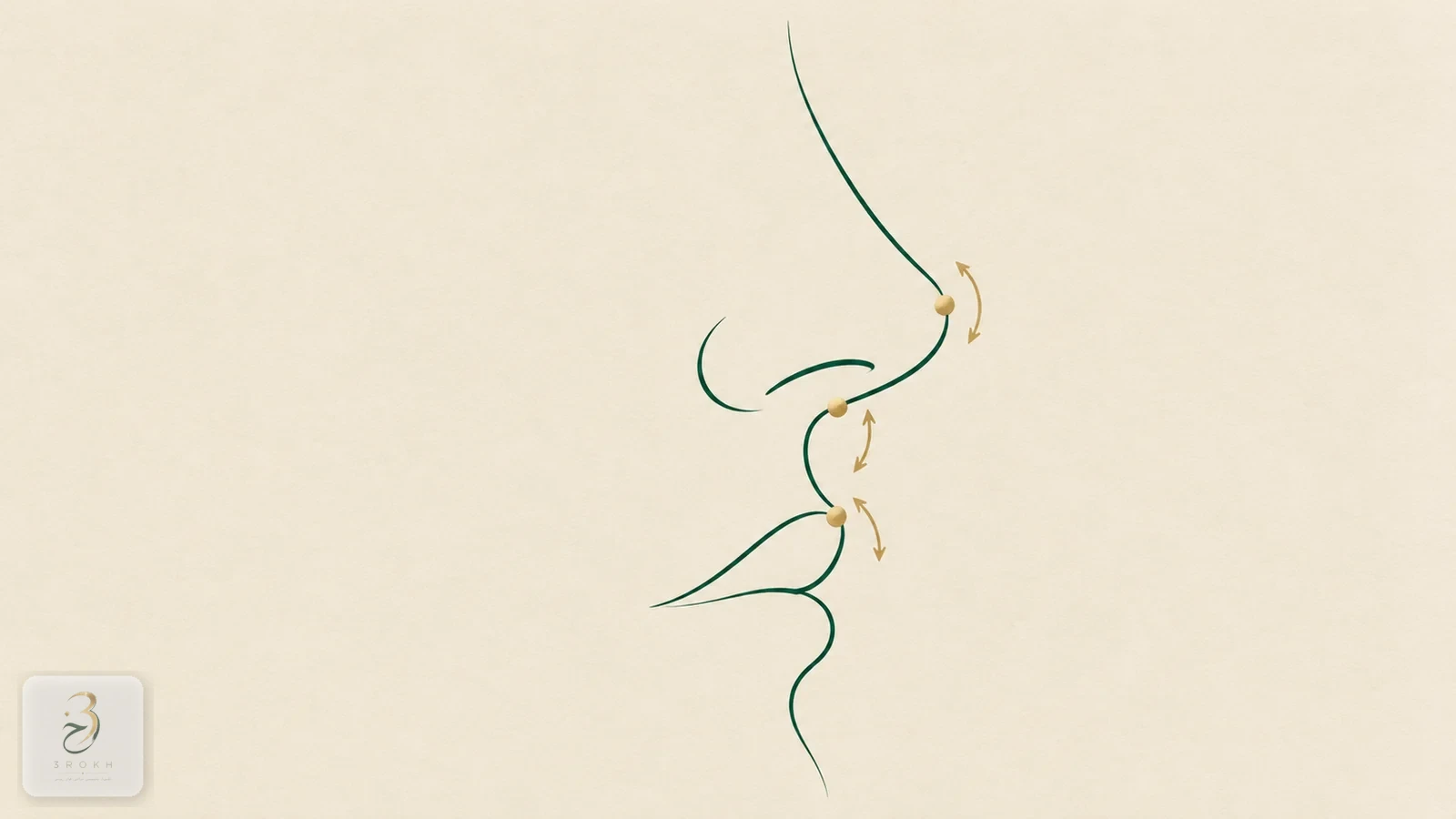
The nasolabial angle is the angle formed in profile between the columella (the part that runs from the tip toward the upper lip and separates the nostrils) and the upper lip. It shows how far the tip of the nose is rotated upward: a larger number means a higher tip with more of the nostrils visible, and a smaller number means a lower tip closer to the lip. In scientific papers it is usually defined between a line through the midpoint of the nostril aperture and a line perpendicular to the Frankfurt horizontal plane (an imaginary line from the lower edge of the eye socket to the top of the ear canal) that passes through the point under the nose.
This article is educational and does not give a diagnosis or a personal number. If you want to see where this angle sits in "semi-fantasy" shapes, read the article on the semi-fantasy rounded-tip nose.
Why do surgeons care about the number?
Because a few small degrees change several things at once: tip rotation, the apparent length of the nose and how much of the nostrils show in profile. A specialist review of the "short nose" lists three shared features: a shortened nasal length, over-rotation of the tip and increased nostril show, which is exactly what is seen together when the angle goes too far. At the other end, a very small angle may make the tip look drooping and the nose heavy. So it is not enough to ask for "more" or "less"; the suitable range has to be found for each person's structure.
What numbers have studies reported?
| Study | Population or raters | Male nose | Female nose |
|---|---|---|---|
| Armijo et al., 2012 | 16 raters, manipulated photos | About 96 degrees | About 98 degrees |
| Brown and Guyuron, 2013 | Members of the Rhinoplasty Society | About 94 to 97 degrees | About 97 to 100 degrees |
| Sinno et al., 2014 | 98 lay volunteers | About 97 degrees | About 105 degrees |
| Alharethy, 2017 | 1,027 raters (Saudi Arabia) | About 89.5 degrees | About 91 degrees |
| Sun et al., 2022 | 703 respondents (China) | Not separated | Not separated; first choice in all groups: 106 degrees |
| Alshawaf et al., 2024 | 197 people (Canada and Middle East) | About 97 degrees | About 109.5 degrees |
| Tavakoli et al., 2023 | 203 patients (Tehran), one male and one female model | About 99 degrees | About 107.6 degrees |
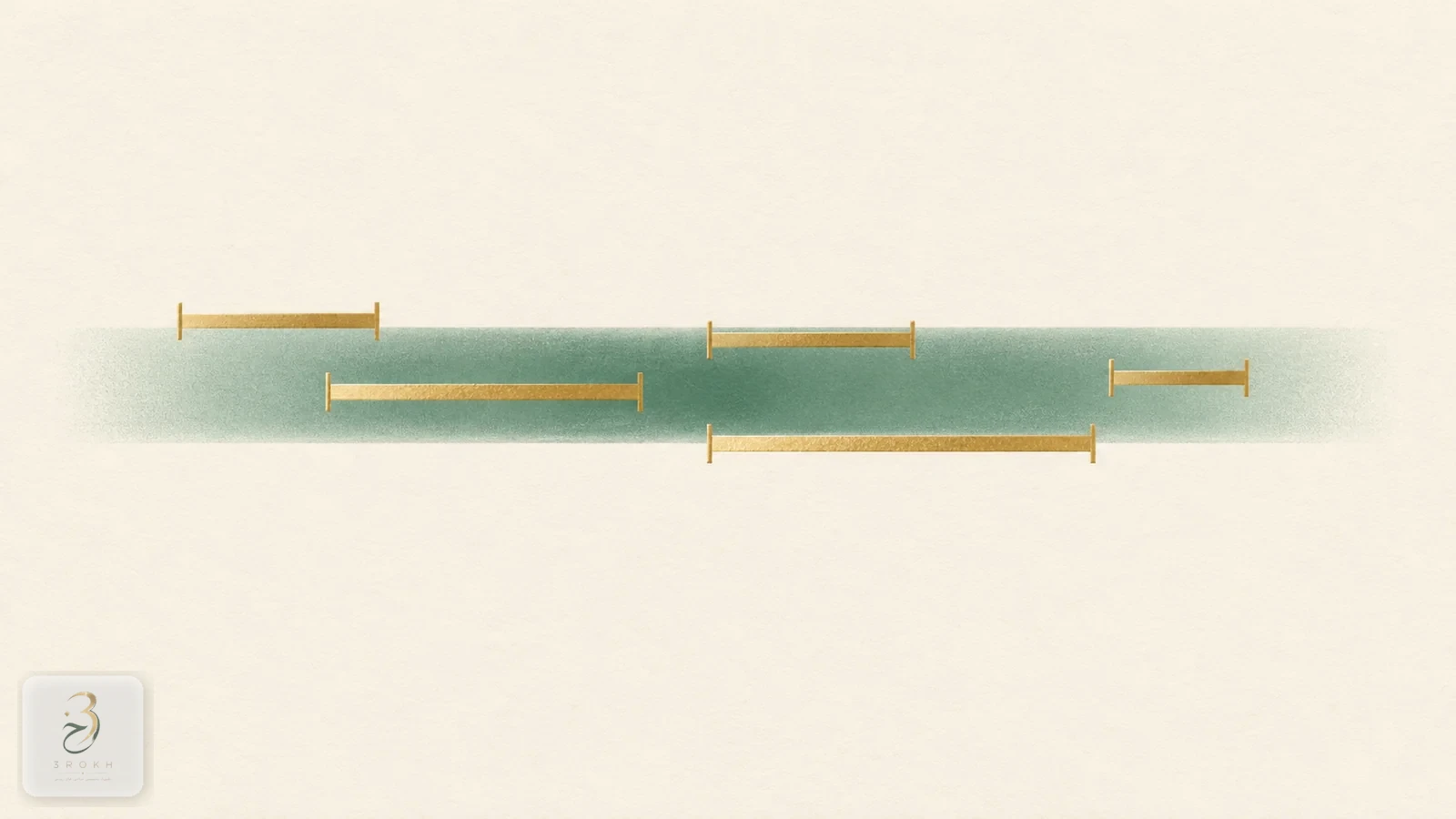
These numbers come from different studies and even the measurement method is not the same, so they should be read side by side but not added together. Interestingly, in the two studies from one research group (2012 and 2013) the gap between male and female was only about 2 to 3 degrees, whereas in two general-public surveys (2014 and 2024) it was about 8 to 12 degrees. The samples were manipulated images of a few faces, not surgical results and not patient satisfaction, and only one (the Tehran study) is Iranian. In that study the order implied by "respectively" in the abstract is ambiguous, so the figure for each sex is inferred from the range of images used for the female model (95 to 120 degrees) and the male model (85 to 105 degrees); the authors concluded that Iranians' preferred nasolabial angles agree with Western neoclassical canons.
Why is there no single number for everyone?
- Population and culture: in the Saudi study, raters preferred an angle of about 90 degrees, and the author concluded that what counts as under-rotation in another culture may be the ideal in this region.
- Age, sex and rater experience: in the Sinno study, male and younger volunteers preferred a more acute angle (about 90 degrees) for a male nose, while women, those over 50 and those who had had a previous rhinoplasty preferred a more obtuse one.
- Measurement method: the angle is defined against a standard head position. If the head is up or down in a photograph, the number changes. In a study of members of the Rhinoplasty Society, even experienced surgeons overestimated the angle by about 2.8 degrees on average.
- Individual structure: nose length, the length and position of the upper lip, the height of the nasal base and the bony structure under the nose all affect what looks proportionate.

What changes the angle?
In practice, tip rotation is changed with a combination of shaping sutures, shortening part of the lateral cartilage and supporting grafts. In a retrospective study comparing two methods for changing this angle, both were effective; the columellar-septal suture gave more rotation but carried a higher risk of over-rotation, while cartilage shortening gave more predictable results. Durability matters too: in a retrospective review, rotation loss was about 4.9 degrees with a columellar strut graft and about 1.3 degrees with a septal extension graft. So the number you see in a plan today is not necessarily the number a year later. The techniques are covered in the article on the semi-fantasy rounded-tip nose.
When the angle goes too far
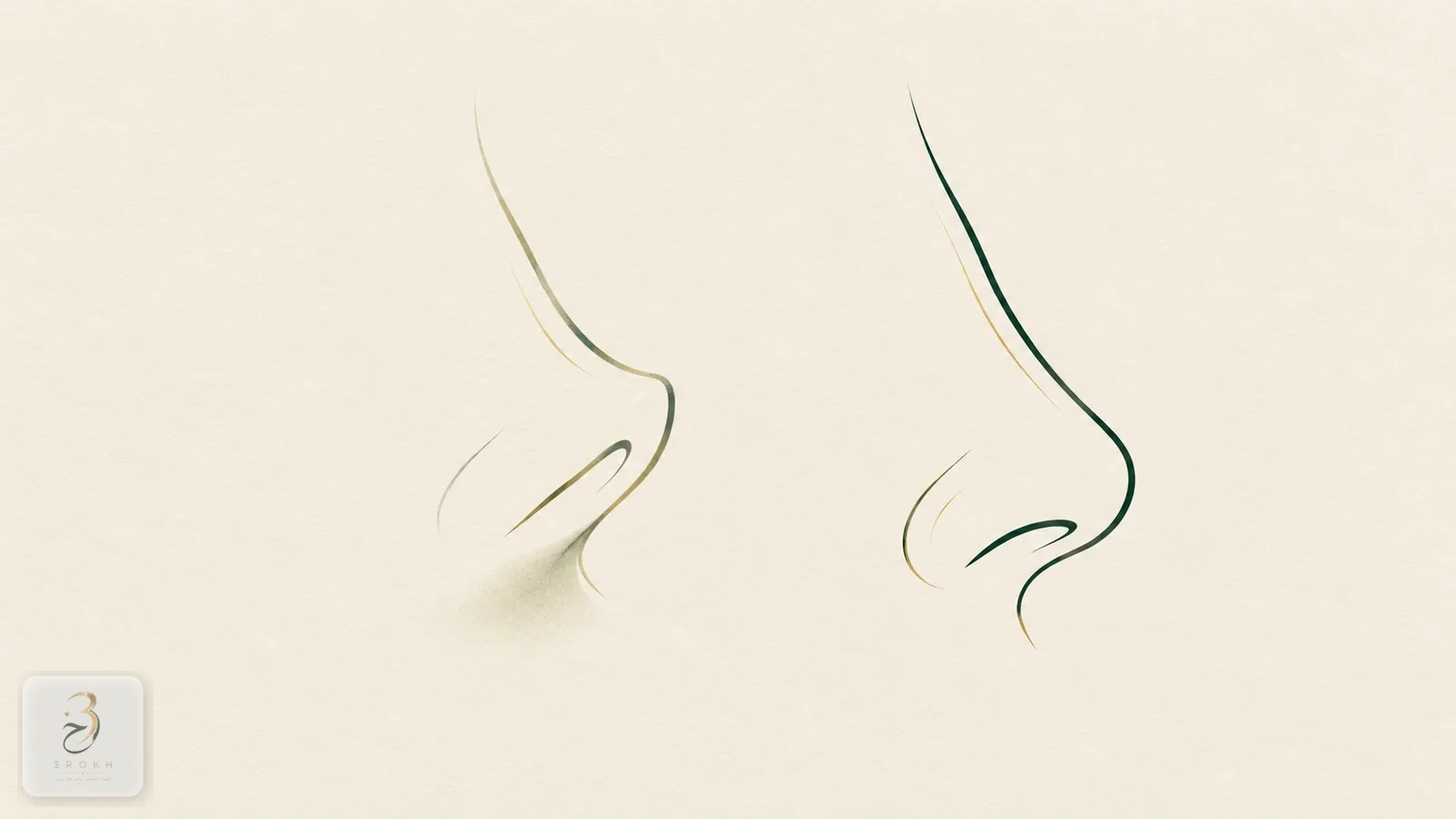
An angle that is too large can lead to a shortened nose: little length, a very high tip and a lot of visible nostril. Correcting this is usually harder than the first operation. In an ultrasound study of swelling, the thickness of the nasal covering after revision surgery was greater than after primary surgery in most regions and the swelling settled more slowly. If you have such a result, see the article on revision rhinoplasty. This is one reason to prefer a cautious shape when you are undecided.
What to ask in the consultation and how to take photos
- Ask the surgeon to show you the current angle of your nose on a standard photograph and say what range they consider suitable for you, not a general number.
- Take your own photos with the head level and not tilted, and compare a surgeon's before-and-after photos only when head and camera angle are the same; see the article on how to read before-and-after photos.
- Ask what method will build and hold the rotation and how much loss to expect.
- Treat simulation as a shared language, not a promise; its limits are in the article on simulating the result of rhinoplasty.
For an in-person consultation with Se Rokh's doctors, use booking and see the scope of the work on the rhinoplasty page.

Sources
- Armijo BS et al. Defining the ideal nasolabial angle. Plast Reconstr Surg. 2012
- Brown M, Guyuron B. Redefining the ideal nasolabial angle: Part 2. Expert analysis. Plast Reconstr Surg. 2013
- Sinno HH et al. The ideal nasolabial angle in rhinoplasty: a preference analysis of the general population. Plast Reconstr Surg. 2014
- Alharethy S. Preferred nasolabial angle in Middle Eastern population. Eur Arch Otorhinolaryngol. 2017
- Sun S et al. The Ideal Nasal Tip Projection and Rotation Angles in Chinese: A Preference Analysis of the General Population. J Craniofac Surg. 2022
- Alshawaf SM et al. Preferred Nasolabial Angle in Rhinoplasty: A Cross-Sectional Analysis. Aesthet Surg J. 2024
- Tavakoli K et al.. Ideal Nasal Preferences: A Quantitative Investigation with 3D Imaging in the Iranian Population. Arch Plast Surg. 2023
- Korkmaz M, Korkmaz H. The comparison between alar cartilage shortening and columellar-septal suture techniques in nasal tip rotation. J Craniofac Surg. 2015
- Bellamy JL, Rohrich RJ. Superiority of the Septal Extension Graft over the Columellar Strut Graft in Primary Rhinoplasty: Improved Long-Term Tip Stability. Plast Reconstr Surg. 2023
- Cone JD Jr, Hobar PC. The Short Nose. Clin Plast Surg. 2016
- Rasti M et al. Evaluation of Skin-Soft Tissue Envelope Thickness by Ultrasonography after Primary and Revision Rhinoplasty. Aesthetic Plast Surg. 2023
Frequently asked questions
What is the ideal nasolabial angle in degrees?
There is no fixed number. Different studies have preferred values from about 90 to about 110 degrees, and the male-female difference has been reported from a few degrees to more than ten depending on the study. The right number is judged by the surgeon against your structure.
Is the male angle different from the female angle?
In most studies a smaller (less rotated) angle was preferred for a male nose, but the size of the difference varies between studies, from about 1 degree to more than 10. One study of Middle Eastern raters preferred about 90 degrees for both sexes.
What is wrong with too much rotation?
If the angle goes too far, the nose may look shorter, the nostrils may show too much and the tip may look artificial. Correcting this is usually revision surgery and is harder than the first operation.
Can I measure the nasolabial angle from my own photo?
Roughly, but not accurately. The angle is defined against a standard head position, and a tilted head or camera angle changes the number. In one study even experienced surgeons overestimated the angle by about 2.8 degrees on average.
Related services
Comments
No comments yet. Be the first to write one.
Related articles
Medications and Supplements to Stop Before Surgery: What, and How Many Days Before
Aspirin, herbal supplements, birth control pills, isotretinoin — which ones really need to stop, how many days before surgery, and which must never be stopped on your own, sourced from Mayo Clinic, Cleveland Clinic and an independent scientific review.
Read moreWhat Is Nasal Projection? A Map of Nasal Terms With Reference Numbers
Projection, dorsum, radix, columella and the nasolabial angle — the terms a surgeon uses in consultation, with reference ranges and an answer to why a nose can look more projected after surgery.
Read morePre-Rhinoplasty Tests: The List, the Timing, and How Long Results Stay Valid
Which tests you actually need, how many weeks before surgery to take them, how long each result stays valid — and what an abnormal value really changes.
Read moreRhinoplasty Cost in Tehran: Dr. Hashemi's and Dr. Yousefian's Starting Prices
Rhinoplasty at Se Rokh starts between 58 and 68 million toman — but what matters more than the number is what sits inside it and what is billed separately. Each surgeon's starting figure, the exact boundary of the quote, and what to send for an accurate price.
Read moreWhich Nose Shape Suits a Round, Plump Face and Which Does Not
There is no fixed "nose model" for a round, plump face backed by trials. This article explains which proportions a surgeon actually measures, why nasal skin should not be assumed from a full face, and why expectations need to be explicit.
Read moreCan You See Rhinoplasty Results Before Surgery? Simulation and Its Limits
What computer simulation before rhinoplasty actually shows, and why it can't guarantee the final result — based on clinical studies, not an app roundup.
Read more