

رینوپلاستی
What Is Nasal Projection? A Map of Nasal Terms With Reference Numbers
Quick answer
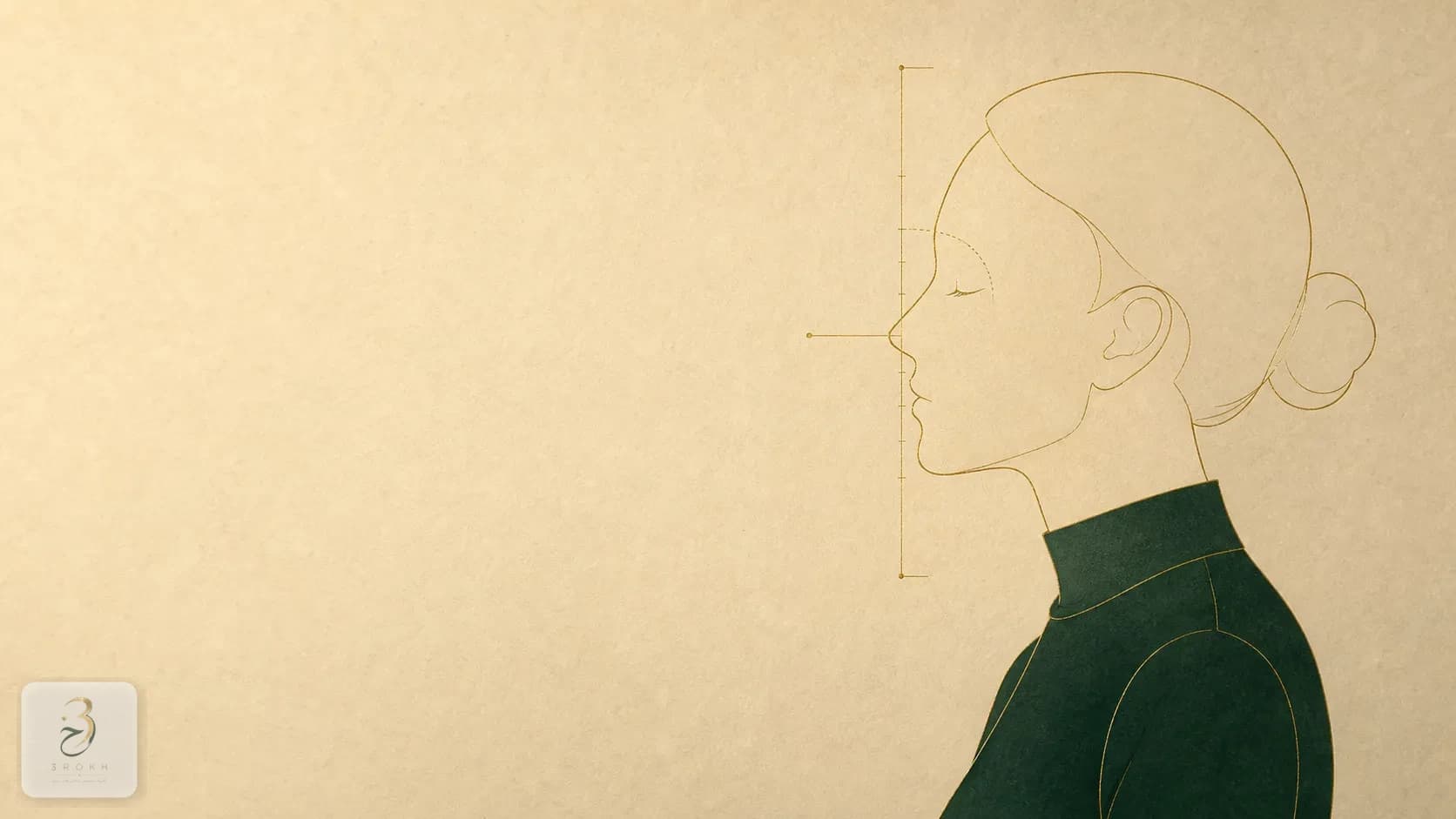
Nasal projection is how far the tip of the nose stands forward from the plane of the face, and it is visible only in profile. Per StatPearls, the distance from the tip to the alar-facial groove should be roughly 55% to 60% of nasal length from nasion to tip. Projection is not the same as nasal length or tip rotation, and each is corrected differently.
- Reference projection ratio (Goode)
- 55% to 60% of nasal length
- Nasolabial angle
- 90-95 degrees in men, 95-115 degrees in women
- Judging the final result
- At least one year after surgery
- Related service page
- /services/rhinoplasty
These figures aid diagnosis rather than set a surgical target; applying them to an individual requires examination.
Key points
- Nasal projection is how far the tip of the nose stands forward from the plane of the face, and it is visible only in profile.
- According to StatPearls, appropriate projection is roughly 55 to 60 percent of nasal length from the nasion to the tip.
- The nasolabial angle is generally considered to be 90 to 95 degrees in men and 95 to 115 degrees in women.
- If a nose looks more projected after surgery, the usual reason is that swelling over the bridge settles before swelling at the tip.
What is nasal projection?
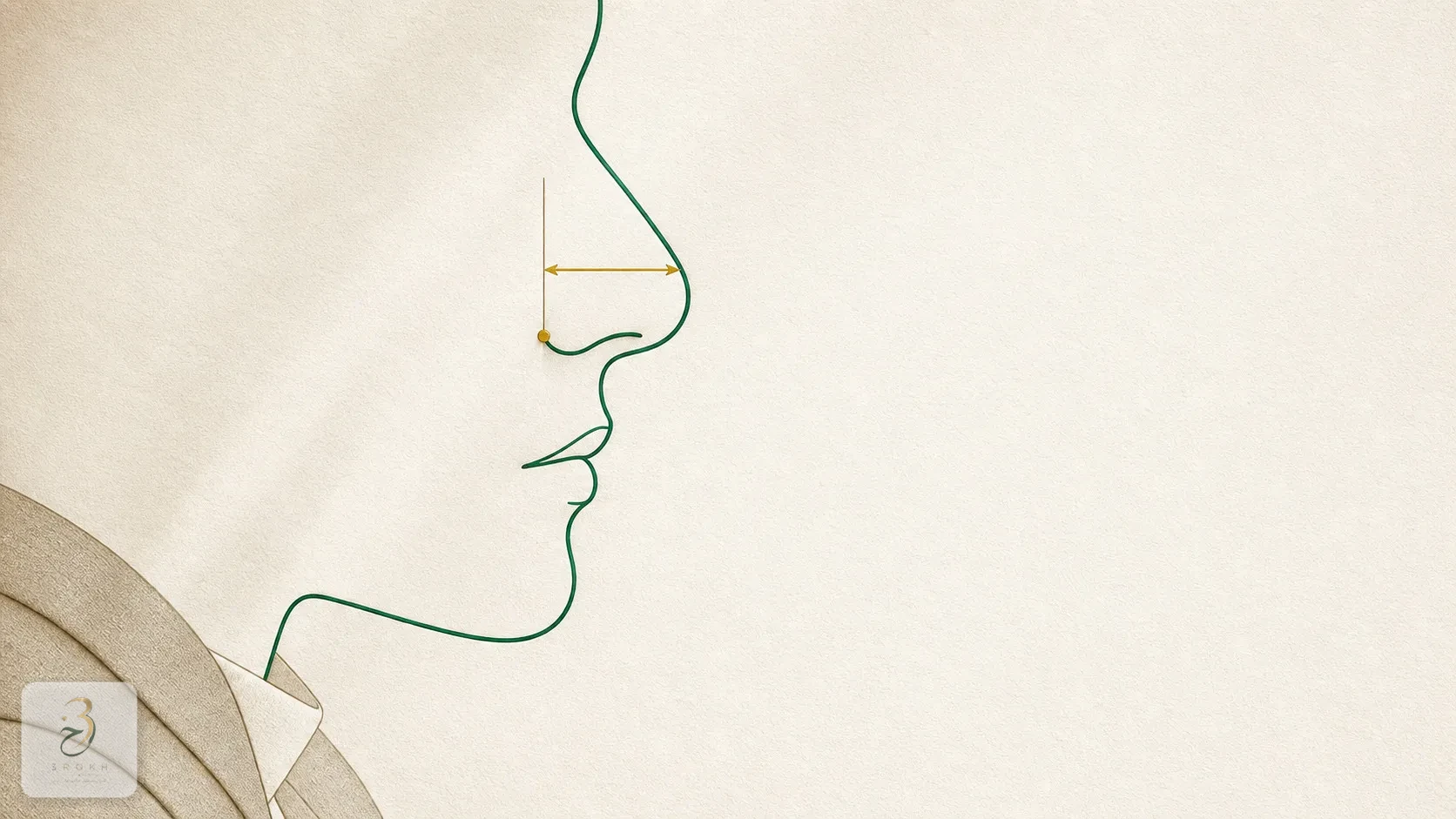
Nasal projection is how far the tip of the nose stands forward from the plane of the face — measured from the most projecting part of the tip to the deepest point where the nose meets the cheek. It is visible only in profile, never straight on, which is why most people first notice it in a side photograph. Projection is not the same thing as size: a small nose can be heavily projected.
This article is educational and does not replace an in-person examination. What suits any individual nose depends on cartilage structure, skin thickness and the proportions of the whole face, none of which can be assessed from text or a photograph.
Projection, rotation and length are three different things
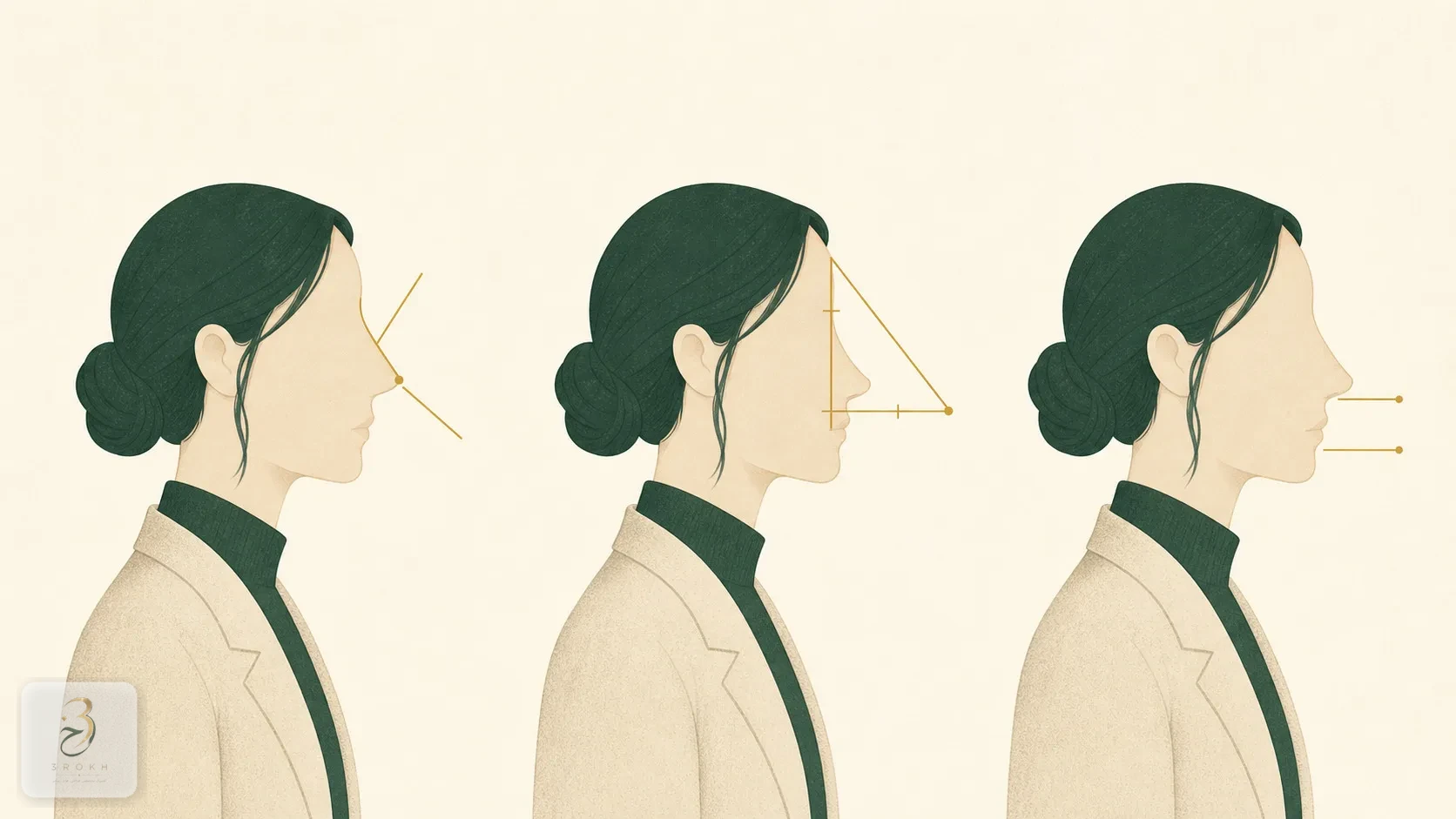
They are constantly confused. Projection is forward prominence of the tip. Rotation is the angle of the tip relative to the upper lip — what people describe as an upturned or drooping tip. Length is the distance from the root of the nose to the tip.
Someone who says "my nose sticks out too far" may in fact be describing excess length or insufficient rotation. A surgeon measures the three separately, because each is corrected by a different manoeuvre, and confusing them means operating on something that was never the problem.
How is nasal projection measured?
Projection is assessed as a ratio rather than in absolute millimetres, because a fixed number is meaningless across different faces. The most widely used benchmark is the Goode ratio: according to StatPearls, a line from the nasal tip to the alar-facial groove should be roughly 55% to 60% of nasal length from the nasion to the tip.
Where projection sits, and why selfies mislead
Projection is a distance, not a point, so it can only be judged in profile. A true side photograph is needed — eyes level with the horizon, no head rotation.
On that image, picture a vertical line from forehead to chin; the gap between the tip and that line is what is meant by projection. Camera distance changes it dramatically: a close-range phone lens exaggerates forward prominence. That is why a selfie is not a reliable basis for judgement, and why real measurement is done at examination with standardised photography.
| Method | What it compares | Reference range |
|---|---|---|
| Goode ratio | Tip to alar groove, against nasal length | 55% to 60% |
| Crumley triangle | Nasal height against nasal length | 3 : 4 : 5 |
| Simons method | Tip projection against upper lip length | roughly 1 : 1 |
These figures are aids to diagnosis, not surgical targets. No surgeon builds a nose to hit a number; the ratios help establish whether the complaint is really projection, or length, rotation, or something outside the nose entirely.
A map of the terms: radix, dorsum, rhinion, columella
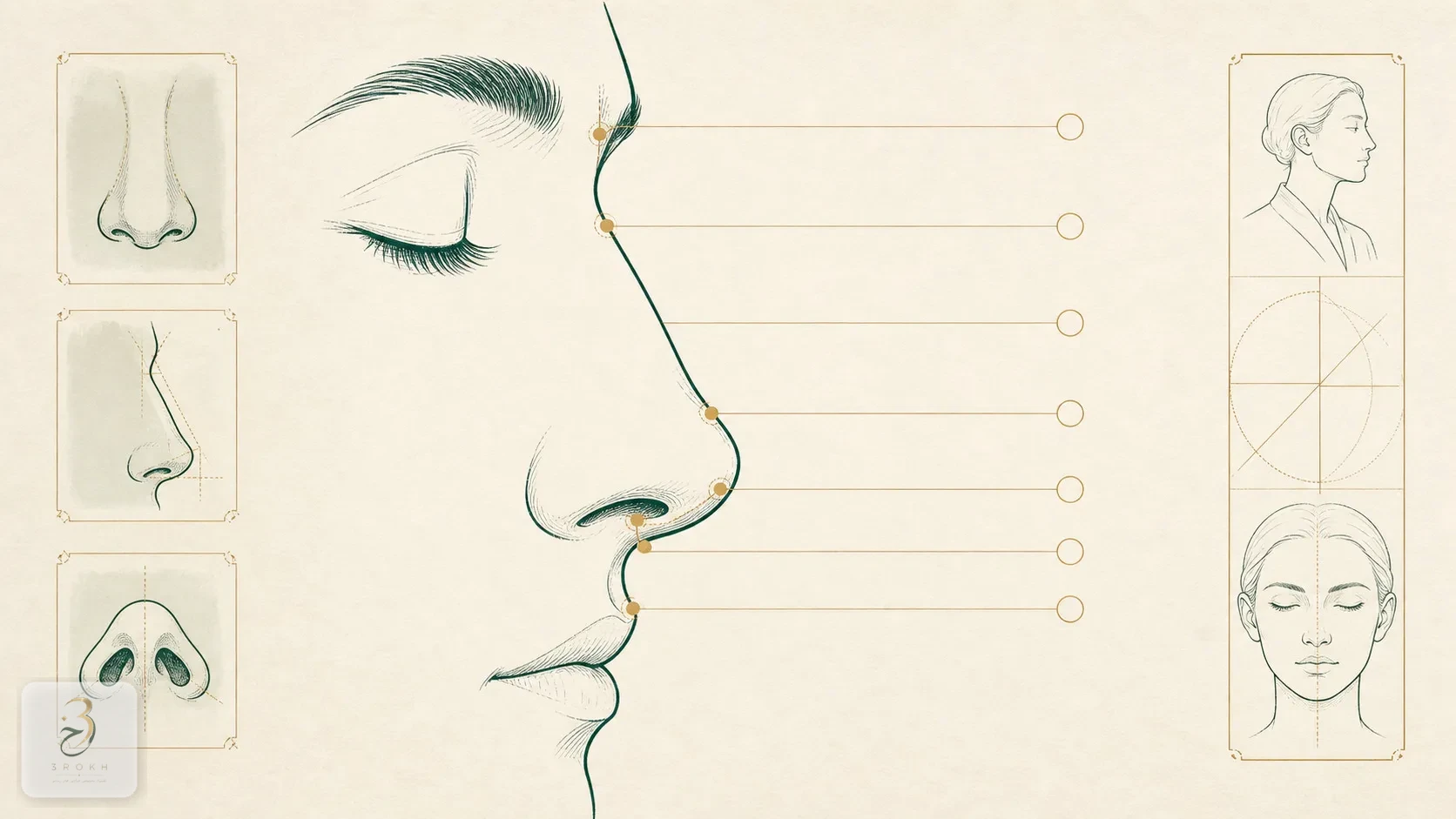
These name the regions of the nose, and they are the words a surgeon uses in consultation. Knowing them means understanding which part is actually being discussed, and being able to ask a precise question. The definitions below follow StatPearls.
| Term | Common name | Where it is |
|---|---|---|
| Radix | Root of the nose | The depression at the top of the nose, between the brows |
| Dorsum | Bridge | The anterior nasal surface, from radix to tip |
| Rhinion | Bony-cartilaginous junction | The point on the bridge where skin is thinnest |
| Dome | Tip arch | The most projecting portion of the tip cartilages |
| Columella | Column between nostrils | The strip of tissue separating the two nostrils |
| Infratip lobule | Under-tip | Between the tip-defining points and the columellar junction |
| Septum | Central partition | The wall dividing the two nasal cavities |
Why thin skin at the rhinion matters
Nasal skin is not uniform. StatPearls notes it is thickest at the tip and radix and thinnest at the rhinion. That explains why the slightest irregularity on the bridge shows after surgery while tip changes stay hidden under swelling for months. If the central partition is deviated, the question moves from aesthetics into surgery to correct a deviated septum, where the goal is breathing.
The nasolabial angle and its reference range
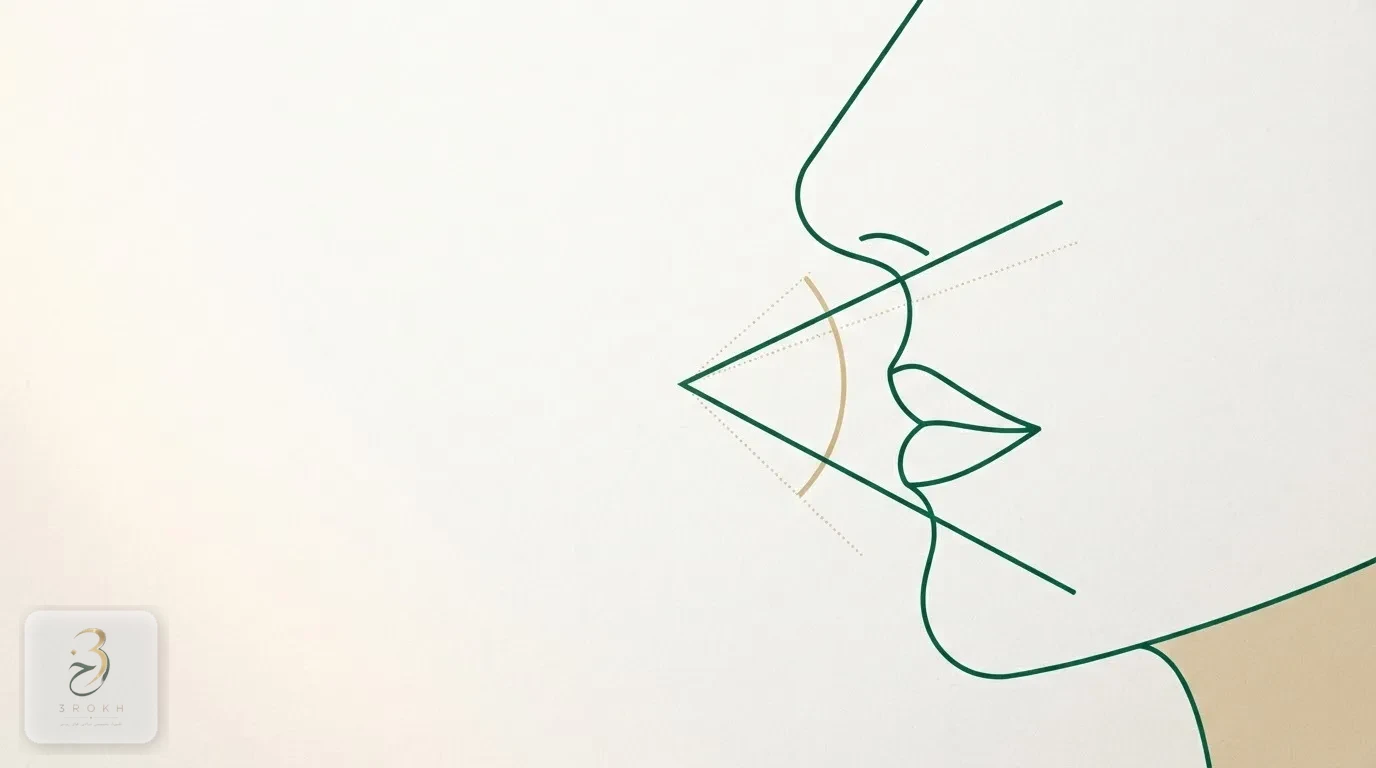
The nasolabial angle is the angle between the upper lip and the nasal tip, and it is what defines tip rotation. StatPearls describes the accepted range as sociocultural and gender-dependent: roughly 90 to 95 degrees in men and 95 to 115 degrees in women, with the upper end of the range more acceptable in shorter patients.
| Nasolabial angle | Reference range |
|---|---|
| Men | 90 to 95 degrees |
| Women | 95 to 115 degrees |
Contrary to a common assumption, more rotation is not a better result. StatPearls states plainly that an overrotated nose is a telltale sign of poor rhinoplasty, because the appearance is highly unnatural. This is one reason a request for a strongly upturned tip is a high-risk request.
Over- and under-projection, and the illusion the rest of the face creates
Under-projection is corrected by adding structure, usually a cartilage graft; over-projection by reducing and rearranging the tip cartilages. But the most useful point is that part of what looks like poor projection does not come from the nose at all.
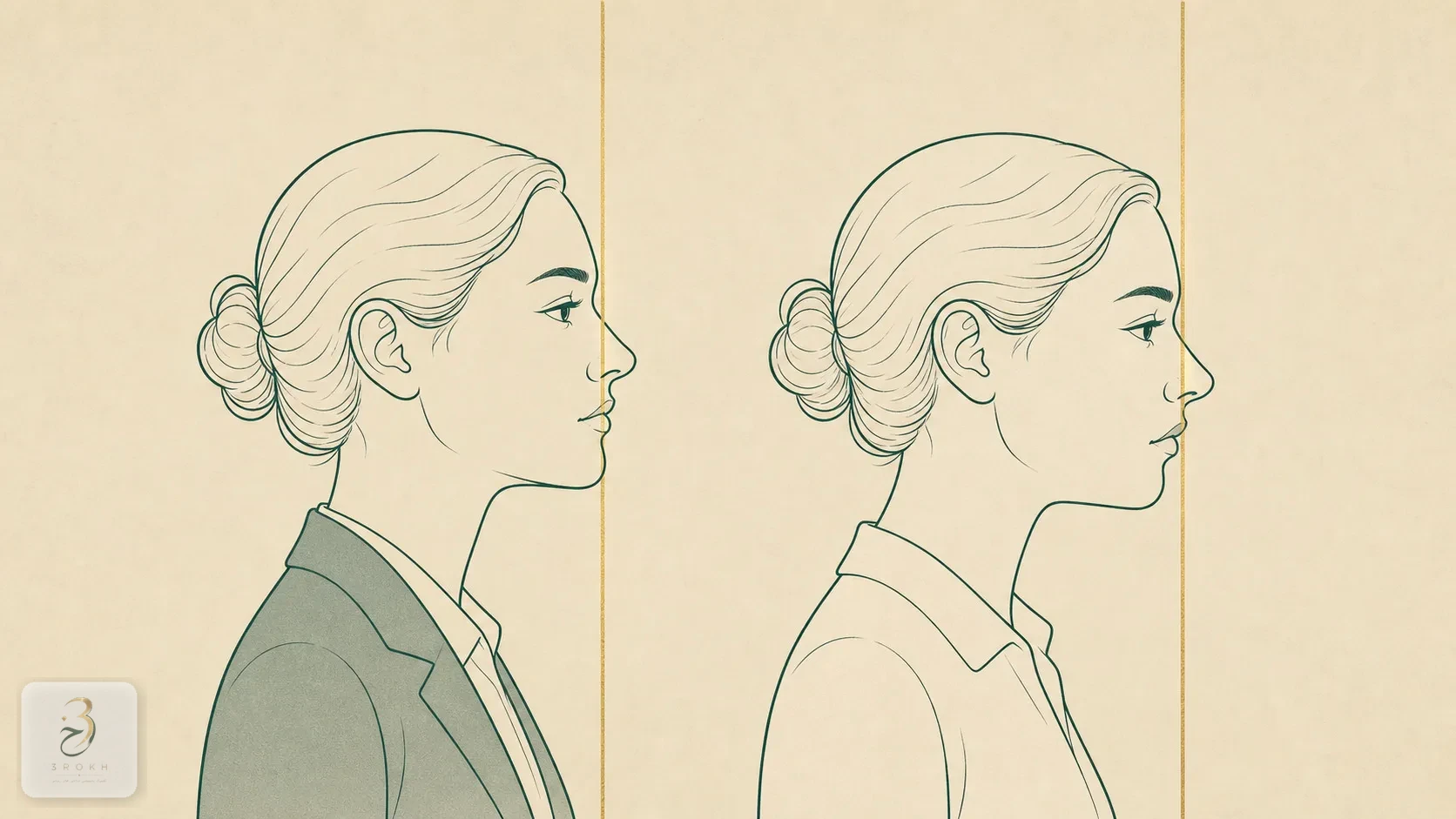
StatPearls describes two well-recognised effects:
- A high radix reduces the nasofrontal angle and can make a nose appear under-projected while tip projection is in fact within range.
- A receding chin can make the tip appear more projected than it is — the nose has not changed, the reference point of the profile has.
Proper assessment therefore reads the whole profile, not the nose in isolation. A surgeon who reduces the tip without looking at the forehead, lip and chin may correct the number and worsen the appearance. The list of questions to ask at a consultation exists for exactly this conversation.
How reduction is actually done
Reducing projection means rearranging tip cartilage, not shaving it away. One established approach StatPearls describes is the tongue-in-groove technique: setting back the medial crura, which simultaneously manages the nasolabial angle, increases rotation and reduces columellar show.
Increasing projection, and the thing not to forget
Increasing projection requires added structure, usually a cartilage graft harvested from the septum, ear or rib.
The point that ties both directions together: StatPearls emphasises that tip support must be reconstituted at the end of any rhinoplasty. Extensive manipulation without restoring that support is the source of a large share of secondary problems, aesthetic and functional alike — from tip drooping to internal valve narrowing.
Why a nose can look more projected after surgery
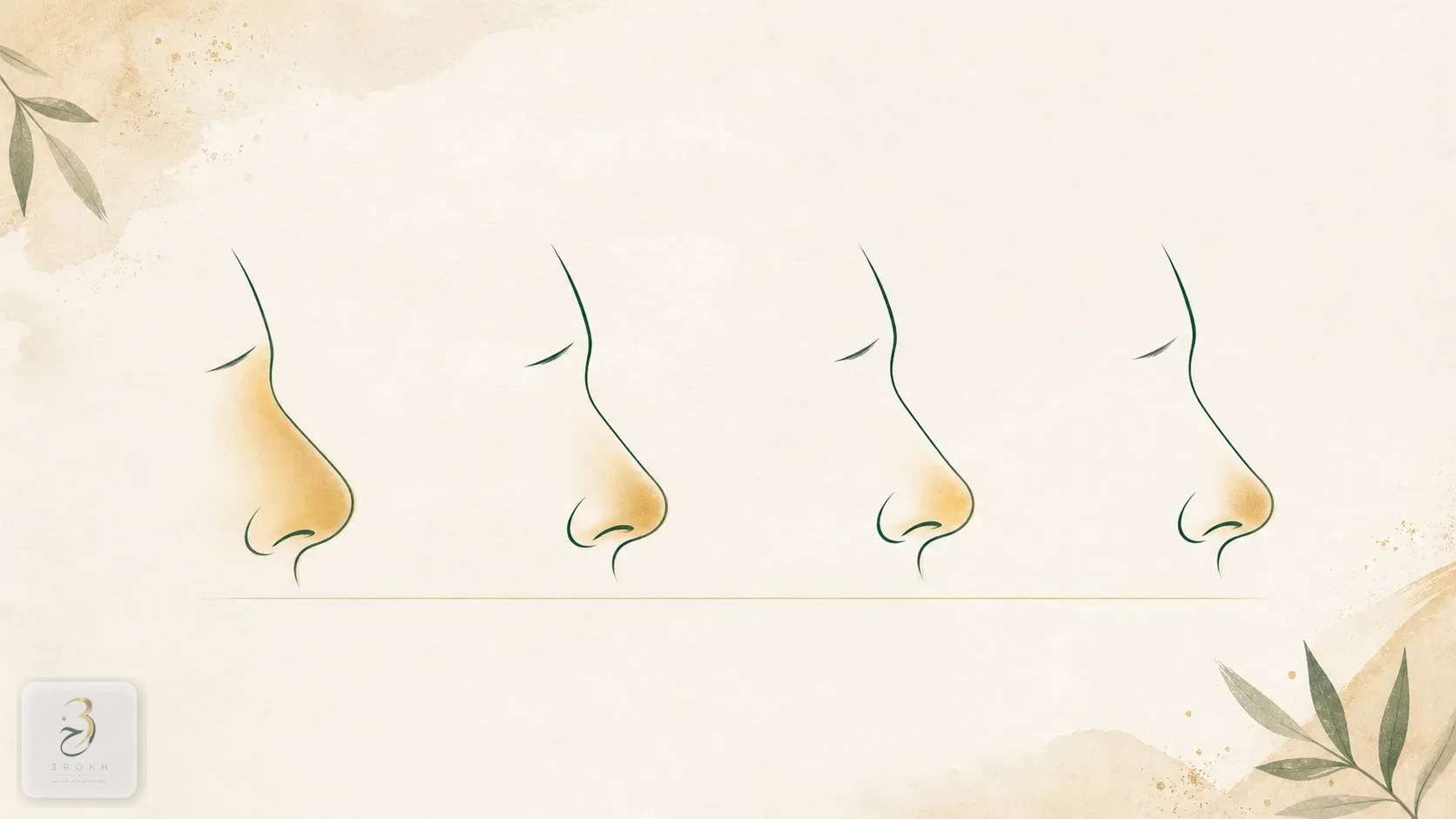
This is the most common post-operative worry, and in most cases it reflects the order in which swelling resolves rather than the final surgical result. Swelling over the bridge settles before swelling at the tip; while the bridge flattens and the tip is still swollen, the tip reads as further forward and longer than it will be.
What creates the impression
- Different swelling timelines: the lower third of the nose, containing the tip and alae, is according to StatPearls the most anatomically and functionally complex region, and the last to settle.
- Surgical approach: StatPearls notes endonasal and tip-delivery approaches produce swelling of lesser severity and shorter duration than the open approach, so part of the difference between people's experiences is technique.
- Tip grafts: cartilage placed for structural support looks bulkier for a period.
- Ongoing change: StatPearls stresses that the nose continues to change shape over time, particularly after surgery.
When to actually be concerned
The timeline is clear. StatPearls advises that a patient unhappy with the result should wait at least one year before judging the final outcome, and revision surgery is generally delayed 6 to 12 months to let swelling subside as far as possible. Encouragingly, some contour irregularities are managed with triamcinolone injection and taping rather than another operation. The week-by-week picture is in the recovery guide, and the criteria for revision rhinoplasty are set out separately.
Can projection be changed without surgery?
The short answer is that filler cannot reduce projection. Filler adds volume, so it can only shift the impression — for instance by filling around a hump to create the illusion of a straighter bridge. Genuinely reducing forward tip prominence requires cartilage to be rearranged, which is the work of rhinoplasty.
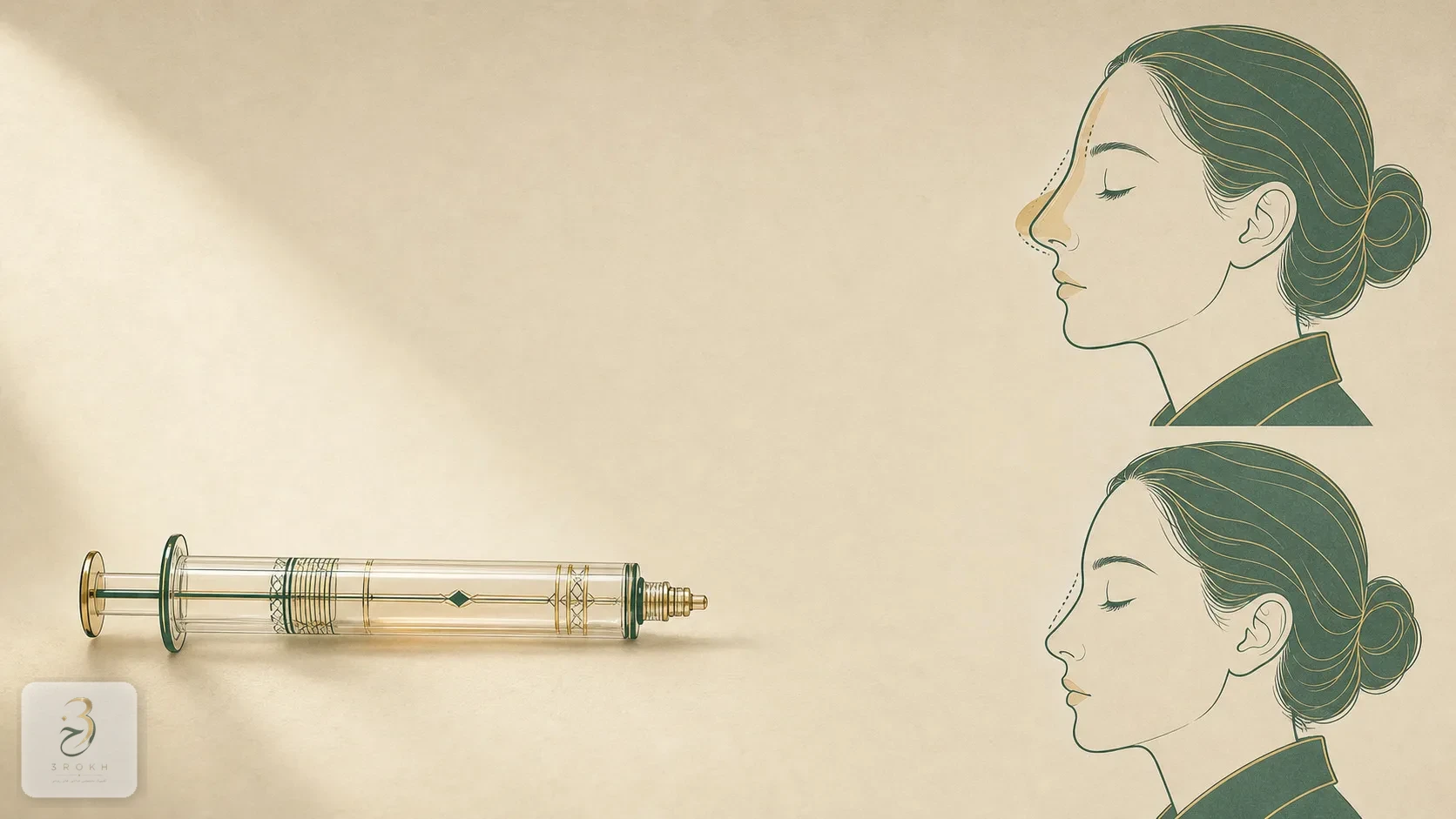
Nasal filler is not risk-free. StatPearls emphasises injecting into the relatively avascular deep fat plane to avoid vascular occlusion and its consequences — skin necrosis and blindness. In anyone with previous rhinoplasty or a nasal implant the risk of infection and tissue ischaemia is higher, and some authors suggest waiting 12 months after surgery before injecting. In thicker, oilier skin the effect is less pronounced and swelling afterwards is greater.
When to see a doctor
If you are unhappy with your profile and cannot tell whether the issue is projection, length or rotation, that distinction is what an examination is for — not a guess from a selfie. A consultation makes sense in these situations:
- Before deciding on surgery, to establish where the problem actually lies and whether the nose is the only factor.
- When the appearance concern comes with a breathing problem — that combination usually points to the septum.
- More than a year after surgery, if the tip still bothers you; that is the point at which assessing the final result becomes meaningful.
- Urgently: severe pain, bleeding, fever or any change in vision after any nasal procedure, filler included.
Sources
Frequently asked questions
Where exactly is nasal projection?
Projection is a distance, not a point: the gap between the nasal tip and a vertical line drawn from forehead to chin. It can only be seen in a true side photograph, and a close-range phone lens exaggerates it.
What is the bridge of the nose?
The bridge is the dorsum: the anterior nasal surface from the radix to the tip. The point on it where bone meets cartilage is the rhinion, where the skin is thinnest — which is why irregularities on the bridge show sooner after surgery.
Is it normal for a nose to look more projected after surgery?
In most cases yes, and it is temporary. Swelling over the bridge settles before swelling at the tip, so the tip reads as further forward for a while. StatPearls notes the lower third of the nose is the last to settle, and judging the final result is meaningful only after at least a year.
How long does tip swelling last?
It varies between people and depends on technique; StatPearls notes that endonasal and tip-delivery approaches produce swelling of lesser severity and shorter duration than the open approach. Revision surgery is generally delayed 6 to 12 months to let swelling subside.
How is projection reduced?
By rearranging the tip cartilages, not by shaving them. One established approach StatPearls describes is the tongue-in-groove technique, which simultaneously manages the nasolabial angle and reduces columellar show. Filler cannot reduce projection, because filler only adds volume.
What is the wall in the middle of the nose called?
The septum: the partition dividing the two nasal cavities, cartilaginous at the front and bony behind. A deviation affects breathing, and correcting it is the subject of septoplasty rather than cosmetic surgery.
Related services
Comments
No comments yet. Be the first to write one.
Related articles
Medications and Supplements to Stop Before Surgery: What, and How Many Days Before
Aspirin, herbal supplements, birth control pills, isotretinoin — which ones really need to stop, how many days before surgery, and which must never be stopped on your own, sourced from Mayo Clinic, Cleveland Clinic and an independent scientific review.
Read moreCan You See Rhinoplasty Results Before Surgery? Simulation and Its Limits
What computer simulation before rhinoplasty actually shows, and why it can't guarantee the final result — based on clinical studies, not an app roundup.
Read moreThe Cost of Rhinoplasty in Tehran: What the Price Actually Includes
Rhinoplasty at Se Rokh starts between 58 and 70 million toman — but what matters more than the number is what sits inside it and what is billed separately. Each surgeon's starting figure, the exact boundary of the quote, and what to send for an accurate price.
Read more