
Decision Guides
How to Read Before-and-After Cosmetic Surgery Photos Correctly

Quick answer
A before-and-after photo can show the general direction of a change, but lighting, angle, camera distance and timing — even with no editing — can make the result look different than it is. The best check is seeing at least three matched angles and asking the surgeon directly.
- Minimum views needed
- 3 (frontal, profile, three-quarter)
- Rhinoplasty final result
- 12–18 months later
- Blepharoplasty final result
- 4–6 weeks later
- Service page
- Rhinoplasty (Nose Surgery)
A proper evaluation of any specific surgeon's portfolio still requires an in-person consultation.
Key points
- Before-and-after cosmetic surgery photos can show the general direction of a change, but lighting, angle and camera distance alone — with no editing at all — can change how a nose, eyelid or ear looks.
- A rhinoplasty's final result is typically clear only twelve to eighteen months after surgery, which is why a photo from the first few weeks is a poor measure of the nose's final shape.
- A paper in JAMA Facial Plastic Surgery found that filtered photos on social media can build unrealistic expectations about appearance.
- The best way to evaluate a surgeon's portfolio is to see at least three matched angles under the same lighting and to ask directly when each photo was taken.
Can you actually trust before-and-after cosmetic surgery photos?
Short answer: not always, but they aren't necessarily fake either. A before-and-after pair can show the general direction of a change, yet lighting, camera angle, distance, makeup and even the timing of the photo can shift how a nose, eyelid or ear looks — with no editing involved at all. This article is educational and does not replace an in-person consultation with a surgeon.
The American Society of Plastic Surgeons (ASPS) tells patients directly to treat these photos as "just one tool" in research, not proof of a guaranteed outcome. Reading a photo pair correctly is a skill built from a handful of simple checks, which is exactly what the rest of this guide walks through — one variable at a time.
Lighting, angle and camera distance change the result without any editing

Hard, direct light deepens shadows along the nasal bridge or eyelid crease and exaggerates bumps; soft, diffused light flattens the same face and makes it look more symmetrical. If the "before" photo was taken under a clinic's overhead light and the "after" was shot next to a window, part of the visible difference is lighting, not surgery.
Head tilt and camera height
A few degrees of head rotation, or a camera positioned slightly above or below eye level, changes how a nasal bridge, drooping eyelid or ear projection reads. A photo shot from below makes the tip of the nose appear higher and narrower; one from above does the opposite. For a fair comparison, the head needs to sit at the same angle in both frames.
Distance from the lens
The closer the camera sits to the face, the more perspective distortion appears, exaggerating whatever is nearest the lens — usually the tip of the nose. This is a well-documented effect in portrait photography, not a claim specific to this article. A close-up shot with a wide lens makes a nose look bulkier than it is; the same face photographed from farther away with moderate zoom looks more natural. Comparing two photos taken at different distances is not a fair comparison.
Why a single photo is never enough: frontal, profile and three-quarter views

Because the nose, eyelid and ear are three-dimensional, and one angle only ever shows part of the change. Standard documentation in facial plastic surgery typically lines up at least three views: frontal, full profile, and a three-quarter angle around 45 degrees. According to Mayo Clinic, rhinoplasty planning involves photographing the nose from multiple angles, and those same images anchor both the pre-surgery discussion of goals and the surgeon's reference during the procedure.
The frontal view shows facial symmetry, the profile shows the dorsal line and the angle from tip to lip, and the three-quarter view is closest to how a face actually reads in everyday life. A portfolio built around a single profile shot tells an incomplete story — a change might look far more (or far less) dramatic from the front than it does from the side. One more distinction worth knowing: some clinics generate a computer simulation of a possible outcome before surgery. That rendering is a planning tool, not an actual "after" photo, and the two should never be confused.
Static photos don't show function
A photo captures a single still moment, while the real-world result of these three procedures also shows up in motion — a nasal tip can drop when smiling, an eyelid needs to close fully when blinking, and ear symmetry is judged from several head positions, not one. A short video of the patient talking or smiling naturally is a useful complement to still photos, though never a substitute for an in-person exam.
Why the timing of the "after" photo matters
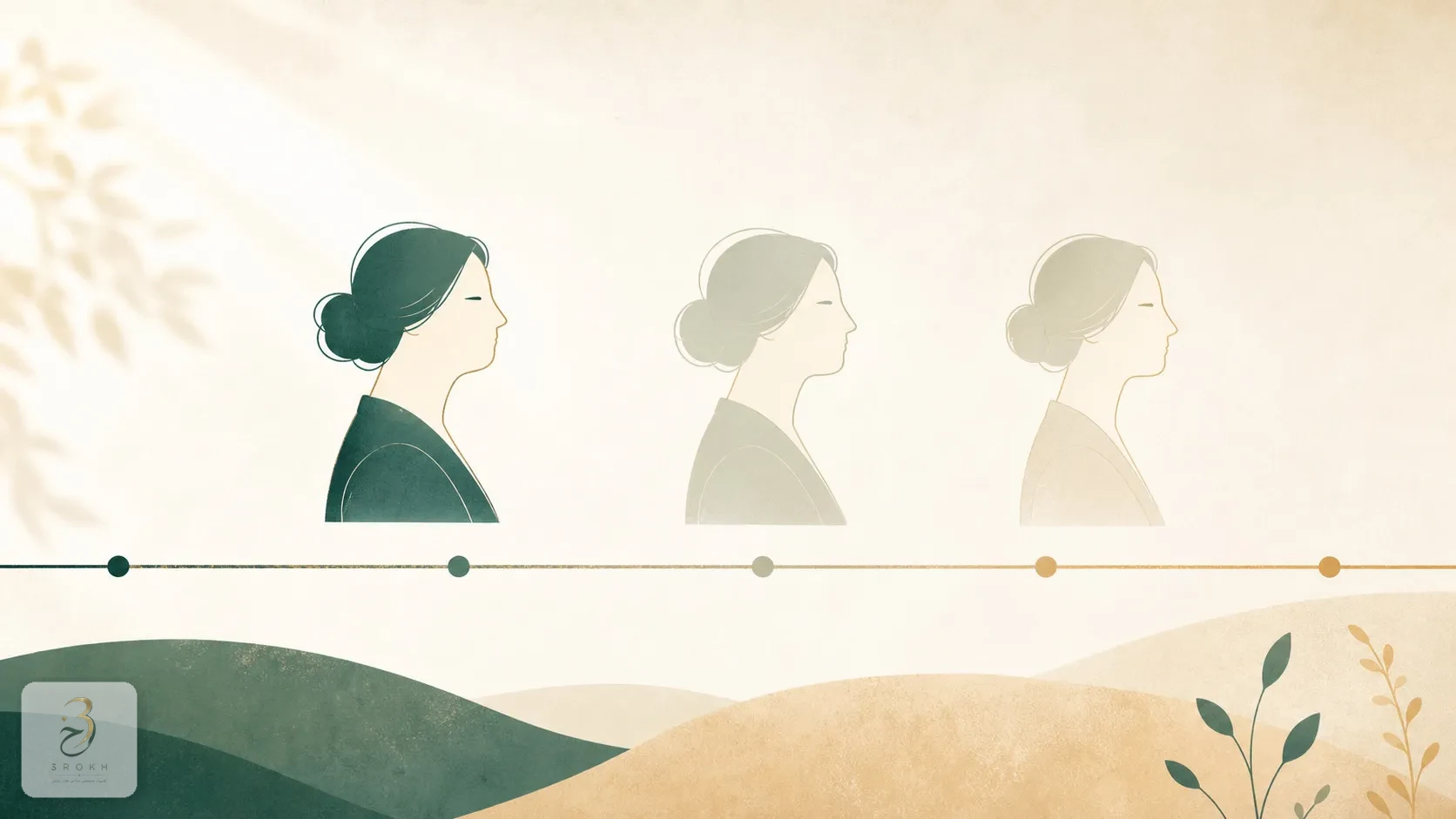
It matters a great deal, because early swelling is not the final result. A photo taken one or two weeks after surgery still shows residual swelling and can make the outcome look better or worse than it will end up being. How long it takes to reach a stable, final result also varies significantly by procedure.
| Procedure | Visible early swelling settles | Final result is typically clear |
|---|---|---|
| Rhinoplasty | 2–3 weeks | 12–18 months |
| Blepharoplasty | 1–2 weeks | 4–6 weeks |
| Otoplasty | About 1 week | 4–6 weeks |
These ranges are approximate and depend on surgical technique, skin thickness and individual healing. For rhinoplasty specifically, tip swelling can take months to fully resolve, which is why an "after" photo taken only a few weeks post-op is a poor proxy for the nose's ultimate shape.
Two real examples from our own clinic's archive
To keep these points from staying purely theoretical, here are two pairs from our own documentation archive — exactly as recorded in the patient file, with no staged scene or special editing. Notice that both pairs show the "before" stage and the very first moments of "after," not the fully healed final result that only takes shape months later — the same distinction covered in the section above.
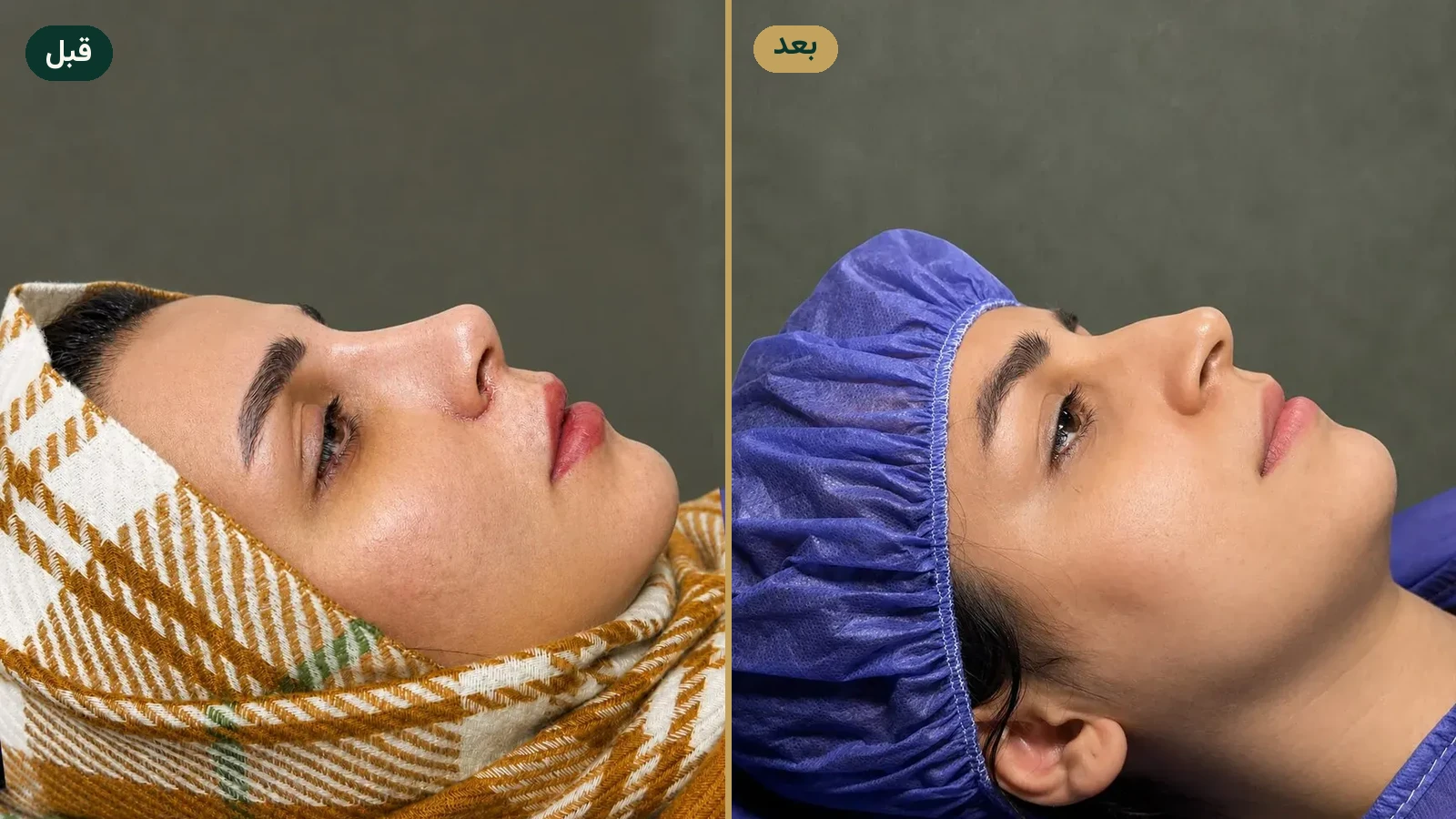
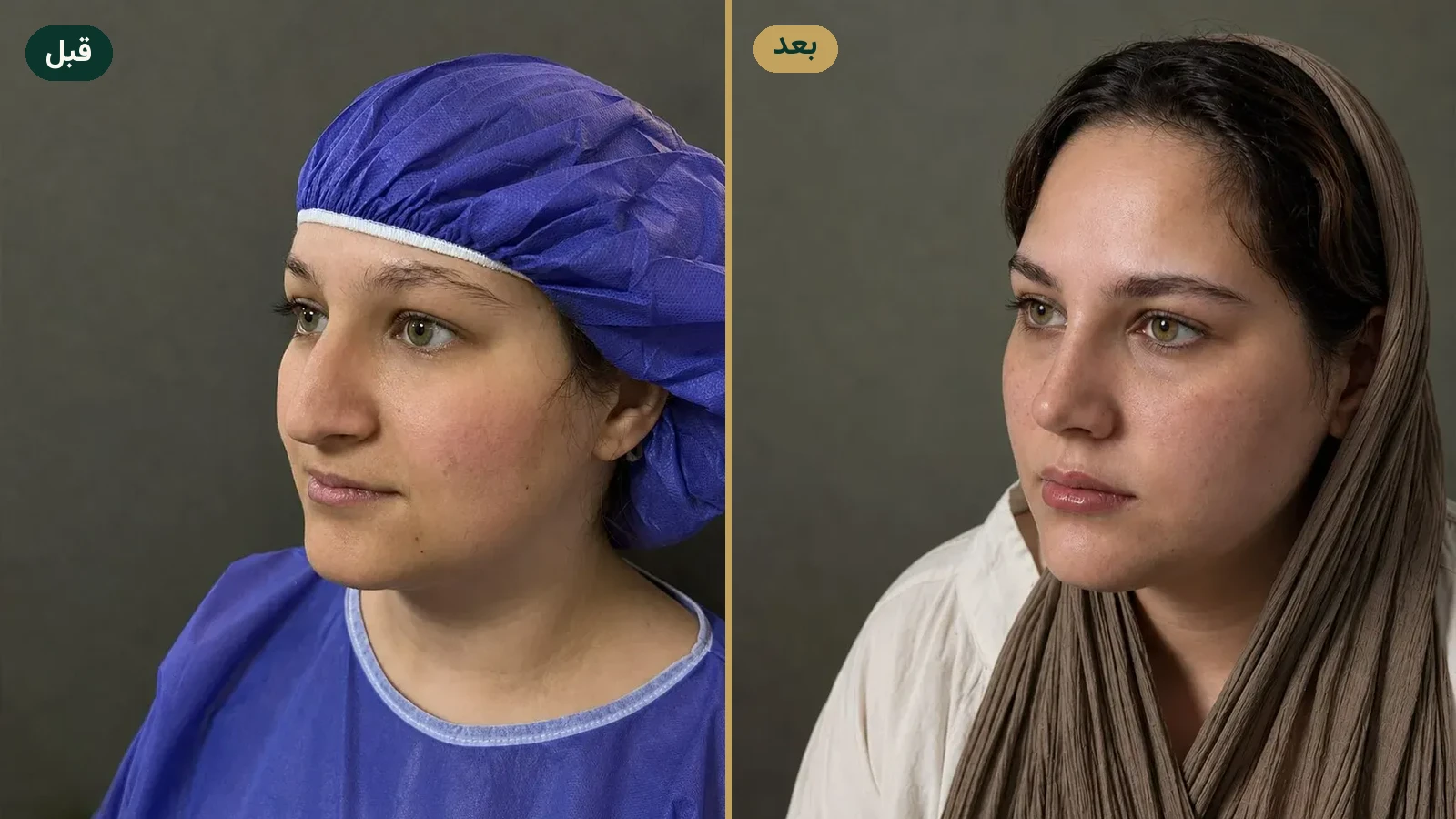
For more examples, organized by surgeon and by procedure, see our clinic gallery; a fuller set with more angles is also available to review at an in-person consultation.
Makeup, contouring and digital editing: where does the line sit?
Makeup, contouring and even a change of hairstyle can alter how a nose or face reads in a photo without touching the surgical outcome at all. Shading along both sides of the nose can make it look narrower — an effect achievable with makeup alone, with no procedure whatsoever.
Digital editing is a different level of change entirely: skin smoothing, color shifts, or subtly moving facial lines with tools like Photoshop. According to ASPS, some images shared on social media as portfolio work are altered so heavily that the before and after look like two different people. The line between makeup/lighting and digital editing isn't always visible to the naked eye, but asking a surgeon directly whether a photo is unedited is a reasonable question every patient is entitled to ask.
Cherry-picking and "filtered-photo dysmorphia"

Every surgeon naturally showcases their best work rather than their average outcome — psychologists call this selection bias. An online gallery typically leaves out the bulk of ordinary results and keeps only the most striking few. That isn't dishonest on its own, but it doesn't give a realistic picture of what any given patient should expect.
A related issue is how social-media filters shape patient expectations. A paper in JAMA Facial Plastic Surgery found that filtered and retouched photos from mobile apps can distort people's sense of their own natural appearance and build expectations that no real surgery can deliver. When a patient brings a heavily edited photo into a consultation as a literal "goal," that gap between the image and their own actual anatomy is exactly what needs to be discussed openly with the surgeon.
A practical checklist: what to ask about any before-and-after photo

Five specific questions give you a far more realistic read on any portfolio photo — and they work just as well typed into an Instagram comment as they do asked in person.
- How long after surgery was this taken? If the answer is vague, ask whether a one-year result is also available.
- Were the lighting and angle matched between the two shots? Compare background, camera height and distance yourself.
- Is more than one angle available — frontal, profile, three-quarter? A single photo is not enough to judge by.
- Is this a typical result or the most exceptional one on file? A transparent surgeon will usually say so without being asked twice.
- What are the surgeon's actual credentials? A portfolio only means something when it sits behind a real license and specialty — see this guide for the full list of what to check.
- Can I see a few more examples with a similar face shape to mine? One exceptional case is a poor predictor of your own result; a handful of ordinary ones is far more useful.
These pair well with a broader consultation script — 12 Questions to Ask a Surgeon at Your Consultation covers the fuller list, and How to Choose a Trustworthy Cosmetic Surgeon frames the decision more broadly still.
When to talk to a doctor

Before any decision about rhinoplasty, blepharoplasty or otoplasty, the best way to read a portfolio is alongside the surgeon's own verbal account of each photo's conditions. No online gallery replaces an in-person exam of your own anatomy — Cleveland Clinic notes that realistic expectations are one of the strongest predictors of satisfaction after any cosmetic procedure.
At the consultation, ask to see examples with a face and skin type similar to your own, not just the most popular ones. For rhinoplasty, blepharoplasty and otoplasty, real photos only become meaningful once they're reviewed together with an exam and the surgeon's own explanation.
Sources
- Mayo Clinic — Rhinoplasty
- PubMed — Rajanala S, Maymone MBC, Vashi NA. Selfies-Living in the Era of Filtered Photographs. JAMA Facial Plast Surg, 2018
- American Society of Plastic Surgeons — Can you trust before and after photos?
- Cleveland Clinic — Cosmetic Surgery: What It Is, Types & Common Procedures
Frequently asked questions
Are before-and-after rhinoplasty photos always real?
Not necessarily fake, but lighting, angle, camera distance and makeup can make a result look different from reality with no editing at all; a fair judgment requires matching the shooting conditions of both photos.
Why might my result not look like a portfolio photo?
Skin thickness, bone and cartilage structure, and facial proportions vary from person to person; a portfolio photo shows a possibility, not a guarantee of an identical outcome.
What's the best time to take an "after" photo?
It depends on the procedure — typically 12 to 18 months for rhinoplasty, and a few weeks for blepharoplasty or otoplasty, once early swelling has fully settled.
Can I choose a surgeon based on photos alone?
No — photos are just one evaluation tool. Checking credentials and experience, and asking directly about each photo's conditions, matter just as much.
How can I tell if a photo has been edited?
Unnatural differences in skin tone, lighting or background between the two shots, or results that look suspiciously identical across many patients, are possible signs of editing; asking the surgeon directly is the most reliable check.
Is a single profile photo enough to judge a portfolio?
No — because the nose, eyelid and ear are three-dimensional, at least three views (frontal, profile and three-quarter) are needed to see the full picture of a result.
Related services
Comments
No comments yet. Be the first to write one.
Related articles
12 Questions to Ask Your Surgeon During the Consultation
A focused checklist of 12 precise questions for the consultation room — from surgeon experience to the exact revision policy — and what a reassuring answer sounds like versus a warning sign.
Read moreThe Complete Consultation Guide: What Actually Happens, Step by Step
From medical history intake to the physical exam, photography and the closing discussion — a step-by-step walkthrough of exactly what happens in a cosmetic surgery consultation, and how long each part takes.
Read moreENT Surgeon vs Plastic Surgeon for Rhinoplasty: What's the Real Difference?
A grounded comparison of ENT surgeons and plastic surgeons for rhinoplasty, based on your actual situation rather than a title alone — which specialty fits a cosmetic-only concern, a breathing problem, or revision surgery.
Read moreSigns of an Untrustworthy Rhinoplasty Ad
Before contacting any clinic, screen the ad itself for these signals: guaranteed results, non-surgical substitutes, manipulated photos, unrealistic pricing, and celebrity endorsements.
Read moreHow to Choose a Trustworthy Cosmetic Surgeon
Four concrete checks for choosing a trustworthy surgeon: how to verify a credential, which specialty fits which procedure, how to spot an edited before-and-after photo, and what to ask in a consultation.
Read moreMedications and Supplements to Stop Before Surgery: What, and How Many Days Before
Aspirin, herbal supplements, birth control pills, isotretinoin — which ones really need to stop, how many days before surgery, and which must never be stopped on your own, sourced from Mayo Clinic, Cleveland Clinic and an independent scientific review.
Read more