
Rhinoplasty
Doll Nose vs Barbie Nose: The Real Difference Between the Two Terms

Quick answer
"Doll" and "Barbie" are both everyday terms with no medical definition. In common usage, doll means a shorter, rounder, "cute" nose with a rotated tip, and Barbie means a slimmer, longer nose with a finer, more defined tip and a straight or slightly scooped bridge. This difference is not fixed; to convey your meaning, specify nose length, tip shape, bridge narrowness and how much of the nostrils show, using specific photos.
- Doll (usually)
- Shorter, round and rotated tip
- Barbie (usually)
- Slimmer, fine and defined tip
- Main risk of each
- Short-nose look / over-narrowed bridge
Bring one "I want this" photo and one "I do not want this" photo.
Key points
- Doll nose and Barbie nose are both everyday terms with no medical definition.
- In common usage, doll is shorter and rounder while Barbie is slimmer and more refined.
- To convey your meaning to the surgeon, bring one photo you want and one you do not want.
What is the difference between a doll nose and a Barbie nose?
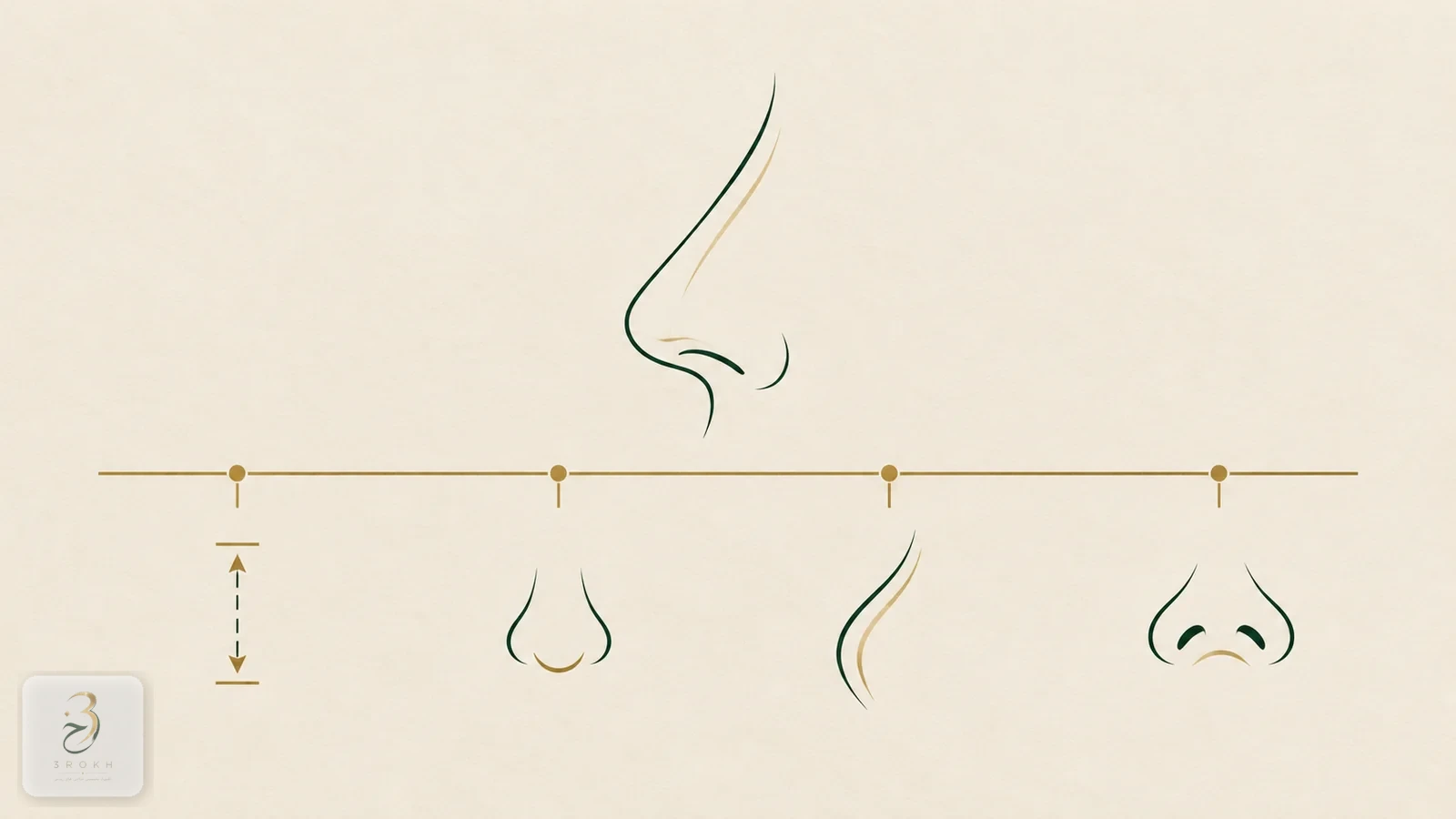
"Doll" and "Barbie" are both everyday terms, not medical classifications, and no official body has drawn a precise line between them. In common usage, a doll nose is described as shorter, rounder and "cute" with a rotated tip, and a Barbie nose as slimmer and longer with a finer, more defined tip and a straight or slightly scooped bridge. That description is not fixed and varies from one center to another and one patient to another, so it has to be translated into measurable features.
This article is educational and does not give a diagnosis or an individual prescription. If you want the wider spectrum of these names, the article on the semi-fantasy rounded-tip nose places them on one scale, and the article on the cost of fantasy and doll rhinoplasty covers the cost factors.

Why does neither have a medical definition?
These names come from conversations among patients, salons and social media, and each person has formed a picture from a few particular photos. One patient may mean a film actress by "Barbie" and another a camera filter. In the scientific literature there is no such category either; surgeons instead use terms such as tip rotation, projection, supratip break, root height and nose-length proportions. Studies that have measured a preferred angle (such as those in the semi-fantasy article) worked with numbers and simulated photographs, not with names.
The practical conclusion is simple: put the name aside and describe the feature.
Translation table: from word to feature
| Feature | "Doll", usually | "Barbie", usually | What sets the limit of what is achievable |
|---|---|---|---|
| Nose length | Shorter | Longer or proportionate | Current nose length and cartilage |
| Tip shape | Round and rotated | Fine and defined, slightly rotated | Skin thickness |
| Bridge | Short and narrow, sometimes slightly scooped | Slim, straight or slightly scooped | Root height, strength of the midvault |
| Nostrils in profile | More visible | Slightly visible | Amount of rotation and the nostril base |
| Overall feel | Small and cute | Refined and elongated | Proportion to upper lip, chin and forehead |
The table only summarises common usage. If you understand "Barbie" as shorter or "doll" as slimmer, that is fine; what matters is that your surgeon hears the same features.
What do the two have in common?
Both usually have a tip rotated more than the classic nose, so the same points apply to both. The durability of rotation depends on the tip-support method; in a retrospective review, rotation loss was about 4.9 degrees with a columellar strut graft and about 1.3 degrees with a septal extension graft. Thick skin reduces tip definition and keeps swelling longer; in a study that graded 166 patients by skin thickness, the authors wrote that patients with thick skin should be warned about swelling and lack of definition. And the further a shape moves from a natural nose, the harder later correction becomes. These points are covered in the article on the semi-fantasy rounded-tip nose and the article on the fleshy nose and realistic results.

The risk of "doll": shortening and over-rotation
The doll shape leans on shortening and strong rotation. A specialist review of the "short nose" lists three shared features: a shortened nasal length, over-rotation of the tip and increased nostril show. Past a certain point the result moves from "cute" to "shortened", and fixing it is revision surgery. Breathing must also be part of the plan, because raising the tip without regard for the external nasal valve can reduce airflow. If you have had surgery before and the tip is very high or the nostrils show too much, read the article on revision rhinoplasty.
The risk of "Barbie": narrowing and scooping the bridge
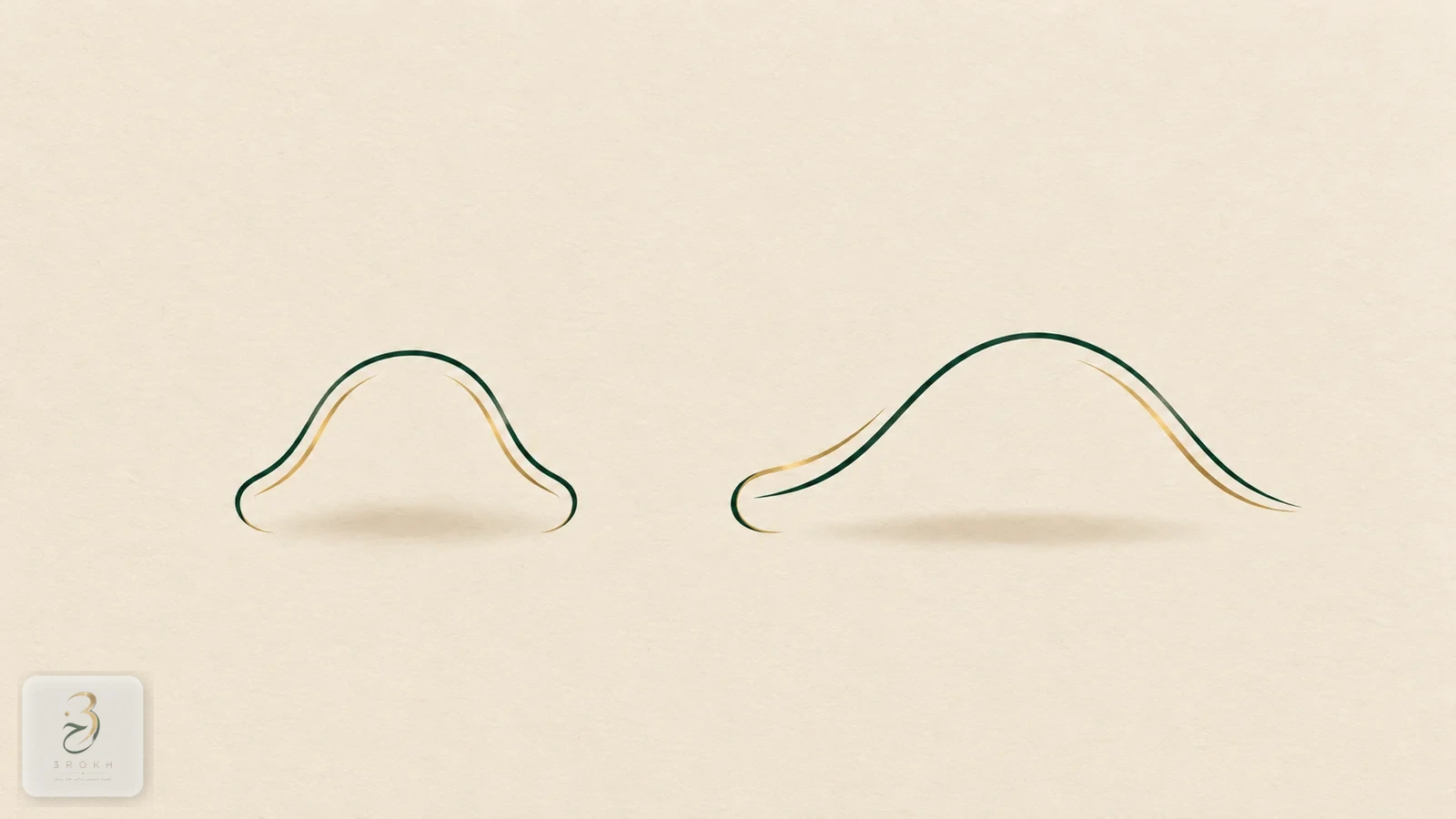
The Barbie shape leans on a slim, delicate bridge. Narrowing the bridge goes with reducing a hump or tightening the midvault. In a classic review of hump reduction, the unwanted sequelae of uneven, over- or under-resection included dorsal irregularity, the inverted-V deformity and excessive narrowing of the midvault, and it stressed that preserving the upper lateral cartilages is needed to keep the internal valve open and the dorsal aesthetic lines intact. Another review of "dorsal failures" likewise lists over-resection, saddle-type collapse and contour irregularity as recognised complications. So a "slightly scooped" bridge sits very close to the line of "too much removed", and the surgeon has to judge that line against your own structure. Thick skin also reduces refinement and definition, which means the Barbie shape is more limited on a fleshy nose.

How to get your meaning across in a consultation
A published clinical practice guideline for rhinoplasty says the surgeon should ask about the patient's motivation and expectations, say whether they are realistic and document the conversation. You can also cut ambiguity from the start:
- Bring one "I want this" photo and one "I do not want this" photo. The "do not want" photo is sometimes clearer than the "want" photo.
- Say which feature made you choose each photo: length, tip, bridge narrowness or how much the nostrils show.
- Ask which method the surgeon will use to hold the rotation, and, if your nose structure does not accept that shape, what the nearest safe option is.
- Treat simulation as a shared language, not a promise; its limits are in the article on simulating the result of rhinoplasty.

If you become undecided after hearing the limits, a cautious shape is usually safer, because softening is easier than reversing.
When to consult in person
- When you have only a name and no specific photo.
- When you have thick skin, a short nose or previous surgery.
- When you also have a breathing problem.
A consultation with Se Rokh's doctors is possible through booking, and the rhinoplasty page explains the scope of the work.

Sources
- Cone JD Jr, Hobar PC. The Short Nose. Clin Plast Surg. 2016
- Rohrich RJ et al. Component dorsal hump reduction: the importance of maintaining dorsal aesthetic lines in rhinoplasty. Plast Reconstr Surg. 2004
- Hamilton GS 3rd. Dorsal Failures: From Saddle Deformity to Pollybeak. Facial Plast Surg. 2018
- Bellamy JL, Rohrich RJ. Superiority of the Septal Extension Graft over the Columellar Strut Graft in Primary Rhinoplasty: Improved Long-Term Tip Stability. Plast Reconstr Surg. 2023
- Wigley C et al. Optimising rhinoplasty outcomes in patients with thick skin. JPRAS Open. 2025
- Ishii LE et al. Clinical Practice Guideline: Improving Nasal Form and Function after Rhinoplasty. Otolaryngol Head Neck Surg. 2017
Frequently asked questions
Are the doll nose and the Barbie nose the same?
There is no official definition, and in practice many people use the two interchangeably. In common usage, doll is described as shorter and rounder and Barbie as slimmer and more refined, but it varies from one center and patient to another, so it should be pinned down with a specific photo.
Which one carries more risk?
It cannot be said in general. Risk depends on how much change is made and on the structure of the nose. A short, very rotated shape risks a short-nose look, and heavy narrowing of the bridge risks a narrow midvault and an uneven dorsum.
Can a thick-skinned nose become a Barbie nose?
A fine tip and a slim, defined bridge are harder to achieve on thick skin, because thick skin softens definition and keeps swelling longer. The shape can be made finer and better proportioned, but not to the degree of a thin-skinned nose.
How can I get my meaning across to the surgeon?
Bring two photos: one of a nose you want to resemble and one you do not, and say which feature led to each choice: length, tip, narrowness of the bridge or how much the nostrils show.
Related services
Comments
No comments yet. Be the first to write one.
Related articles
Cost of Semi-Fantasy, Fantasy and Doll Rhinoplasty: Does the Chosen Shape Affect Price?
"Fantasy" and "doll" are everyday terms, not medical categories, and have no standard price. This article explains which factors really affect the work and cost and why a more dramatic shape is not simpler.
Read moreRhinoplasty Festivals and Discounts: Why a Lower Price Can Push the Cost Up
Seven common mechanisms behind a rhinoplasty discount or festival, three routes by which cheaper ends up dearer, and six questions to ask before paying for any discounted offer.
Read moreDoes Insurance Cover Nose Surgery? Cosmetic vs. Medically Necessary, Explained
Insurers don't judge nose surgery by the result — they judge it by the documented medical reason behind it. When a case counts as therapeutic, when it's cosmetic, and how combined procedures get billed.
Read moreNatural Male vs Female Nose: What Actually Differs
Male and female noses differ in tendency, not in rule. This article shows what the evidence says about size, base, the angle between nose and lip and the bridge, why a male nose should not be feminised and what to say in a consultation.
Read moreRhinoplasty on a Limited Budget: What Is Behind 15 Million and 3 Million Toman Prices?
Where does a 15 or 3 million toman price for rhinoplasty come from? The components of the cost, seven likely explanations for a very low price, and what you should never cut to save money.
Read moreThe Cost of Rasping and Minor Nose Correction Without a Full Rhinoplasty
What does rasping the nose mean, what can 'without a full operation' mean, and why does a small correction not cost proportionally less? The evidence, the limits of limited correction and questions to ask about a cheap offer.
Read more