

Rhinoplasty
Does Insurance Cover Nose Surgery? Cosmetic vs. Medically Necessary, Explained

Quick answer
Insurance typically covers only the functional side of nose surgery — such as correcting a documented deviated septum with a real breathing complaint — not shape changes alone. In combined procedures, only the functional share is usually covered; the cosmetic portion is billed separately.
- Coverage for pure rhinoplasty
- Usually not covered
- Coverage for documented septoplasty
- Often covered, once confirmed
- Combined procedure
- Cost is itemized and split
- Service page
- Septoplasty
The final classification depends on an actual exam and chart review.
Key points
- Insurers classify nose surgery by the documented medical reason behind it, not by how the nose looks afterward.
- A deviated septum with a documented breathing complaint is usually what qualifies a case as therapeutic.
- In a combined septorhinoplasty, insurance typically covers only the functional portion of the cost.
Does insurance ever pay for nose surgery? The short answer
Insurers classify nose surgery by the documented medical reason in the chart, not by how the nose looks afterward. A documented functional problem — usually a deviated septum or a diagnosed airway obstruction — typically qualifies a case as medically necessary and eligible for partial coverage; reshaping without that documentation is treated as cosmetic and paid entirely out of pocket. This article is educational, not a substitute for a review of your own chart by your surgeon and your insurer, and coverage percentages vary by plan — always confirm the specifics with your own policy.
Insurers look at the reason, not the name of the operation
An insurer's coverage decision rests on the diagnosis code behind the surgery, not the label on the request form. Rhinoplasty and septoplasty overlap technically — the same surgical approach can address both the septum and the outer shape in one procedure. What actually convinces an insurer is the documentation inside the chart, not the name of the operation.

Why a verbal complaint alone isn't enough
The American Academy of Otolaryngology–Head and Neck Surgery's position statement on septoplasty for nasal airway obstruction is explicit that the indication should rest on both patient history and objective examination or imaging findings, not on self-report alone. That is essentially the bar most insurers apply too: until an independent clinician has documented an airway problem on exam, "I feel like I can't breathe" is not, by itself, enough to classify a case as functional.
When nose surgery is classified as medically necessary
Nose surgery is classified as medically necessary when a documented functional problem — a deviated septum with airway narrowing, chronic sinusitis tied to nasal structure, prior trauma affecting breathing, or a congenital abnormality — is recorded through an exam and, when needed, imaging, rather than described verbally alone.
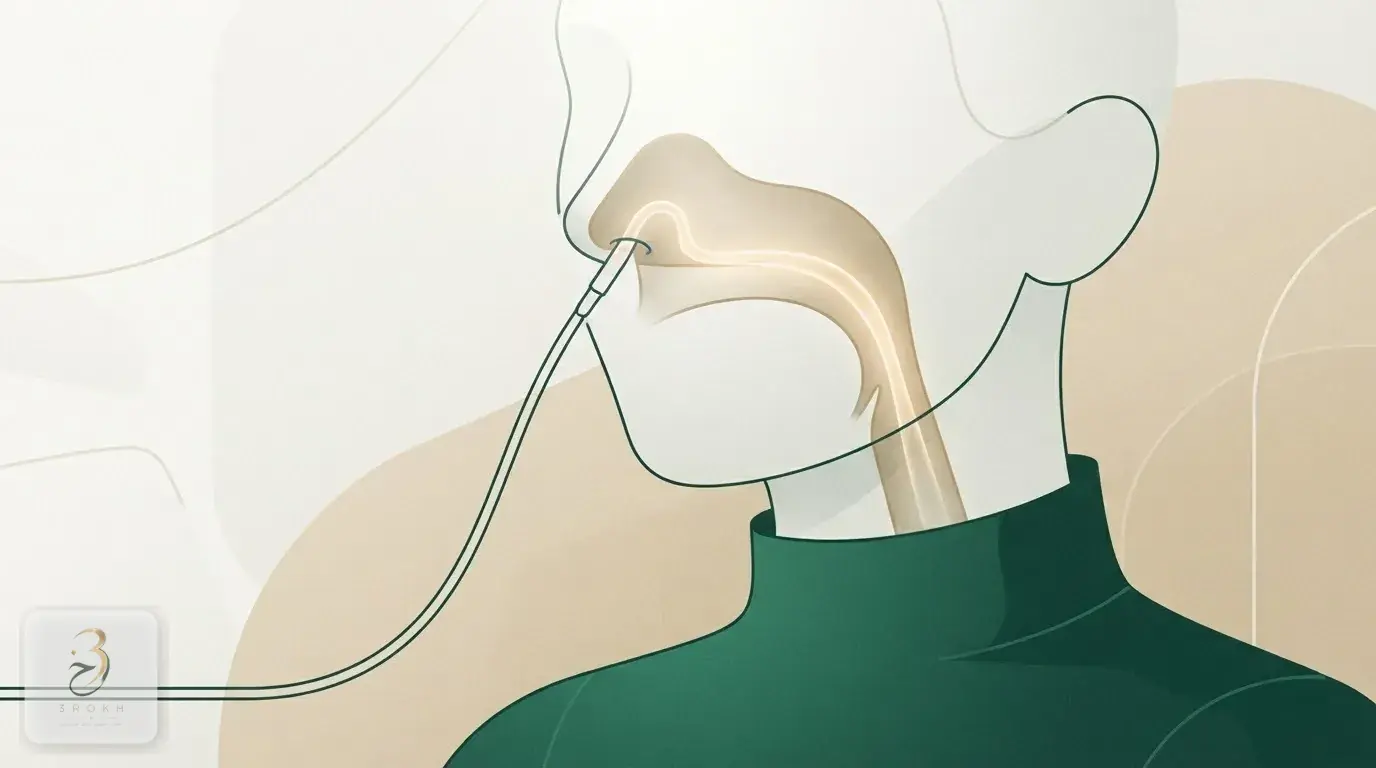
- A deviated septum with documented obstruction, confirmed on clinical exam or nasal endoscopy showing meaningful narrowing of one or both airways.
- Chronic or recurrent sinusitis tied to nasal structure, rather than seasonal allergies alone.
- Prior trauma or a poorly healed nasal fracture that changed both appearance and breathing.
- A congenital abnormality of the septum or nasal valve affecting airflow from an early age.
- A documented role in sleep-disordered breathing, where nasal obstruction is part of a sleep specialist's diagnosis.
None of these is established by how strongly you feel the obstruction. They need to appear in the chart, backed by an exam and, when relevant, imaging.
When nose surgery is classified as cosmetic — and why insurance won't pay
Nose surgery is treated as cosmetic, and paid out of pocket, whenever the goal is reshaping alone with no documented breathing complaint in the chart — regardless of how strongly the patient wants the change.

- Reducing nasal size, removing a dorsal hump, or refining the tip with no documented breathing complaint.
- Symmetrizing the nose purely to match the rest of the face.
- Reshaping after a previous operation when the goal is appearance rather than function — a separate conversation covered under revision rhinoplasty.
- Narrowing the nostrils or softening the tip angle for aesthetic reasons alone.
This split is not a judgment about motivation. It is simply how insurers contractually define "medical necessity." Cosmetic rhinoplasty remains a legitimate, common procedure — it is just settled financially the way any elective service is.
What's the difference between rhinoplasty and septoplasty?
Rhinoplasty and septoplasty target two different goals — outer shape versus airway function — and carry two different insurance statuses as a result. The table below lines up the difference across five shared criteria.

| Feature | Cosmetic rhinoplasty | Therapeutic septoplasty |
|---|---|---|
| Primary goal | Improve shape, symmetry and facial balance | Restore airflow and correct the deviated septum |
| Medical justification required | Patient preference is sufficient | Documented breathing complaint plus exam or imaging |
| Typical insurance coverage | Usually not covered | Often covered once medically confirmed |
| Visible change to outer shape | Yes, it's the point of the surgery | Usually minor or none |
| Related service page | /services/rhinoplasty | /services/septoplasty |
This table is a simplification. In real practice, a large share of patients land somewhere between these two columns — which is the subject of the next section.
When it's both: reshaping the nose and fixing how you breathe
When rhinoplasty and septum correction happen in one procedure — known in the literature as septorhinoplasty — insurers typically neither pay the entire bill nor refuse it outright. The standard practice is itemized cost-splitting between the functional and cosmetic portions.

- The portion tied to correcting the septum and restoring airflow may be covered, if properly documented.
- The portion tied to changing the outer shape, reducing size or removing a hump is billed separately as an out-of-pocket, elective charge.
This split needs to be worked out in writing, before surgery, with your surgeon and, if possible, confirmed with your insurer — not discovered on the day you're discharged. Ask your surgeon to break down, in the consultation notes, which part of the fee maps to which aspect of the operation, and which part can actually be submitted to your insurer.
The documentation insurers actually ask for
To have a case reviewed as medically necessary, most insurers expect five categories of documentation: a specialist exam report, imaging when relevant, a documented history of the complaint, a referral letter, and written pre-authorization.

- A written ENT specialist exam report describing the septal deviation or obstruction in specific terms.
- A nasal endoscopy or sinus CT report, when the surgeon or insurer wants objective confirmation of severity.
- A documented history of the breathing complaint — recorded at earlier visits, not raised for the first time on the day surgery is requested.
- A referral letter from a primary care physician or another specialist, if your plan requires one for elective procedures.
- Pre-authorization from the insurer where required — without it, even a genuinely functional case can be denied on a technicality.
The earlier and more precisely this documentation starts, the less likely a claim is to be rejected close to the surgery date.
Basic coverage, supplemental plans, and what neither one pays for
Base health plans generally recognize only the functional component, and even then with their own caps and conditions. A supplemental or private plan sometimes broadens that coverage or reduces your out-of-pocket share of the functional portion — but that depends entirely on your specific policy; read your plan's actual terms or call your insurer directly.
One thing holds almost universally: no plan, basic or supplemental, pays for the purely cosmetic component of a combined procedure. Only the share of the functional portion may vary.
Traveling for surgery: does your home country's insurance apply?
Your home country's health plan, particularly a public or employer plan, almost never pre-pays for elective surgery performed at a private clinic abroad — even when a genuine functional problem, like a severe septal deviation, exists.

The common reimbursement path
The common path is paying the clinic directly, then, back home, submitting a reimbursement claim to your own insurer with complete documentation — the exam report, imaging, and an official invoice. Whether that claim succeeds depends entirely on your plan's own rules and your home country's regulations; the clinic is not a party to that decision. Before booking travel, ask your insurer directly whether "surgery performed outside the country" is covered under any circumstance, and request the exact documentation your plan would need so the clinic can prepare it from day one.
When to talk to a surgeon
Whether your case is functional, cosmetic, or a mix of both is not something an article can determine — it requires a real examination, a full history, and sometimes imaging. If you have a breathing complaint, raise it at the very first visit, not after a surgical plan is already set. To find out which category your case likely falls into, and which documents to request from your own insurer, booking an in-person consultation is the most reliable next step.
Sources
Frequently asked questions
Is septoplasty for a deviated septum covered by basic health insurance?
In most cases, yes — provided the deviation is documented through an exam and a recorded history of breathing difficulty. Exact coverage and caps vary by insurer and plan, so confirm the specifics directly with yours.
What's the actual insurance difference between rhinoplasty and septoplasty?
Septoplasty targets a functional problem — the deviated septum — and, once documented, is often covered by basic insurance. Rhinoplasty targets outer shape and is done purely by patient preference, so it is almost never covered.
If I get cosmetic changes done at the same time, what does insurance pay for?
In a combined septorhinoplasty, the standard practice is itemized billing: the portion tied to correcting the septum and restoring airflow may be covered, while the portion tied to reshaping the outer appearance is billed separately as an elective charge.
What documentation do I need to prove medical necessity?
A written ENT exam report, a nasal endoscopy or sinus CT report when needed, a documented history of the breathing complaint from earlier visits, and — for some plans — a referral letter and insurer pre-authorization.
Does supplemental insurance cover what basic insurance doesn't?
A supplemental plan sometimes reduces your out-of-pocket share of the functional portion or extends coverage slightly, but this depends entirely on your specific policy. No plan, basic or supplemental, covers a purely cosmetic component.
If I'm traveling to Tehran for surgery, will my home insurance cover it?
Usually not in advance. The common path is paying the clinic directly, then filing a reimbursement claim with full documentation back home — whether it succeeds depends entirely on your own insurer's rules.
Related services
Comments
No comments yet. Be the first to write one.
Related articles
Medications and Supplements to Stop Before Surgery: What, and How Many Days Before
Aspirin, herbal supplements, birth control pills, isotretinoin — which ones really need to stop, how many days before surgery, and which must never be stopped on your own, sourced from Mayo Clinic, Cleveland Clinic and an independent scientific review.
Read moreRhinoplasty Cost in Tehran: Dr. Hashemi's and Dr. Yousefian's Starting Prices
Rhinoplasty at Se Rokh starts between 58 and 68 million toman — but what matters more than the number is what sits inside it and what is billed separately. Each surgeon's starting figure, the exact boundary of the quote, and what to send for an accurate price.
Read moreFixing a Crooked Nose Without Surgery: What Filler Can (and Can't) Do
A crooked-looking nose and a true deviated septum are two different problems. What filler can realistically do, where nasal strips fit in, and when septoplasty is the only real answer.
Read morePre-Rhinoplasty Tests: The List, the Timing, and How Long Results Stay Valid
Which tests you actually need, how many weeks before surgery to take them, how long each result stays valid — and what an abnormal value really changes.
Read moreCan You See Rhinoplasty Results Before Surgery? Simulation and Its Limits
What computer simulation before rhinoplasty actually shows, and why it can't guarantee the final result — based on clinical studies, not an app roundup.
Read moreAnemia and Rhinoplasty: What Hemoglobin Level Cancels Surgery?
There is no single fixed, universal hemoglobin number that automatically cancels a rhinoplasty; the decision rests on how severe the anemia is, its cause, and symptoms. This article covers the real reference bands and the reasoning behind each decision, with sources.
Read more