
رینوپلاستی
Cost of Specialist Nose Photography in 1405: Why It Is Billed Apart from Surgery

Quick answer
Specialist nose photography is a step separate from surgery and in many centers is billed apart from the surgeon's fee; the price differs by center and you should confirm before paying which line it sits in.
- What it is
- A set of standard photos with fixed angle, light and distance
- Usually done
- At the consultation or before surgery
- Related guide
- /blog/rhinoplasty-hidden-costs
Only the center itself can state the actual figure.
Key points
- Specialist nose photography is a step independent of the surgery itself.
- In many centers its cost is billed apart from the surgeon's fee.
- Before paying, ask which line item the photography sits in.
How much does specialist nose photography cost, and why is it billed apart from surgery?
There is no general, verified price for "nose photography in 1405" that could be attributed to every clinic; the service is priced differently at each center or studio, and sometimes it is not a separate line at all. What can be said with confidence is the logic: specialist photography is a step independent of the operation, done at a different time and for a different purpose, which is why many centers bill it apart from the surgeon's fee — or at least should make clear which line it sits in.
This article is educational. It explains what specialist nasal photography is, why it differs from a phone picture, what affects its cost, and what to ask before you pay. We do not quote any particular center's price, because an invented or outdated figure is the worst guide for a decision; only the center itself can state the real number.
What specialist nasal photography actually is
Specialist nasal photography means taking a set of standardized facial photographs with a fixed angle, distance, light and facial posture, so the surgeon can see the nose without distortion and in a comparable way. The usual set includes a front view, right and left profiles, oblique views and a view from below the nose; the exact number varies by center and case.
The reason for the strictness is simple. The nose is three-dimensional, and camera angle, lens and distance can make it look shorter, longer or more crooked. In rhinoplasty studies, angles such as the nasolabial angle or tip projection are typically measured on standardized photographs so before and after can be compared. A recent review on video documentation says explicitly that static photography is still the "gold standard" for recording the nose, with video only complementing it for moving structures.

What makes a photo "standardized"
- Even lighting without a hard shadow on one side of the face
- Fixed camera distance and height relative to the face
- Neutral expression: no smile, no head tilt, eyes forward
- No heavy makeup, filters, retouching, glasses or hair across the face
- A plain backdrop that does not distract from the shape of the nose
These details separate it from a good selfie, and they are why centers invest time, space and equipment in it.

Why photography is billed separately from surgery
Specialist photography usually happens at or before the consultation, not in the operating room. Several reasons make it a separate item:
- Different time and purpose: it is done weeks or months before surgery and serves decision-making and planning, not the operation itself.
- Not everyone photographed has surgery: some consultation patients decide against an operation; recording their photos still takes time, equipment and storage.
- Separate equipment and staff: camera, lighting, backdrop and a trained person carry their own cost and are not part of the surgeon's fee.
- Documentation: the photos become part of the chart and are kept for post-operative comparison and follow-up.
This is general reasoning, not a legal rule. Some centers include photography in the consultation or in a surgical package; others bill it apart. What matters is knowing which before you pay. The costs that usually sit outside the surgeon's fee are reviewed in our article on hidden costs of rhinoplasty, and each surgeon's starting figure is in the article on rhinoplasty cost in Tehran.

Photo, 3D simulation and video: three different services
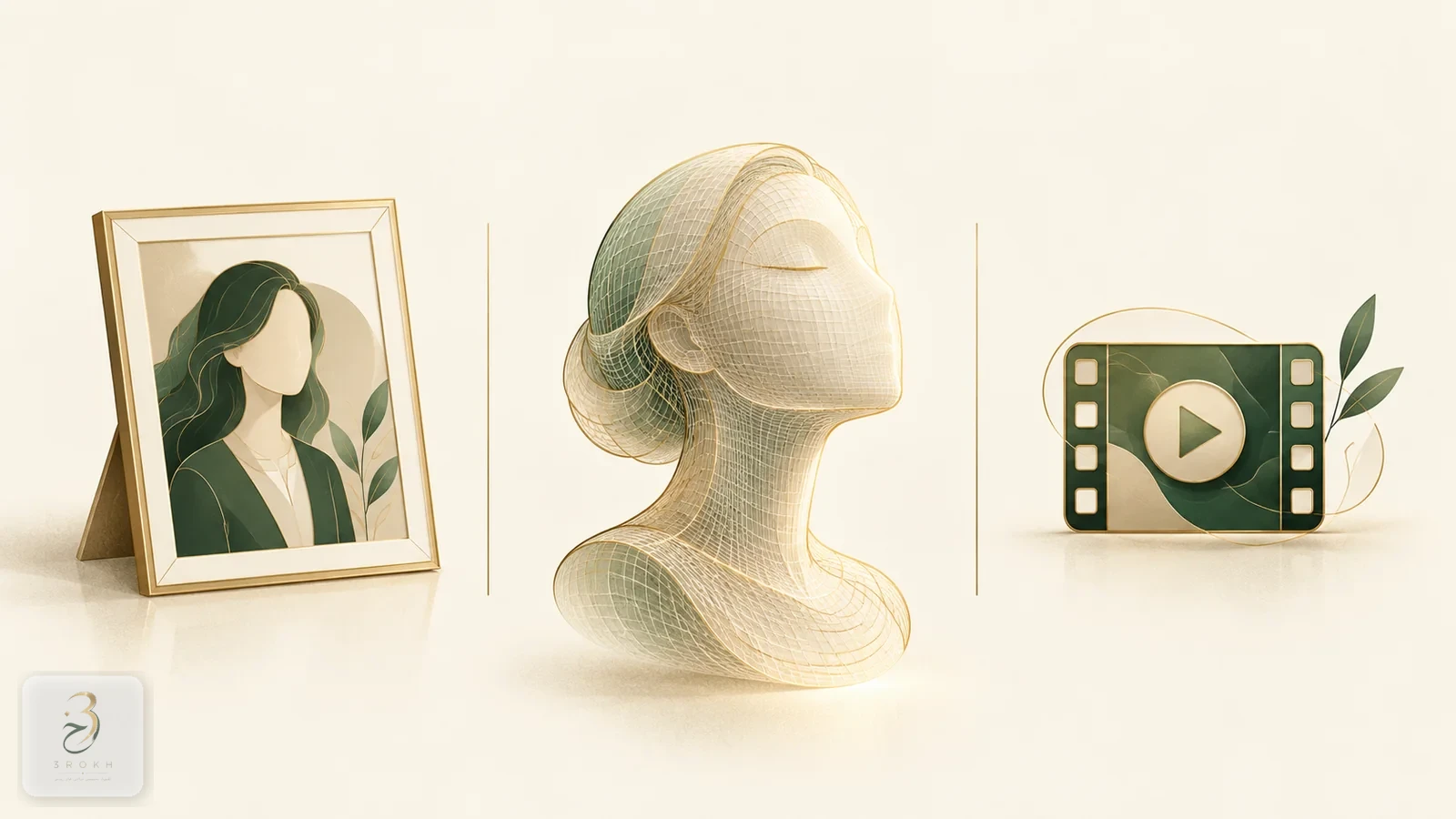
When people say "imaging", three different things may be meant, and they are not priced the same:
| Service | What it records or shows | Key point |
|---|---|---|
| Standard photographs | The nose as it is now, from several angles | The base of every chart; the costly part is time and precision |
| Simulation (2D or 3D) | An approximate image of a possible result | Not a guarantee; accuracy is limited |
| Video | Nasal movement, smiling, breathing | A complement; not every center does it |
A recent review of 3D simulation in aesthetic surgery notes that objective assessment of what determines simulation accuracy is still lacking, and that the ethical and legal consequences of a mismatch between simulation and actual result have not been adequately discussed. So if you pay separately for simulation, treat it as a conversation preview, not a promise. A fuller explanation is in our article on simulation of rhinoplasty results.
What to ask before you pay
To make quotes comparable, ask these directly:
- Exactly how many views, and which ones, are taken?
- Who takes the photos, and with what equipment?
- If a photo is unusable, is a retake free?
- Are post-operative and follow-up photos inside this price or separate?
- Can I receive copies of the files?
- If I go ahead with surgery, is the photography deducted from the surgical fee, or independent?
Asking these is not rude; to a surgeon it signals an informed patient. A fuller list of consultation questions is in the article on questions to ask your surgeon, and what happens in the session is in the consultation guide.

Your own photos for a first estimate
Before an in-person visit you can send your own photos for an initial look, but this is not specialist photography and does not replace it. To keep distortion low, take four views: front, right profile, left profile and from below the nose. Use even light, no filter, no retouching, the whole face inside the frame, a steady distance and a camera at face level, not from above or below. Even then, a firm figure is not given until an in-person exam. For a consultation use booking or contact.
How this relates to before-and-after photos
The quality of the pre-operative record decides how comparable the post-operative photo can be. If light, distance or angle differ between "before" and "after", the apparent result can look better or worse than reality. To read such photos correctly, see the guide to before-and-after photos.

Privacy and consent
A face photograph is identifiable data. Before shooting, make clear where the files are stored and for how long, who can access them, and whether educational or promotional use requires your separate written consent. Consent to a photo in your chart is not consent to public publication; you have the right to give the first and not the second.
When to speak to a doctor
- When a center charges for photography and the line item on the quote is vague.
- When you are asked to send a "retouched" photo, or a simulation is presented as a guaranteed outcome.
- When you have had previous nasal surgery or a fracture, so an estimate from photos is not possible.
Photography is usually the smallest line in the file; its value lies in the accuracy of the decision, not in its price.
Sources
- Videography of the Nose and Face for Rhinoplasty and Facial Plastic Surgery: Which Method Is the Best? (2026)
- Intermediate alar resection: Precision technique for nasal tip aesthetics — standardized photographs used to measure angles (2026)
- Preoperative 3-dimensional Simulation in Aesthetic Surgery (2026)
Frequently asked questions
Exactly how much does nose photography cost?
There is no verified general figure and it differs by center. Only the center can state the number; what matters is whether it is billed inside the consultation, a surgical package or as its own line.
Why is my phone photo not enough?
Because angle, distance and light are not fixed and can change the apparent shape of the nose. Your own photos help an initial estimate but do not replace standardized photography.
Is simulation part of photography?
No. Simulation is an approximate image of a possible result, not a guarantee, and may be priced separately.
Could my photos be published?
Recording photos in your chart is not public publication. Publication is acceptable only with your separate written consent.
Related services
Comments
No comments yet. Be the first to write one.
Related articles
Medications and Supplements to Stop Before Surgery: What, and How Many Days Before
Aspirin, herbal supplements, birth control pills, isotretinoin — which ones really need to stop, how many days before surgery, and which must never be stopped on your own, sourced from Mayo Clinic, Cleveland Clinic and an independent scientific review.
Read moreDoes Insurance Cover Nose Surgery? Cosmetic vs. Medically Necessary, Explained
Insurers don't judge nose surgery by the result — they judge it by the documented medical reason behind it. When a case counts as therapeutic, when it's cosmetic, and how combined procedures get billed.
Read moreThyroid Disease and Anaesthesia Before Rhinoplasty: When Is It Actually Risky?
Hypo- and hyperthyroidism don't rule out rhinoplasty, but they do affect anaesthesia. The real reference TSH number, the difference between thyroid storm and myxedema coma, and whether to take your medication on surgery day.
Read moreCan You See Rhinoplasty Results Before Surgery? Simulation and Its Limits
What computer simulation before rhinoplasty actually shows, and why it can't guarantee the final result — based on clinical studies, not an app roundup.
Read moreFixing a Crooked Nose Without Surgery: What Filler Can (and Can't) Do
A crooked-looking nose and a true deviated septum are two different problems. What filler can realistically do, where nasal strips fit in, and when septoplasty is the only real answer.
Read moreWhat Is Preservation Rhinoplasty, and How Is It Different from the Classic Technique?
Preservation rhinoplasty lowers the entire dorsal complex as one unit instead of shaving down the hump. This article explains the technical difference from the classic technique, the pushdown and letdown sub-methods, and who is a realistic candidate for each, with scientific sourcing.
Read more