

Septoplasty
Deviated Septum Surgery: When It Is a Definitive Fix and When It Is Not
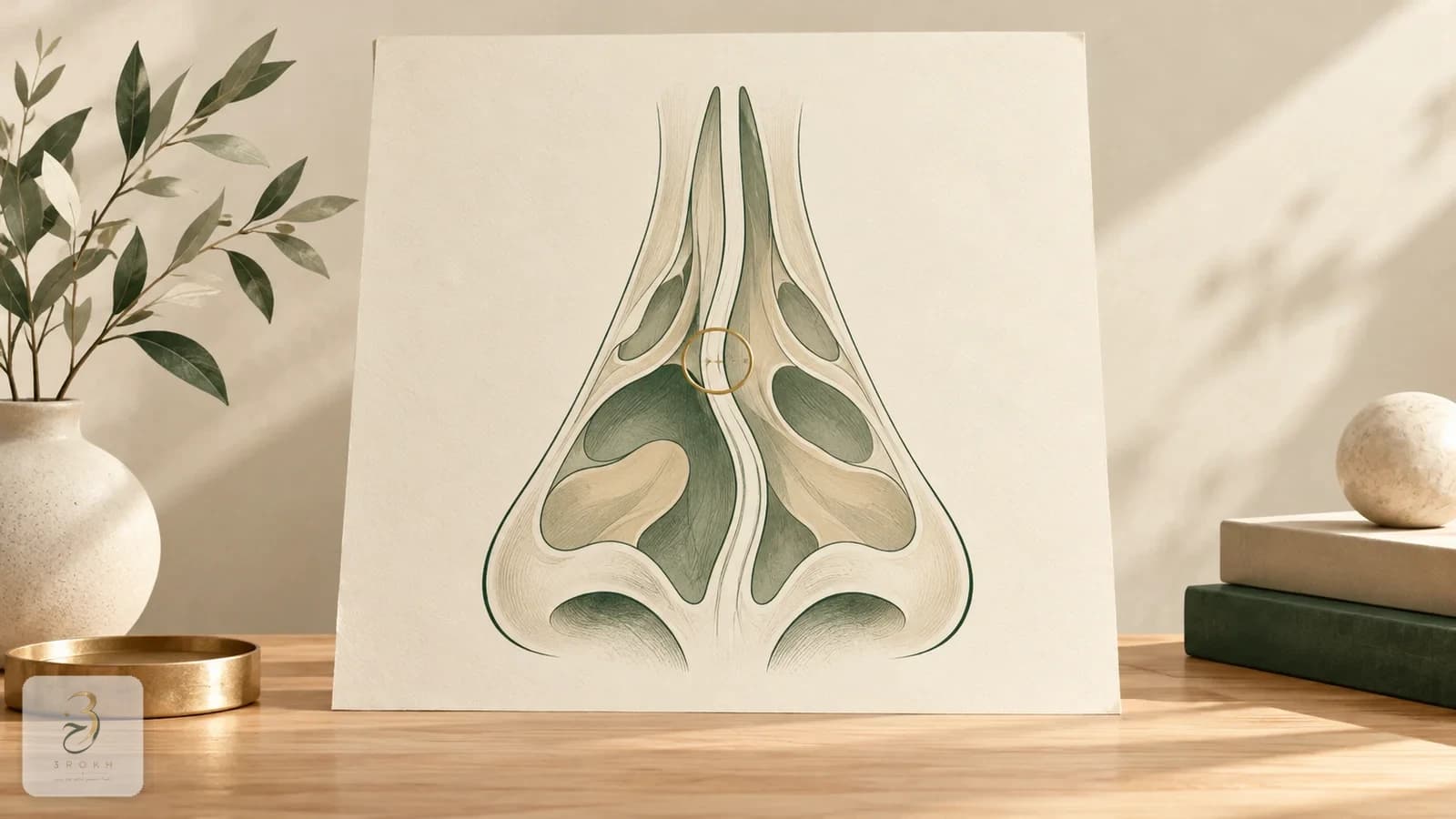
Quick answer
Septoplasty is a definitive fix when nasal blockage truly comes from a structural septal deviation. In the NAIROS trial (378 adults) the six-month SNOT-22 score was 19.9 with surgery and 39.5 with medical management, but 4% were readmitted with bleeding and 12% needed antibiotics. When the cause is allergy, turbinates, a weak nasal valve or sinusitis, or when the goal is to stop snoring, septal surgery alone is not enough. A deviation without symptoms needs no treatment.
- Evidence
- NAIROS: six-month SNOT-22 of 19.9 with surgery versus 39.5 with medical management
- Risk in the same trial
- 4% readmitted for bleeding, 12% needed antibiotics for infection
- Causes of failure
- Missed nasal valve problem, insufficient separation and insufficient correction of caudal deviation
- Recovery
- About 3 to 7 days; better breathing over a few weeks
- Service page
- Septoplasty
Persistent bright bleeding, fever, severe pain or purulent discharge after surgery should not wait for the next visit.
Key points
- Deviated septum surgery is a definitive fix when nasal blockage truly comes from a structural deviation and other causes have been checked.
- In the NAIROS trial of 378 adults, septoplasty worked better than medical management alone at six months, but four percent were readmitted with bleeding.
- If the blockage comes from allergy, swollen turbinates or a weak nasal valve, or if the goal is to stop snoring, septoplasty alone may not be enough.
- A deviated septum that causes no symptoms needs no treatment.
Deviated Septum Surgery: The Short Answer
Short answer: surgery for a deviated septum (septoplasty) is a "definitive fix" when your nasal blockage genuinely comes from that structural deviation. In that situation there is good evidence that surgery works better than medicines alone. But when the blockage has another cause (allergy, swollen turbinates, a weak nasal valve or sinusitis), or when what you expect is the end of snoring or a change in the look of the nose, septoplasty on its own may not solve the whole problem. And a deviation that causes no symptoms needs no treatment at all.
This article is educational and does not diagnose. It explains which symptoms fit a deviated septum, what evidence supports septoplasty, when its result is lasting and when it is not, which checks should come before surgery and what the risks are. If cost and insurance are your concern, see our article on septoplasty and septorhinoplasty cost and the supplementary-insurance share.
What a Deviated Septum Is, and Why Not Every Deviation Is a Disease
The nasal septum is a wall of cartilage and bone that divides the inside of the nose into two halves. In most people this wall is not perfectly straight and leans a little to one side. If that lean causes no blockage, no breathing trouble and no other problem, it is not a disease and needs no treatment. The Se Rokh septoplasty page also states that a deviation that causes no symptom needs no treatment.
Trouble starts when the deviation disturbs airflow. Recent trials and systematic reviews have studied septoplasty in adults whose nasal blockage was linked to a deviation. The key point is that the symptom matters more than the shape: the same deviation can be harmless in one person and the cause of chronic blockage in another.
Symptoms That Fit a Deviation, and Symptoms That May Not
The hallmark symptom is nasal blockage, especially one-sided or always on the same side. The Se Rokh service page lists these candidates: chronic congestion on one or both sides, snoring or sleep disruption from nasal obstruction, recurrent sinusitis linked to the deviation and constant mouth breathing.
But every one of these symptoms has other causes. Blockage can come from inflammation of the nasal lining (allergic or non-allergic rhinitis), enlarged turbinates, weakness of the side wall of the nose at the valve, polyps or sinusitis. Snoring has many causes and the nose is only one. When these coexist with a deviation, straightening the septum is not enough. That is why examination of the nose, often with an endoscope, comes before any decision.

Medicines First, or Straight to Surgery?
Many patients ask whether they must try sprays and medicines first. The NAIROS trial in the BMJ (2023) gives a more scientific answer. In this multicentre UK study, 378 adults with nasal blockage linked to a deviated septum (NOSE score above 30) were randomly assigned to septoplasty or to defined medical management: a steroid nasal spray and saline rinses for six months.
At six months the mean SNOT-22 score was 19.9 in the surgery group and 39.5 in the medical group, about 20 points better for surgery (the minimal clinically important difference in the trial was 9 points). Quality-of-life measures and nasal airflow also improved more with surgery. A higher baseline symptom score predicted a bigger improvement, which suggests that the more blocked you are, the more you are likely to gain.
Two cautions. First, the trial was open-label, so patients knew which treatment they had, which affects subjective symptoms. Second, in the surgery group about 4 percent (7 of 174) were readmitted with bleeding and 12 percent (20 people) needed antibiotics for infection. Septoplasty carries risk and should not be described as risk-free.
What the Evidence for Septoplasty Looks Like
Besides NAIROS, a 2023 systematic review and meta-analysis in Laryngoscope covering 2,577 patients reported a mean baseline NOSE score of 68.1 and a mean improvement of 48.8 points at six months. These studies are mostly observational, but they point the same way: septoplasty, with or without turbinate surgery, significantly reduces obstructive symptoms.
On long-term results the picture is a little more cautious. A 2018 review (Tsang) reported satisfaction of 69 to 100 percent and concluded that septoplasty is "far from a perfect treatment", because data were heterogeneous and randomized trials few. A more recent 2024 review (Fearington) of 35 studies and 4,432 patients, with a mean follow-up of 29 months, reported that all studies showed significant subjective and objective improvement over the long term; 75.4 percent of patients reported satisfaction or improvement. In four studies the subjective score worsened slightly over time, but no significant change in objective measures was found. The authors call slight worsening over time "indeterminate".

What NOSE and SNOT-22 Mean
Two scores appear again and again in medical papers. NOSE is a short questionnaire about nasal blockage that the patient fills in; a higher score means more blockage. SNOT-22 is a 22-item questionnaire that, besides blockage, also covers sleep, fatigue, smell, discharge and general well-being. Both are subjective, meaning they depend on how you feel, which is why some studies also measure nasal airflow with a device.
Their value in a conversation with your doctor is that they put "feeling better" into numbers. When a trial says a 20-point SNOT-22 difference was significant and that the minimal important difference is 9 points, it means the improvement in the surgery group was well above the threshold of "noticeable". Even so, a group average is not always your own experience; some patients improve less and some more than the average.
When Surgery Is a Definitive Fix
Surgery has its best chance when several things come together:
- Your blockage is constant and affects sleep, exercise and work, not only the allergy season.
- Examination (with an endoscope) shows that a structural deviation really narrows the airway on the same side as your blockage.
- You have tried suitable medical treatment, or it has not satisfied you.
- Other causes (allergy, polyps, a weak valve, turbinate swelling) have been looked at and included in the plan.
- Your expectation is better breathing, not a change in the look of the nose.
In this situation septoplasty is in line with the evidence, and straightening the septum is generally lasting. The Se Rokh service page likewise says the result is lasting in most cases. But "lasting" does not mean "flawless" or "never blocked again", because the nose has several parts and the septum is only one of them.
When It Is Not Definitive
1. When the main cause of blockage is not the septum. Allergy, rhinitis, polyps and swollen turbinates are not fixed by straightening the septum. Turbinate surgery is sometimes done together with septoplasty, and the Fearington review also studied "septoplasty with or without turbinoplasty", but that is the surgeon's decision.
2. When a weak nasal valve has been missed. A 2022 systematic review of the causes of failed septoplasty found three main ones: an unrecognized nasal valve abnormality, insufficient separation and resection at the junction of bone and cartilage, and insufficient correction of caudal septal deviation. The authors stress that before septoplasty one must take care not to overlook valve abnormality and other nasal disease, and note that there is still no widely accepted classification of septal deviation.
3. When the goal is to stop snoring or sleep apnea. In a small study of 40 snoring men, nasal surgery lowered nasal resistance but did not change snoring time or intensity, or breathing in sleep on polysomnography. The study is small and the operations were mostly structural, but it warns that opening the nose is not the same as ending snoring.
4. When sinusitis has other causes. A deviated septum is one possible factor in recurrent sinusitis, not the only one. The sinuses need separate assessment.
5. When you expect a cosmetic change. Septoplasty is purely functional and does not change the outside shape of the nose unless done together with rhinoplasty. For that situation read our article on septorhinoplasty.
6. When the result shifts over time. As we saw, in some studies the subjective score worsened slightly. The body changes over months and years, and new conditions, such as a new allergy, can bring the blockage back.

Table: How Does Your Blockage Relate to Septoplasty?
| Situation | Is septoplasty likely to help? | Note |
|---|---|---|
| Constant one-sided blockage with a clear structural deviation on examination | Probably yes | NAIROS evidence; the more severe, the greater the gain |
| Seasonal blockage with allergy | Usually not on its own | Treat the allergy and assess the turbinates |
| Swollen turbinates together with a deviation | Sometimes with turbinate surgery | The surgeon decides |
| Weak nasal valve | Septoplasty alone is not enough | A common cause of failure if overlooked |
| Snoring without clear obstruction | Doubtful | Virkkula's data; sleep assessment needed |
| Recurrent sinusitis with a deviation | May be part of the solution | Assess the sinuses separately |
| A deviation with no symptom at all | No treatment needed | Se Rokh septoplasty page |
The table only helps you talk to your doctor and does not replace an examination.
What Non-Surgical Treatment Does and Does Not Do
The medical treatment in NAIROS was a steroid nasal spray and saline rinses. These reduce inflammation and swelling of the lining and matter for people with allergy or rhinitis, but they do not change the structure of the septum. So "improved with medicine" and "straightened septum" are two different things. If medicine brings the symptoms to a tolerable level, and if the deviation has no symptoms, you may never need surgery.
The practical point is to use medicines as the doctor directs and regularly. Using some decongestant drops and sprays on your own, or for a long time, can make the lining worse, so do not continue them without a doctor's opinion. If you have taken medicine for months and your symptoms still disrupt your life, that is useful information for the surgical decision.
Deviated Septum, Crooked Nose and Fracture: Three Different Things
People sometimes use "crooked nose", "deviated septum" and "broken nose" interchangeably. A crooked nose concerns the outside appearance, a deviated septum the inner wall, and a fracture an injury to bone or cartilage. An old fracture may have caused both an outer crookedness and an inner deviation. The different treatment paths are explained in our article on the cost of nasal fracture surgery and our article on a crooked nose without surgery. If you have had a fresh blow to the nose, do not wait with swelling, bleeding or a sudden change of shape; have an early examination.
What Is Checked Before Surgery
A good assessment usually has several parts: a history of the blockage (one-sided or two-sided, seasonal or constant, snoring, dry mouth), examination of the inside of the nose with an endoscope to see the septum, turbinates, valve and lining, and sometimes assessment of allergy or the sinuses. A simple questionnaire such as NOSE, which the studies use, can put the severity into numbers. Some centres also measure airflow. On the Se Rokh service page the first step is "examination and endoscopy" to locate and grade the deviation, followed by preparation with tests and an anesthesia consultation if required.
If you snore heavily or stop breathing in your sleep, say so. Septoplasty is not a substitute for a sleep assessment. And if tests or medicines are part of your plan, read our article on pre-rhinoplasty tests and our list of medicines to review before surgery; do not stop any medicine on your own.
What the Operation Is Like
In septoplasty the surgeon works from inside the nose with no external incision: the lining over the septum is lifted aside, the crooked parts of cartilage or bone are corrected or removed, and the lining is put back. The outside look of the nose does not change. According to the Se Rokh service page, the operation takes about one to two hours, can be done under local or general anesthesia and allows same-day discharge.
On local anesthesia: there are limited reports of septoplasty under local anesthesia in the office, and a 2019 review of in-office functional nasal surgery stresses careful patient selection. But most of the evidence is limited to such reports and narrative reviews. The choice between local and general anesthesia is made by the surgeon and the anesthesiologist from your circumstances.

Recovery and Risks
According to the Se Rokh service page, recovery is about 3 to 7 days, and better breathing usually appears over a few weeks as the swelling settles. Swelling of the lining makes the blockage worse at first, so judging the result in the first days is meaningless. A 2026 systematic review of anesthesia and nasal packing in rhinoplasty found that in nasal-surgery literature the trend is towards minimal or no packing, with less discomfort and no increase in bleeding, and that absorbable materials or silicone splints can reduce the risk of mucosal adhesions. The type and duration of internal dressing are decided by the surgeon.
The main risks include bleeding, infection, perforation of the septum, adhesions inside the nose, altered sensation or dryness and an incomplete result. In NAIROS, bleeding needing readmission was 4 percent and infection needing antibiotics 12 percent. These are the figures of that study, not your personal probability. Warning signs: persistent bright bleeding, fever, severe and increasing pain, purulent discharge or sudden swelling; contact the surgeon without waiting.
Simple Aftercare
The surgeon gives the exact instructions, but some principles are shared: keep the head above the level of the chest in the first nights to reduce swelling (our article on sleeping with the head raised after nose surgery has more detail), avoid blowing the nose hard, avoid heavy lifting and strenuous exercise until the surgeon allows it, and use saline rinses or sprays only if the surgeon has prescribed them. Continue any painkillers or antibiotics as prescribed and do not decide on your own to stop other medicines. These are general tips and the surgeon's personal instructions come first.
If You Are Still Blocked After Surgery
Some patients are still blocked after septoplasty. The reason may be swelling and healing that are not finished, allergy or inflammation of the lining, a valve problem, large turbinates or an insufficient correction of the deviation. The 2022 review points to exactly these causes of failure. Before drawing any conclusion one must wait several weeks to months and see the doctor again. If the blockage stays, re-examination with an endoscope shows what remains and whether revision surgery is needed. Do not make that decision early and without examination.
For leakage or discharge after surgery, see our article on nasal discharge after rhinoplasty, and on touching the nose our article on touching the nose after rhinoplasty; although these two are about rhinoplasty, much of the caution applies to septoplasty as well.

Septoplasty or Septorhinoplasty?
If only your breathing is a problem and you are content with the look of the nose, septoplasty is the natural choice. If you also want to change the shape of the nose, or the deviation comes with an outside crookedness, septorhinoplasty may come up, which corrects both function and appearance in one operation. The two differ in cost, recovery and insurance coverage. We explain the difference in our article on septorhinoplasty.
Common Mistakes
- "Any deviation needs surgery." No; without symptoms it needs none.
- "Septoplasty will certainly stop my snoring." The evidence does not show that.
- "A spray straightens the septum." Medicine only reduces swelling of the lining and does not straighten the septum.
- "Bleeding and swelling in the first week mean failure." Swelling is temporary; persistent bleeding is a warning.
- "Turbinates and the valve do not matter." They are common causes of failure.
- Choosing a surgeon by price alone. Read our guide to choosing a cosmetic surgeon.
Questions to Ask at the Consultation
- Is my blockage from the septum, the turbinates, the valve, allergy or a combination?
- Was an endoscopy done and what did it show?
- How long should I try medical treatment before surgery?
- Do I need turbinate or valve surgery as well?
- Is local anesthesia possible, or is general anesthesia needed?
- Which complications are possible and which need an immediate call?
- If I stay blocked, what is the follow-up and revision plan?
- What does the fee include, and what part may count as medical?

If You Are Travelling for Surgery
Septoplasty has a short recovery, but visitors still need to plan. Ask how many days you should stay near the surgeon, when the internal dressing or splints are checked, and who you can contact if bleeding, fever or severe pain begins after you leave. Bring your latest ENT notes and any allergy or sleep tests, and keep your operation record. Avoid a long flight or travel to a place with no access to care in the first days without asking the surgeon.
When to Consult a Doctor
An in-person consultation is needed when:
- Your nasal blockage is constant and affects your sleep, exercise or work.
- One side of your nose is always blocked, or you snore and breathe through your mouth.
- You have recurrent sinusitis and do not know whether the deviation plays a part.
- Your blockage has not improved or has worsened after septoplasty.
- After surgery you have persistent bleeding, fever, severe pain or purulent discharge; do not wait for the next visit.
- You want to know whether septoplasty is enough or septorhinoplasty is more suitable.
Use the booking form or the contact page to arrange an appointment. See the surgeons in the doctors section and read about the general course of treatment on the septoplasty page.
Sources
- Carrie S et al. — Clinical effectiveness of septoplasty versus medical management for nasal airways obstruction (NAIROS), BMJ 2023
- Alessandri-Bonetti M et al. — Efficacy of Septoplasty in Patients with Nasal Obstruction: A Systematic Review and Meta-analysis, Laryngoscope 2023
- Tsang CLN et al. — Long-term patient-related outcome measures of septoplasty: a systematic review, Eur Arch Otorhinolaryngol 2018
- Fearington FW et al. — Long-Term Outcomes of Septoplasty With or Without Turbinoplasty: A Systematic Review, Laryngoscope 2024
- Althobaiti KH et al. — Common Causes of Failed Septoplasty: A Systematic Review, Cureus 2022
- Virkkula P et al. — Snoring is not relieved by nasal surgery despite improvement in nasal resistance, Chest 2006
- Kao R et al. — In-office Functional Nasal Surgery, Otolaryngol Clin North Am 2019
- Obradovic B — Septoplasty Under Local Anesthesia, J Craniofac Surg 2019
- Barone M et al. — Anesthesia Modalities and Nasal Packing in Rhinoplasty: A Systematic Review of Complications, Postoperative Management, and Safety Guidelines, Aesthetic Plast Surg 2026
Frequently asked questions
Does every deviated septum need surgery?
No. A deviation that causes no symptom needs no treatment. Surgery comes up when there is constant blockage or breathing trouble, obstruction-related snoring or recurrent sinusitis linked to the deviation, and medical treatment is not enough.
What is the evidence for septoplasty compared with medicine?
In the NAIROS trial (BMJ 2023) the mean SNOT-22 at six months was 19.9 with surgery and 39.5 with a steroid spray and saline rinses. The trial was open-label; in the surgery group 4% were readmitted with bleeding and 12% needed antibiotics.
Will septoplasty stop my snoring?
Not necessarily. In a small study of 40 snoring men, nasal surgery lowered nasal resistance but did not change snoring time, snoring intensity or breathing in sleep on polysomnography. If you snore heavily or stop breathing in your sleep, a sleep assessment is needed.
Why are some people still blocked after septoplasty?
Recognized causes include swelling that has not settled, allergy, swollen turbinates, a weak nasal valve and insufficient correction of the deviation. A 2022 review named an undiagnosed valve abnormality, insufficient separation at the bone-cartilage junction and insufficient correction of caudal deviation as the main three.
Does septoplasty change the look of the nose?
No. Septoplasty is done from inside the nose with no external incision and is purely functional unless combined with rhinoplasty. If you also want a change in appearance, discuss septorhinoplasty with the surgeon.
How long is recovery after septoplasty?
According to the Se Rokh service page about 3 to 7 days, and better breathing usually appears over a few weeks as swelling settles. Swelling of the lining makes blockage worse at first, so judging the result in the first days is meaningless.
Related services
Comments
No comments yet. Be the first to write one.
Related articles
Septoplasty and Septorhinoplasty Cost in 1405 (2026) and What Supplementary Insurance Pays
The figure for septoplasty is set after examination, and for septorhinoplasty it starts from the rhinoplasty starting figure. This article shows what the figure is made of and how to work out the supplementary insurance share.
Read moreFixing a Crooked Nose Without Surgery: What Filler Can (and Can't) Do
A crooked-looking nose and a true deviated septum are two different problems. What filler can realistically do, where nasal strips fit in, and when septoplasty is the only real answer.
Read moreDoes Insurance Cover Nose Surgery? Cosmetic vs. Medically Necessary, Explained
Insurers don't judge nose surgery by the result — they judge it by the documented medical reason behind it. When a case counts as therapeutic, when it's cosmetic, and how combined procedures get billed.
Read moreThe Hidden Costs of Rhinoplasty: Anesthesia, Facility, Tests, and Follow-Up Visits
A clinic's "starting from" figure usually covers only the surgeon's fee and the operating room. Four other line items — anesthesia, the facility, tests, and extra follow-up visits — may be billed separately; here is what to ask before you commit.
Read moreRhinoplasty Recovery: A Week-by-Week Guide to the Final Result
Why healing happens in phases, normal versus worrying bleeding, medication and nutrition, taping and massage, tip numbness and the swelling timeline — each claim referenced to an authoritative source, from the first hours to month twelve.
Read moreThe Full Cost of Pre-Rhinoplasty Tests and Which of Them Insurance Pays For
Tests before rhinoplasty are paid for separately from the surgical figure. What raises their cost, how to estimate them in advance and when insurance may pay a share.
Read more