

مراقبت بعد از جراحی
Removing Splint and Taping: What to Expect

Quick answer
The external splint is typically removed 7 to 10 days post-op, and internal splints 10 to 14 days. Removal takes a few minutes and feels like mild pressure, not sharp pain. Taping continues for 3 to 6 weeks to control swelling.
- External splint removal
- 7 to 10 days post-op
- Internal splint removal
- 10 to 14 days post-op
- Taping duration
- 3 to 6 weeks (full-time initially, then nights-only)
- Related services
- /services/rhinoplasty
Key points
- The external nasal splint is usually removed 7 to 10 days after surgery, and internal splints 10 to 14 days post-op.
- Splint removal takes only a few minutes and feels like mild pressure, not sharp pain.
- After splint removal, nasal taping continues for 3 to 6 weeks to control swelling and help skin adhere to the new framework.
- The nose is still swollen immediately after splint removal, and the final shape takes 6 to 12 months to fully emerge.
When and how is the nasal splint removed?
The external splint (nasal cast) is typically removed 7 to 10 days after surgery, and internal splints 10 to 14 days post-op. Removal takes a few minutes, requires no anesthesia, and feels like mild pressure rather than sharp pain. Afterward, nasal taping begins — usually 3 to 6 weeks, full-time in the early weeks and nights-only later.
This article is educational and does not replace in-person consultation with your surgeon. Every patient's case is unique.
Internal and external splints: their roles and removal timeline

The external splint (cast or thermoplastic) sits on the nasal bridge to hold bones in place and protect against bumps. According to the American Society of Plastic Surgeons (ASPS), this splint is typically removed 7 to 10 days post-op — once bones have begun to knit but are not yet fully stable.
Internal splints (two thin silicone sheets inside the nostrils) keep the septum straight and prevent the mucosa from adhering. These remain 10 to 14 days — slightly longer than the external splint, because internal tissue heals more slowly and adhesion risk is higher. Studies show internal splints reduce rebleeding and synechia risk by about 40%.
Splint vs. packing
Packing (compressed gauze) is used only to stop bleeding in the first 24 to 48 hours and is typically removed the day after surgery or within 72 hours at most. Internal splints, by contrast, are semi-rigid supports that remain for weeks and usually have a central airway to ease breathing — though not as freely as before surgery.
The removal process: step-by-step

Splint removal is an outpatient procedure done in the surgeon's office, not the operating room. No anesthesia is needed.
- External splint: The surgeon first peels away the tape on both sides, then gently lifts off the splint itself (usually fiberglass or thermoplastic). You feel mild pressure on the bridge, but no sharp pain — most patients say the tape removal is more uncomfortable than the splint itself.
- Internal splints: The surgeon pulls out the small suture or loop connecting the two splints. This takes 5 to 10 seconds and feels like something sliding out from inside your nose — unpleasant but brief. You may see a few drops of blood or thick discharge afterward — this is normal.
The entire process (external + internal) takes less than 5 minutes. Afterward, the surgeon irrigates your nose with saline to clear dried blood and secretions. This immediately makes breathing easier.
Why isn't it very painful?
Splints rest on the surface of bone or mucosa, not embedded in tissue — they simply contact it. Removing them means lifting off an external support, not pulling something out of a wound. If the surgeon moistens the edges before removal, the chance of sticking to skin or mucosa is even lower.
Nasal taping: why and how
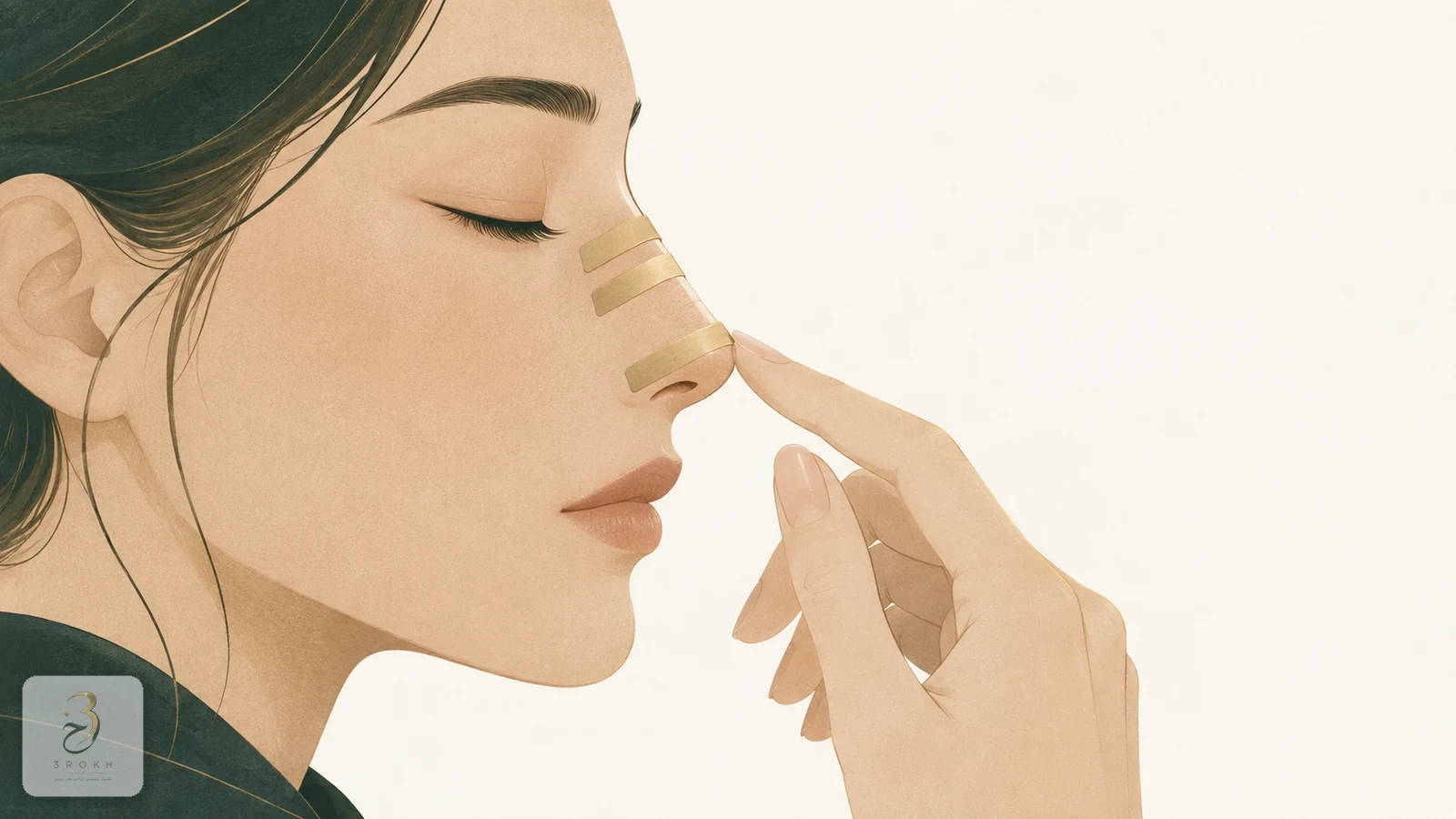
Taping means applying medical tape over the nose in the weeks and months following splint removal. Its goal is to control swelling and help skin adhere to the new bone framework — especially if nasal skin is thick or oily.
A study in Aesthetic Plastic Surgery found that regular taping can reduce persistent edema by up to 30% and shorten the time to final contour. Tape creates gentle pressure that prevents fluid accumulation under the skin.
How many weeks of taping?
Usually 3 to 6 weeks, depending on swelling and skin type. Weeks 1 to 3 are full-time; weeks 4 to 6 are nights-only. Your surgeon will decide at follow-up visits when you can stop.
Taping technique
- Use skin-safe medical tape (such as Micropore or paper tape) — regular adhesive tape irritates the skin.
- Cut strips about 1 cm wide.
- Start at the tip and work upward over the bridge. Each strip slightly overlaps the previous one (like roof tiles).
- Gentle pressure — not so tight that skin changes color, not so loose that it falls off.
- If your skin is sensitive, apply a thin layer of fragrance-free moisturizer first, then tape.
Change the tape every 24 hours — dirty or sweat-soaked tape no longer provides even pressure.
How it feels before and after splint removal

Most patients expect to see their final nose shape the day the splint comes off — the reality is that the nose is still swollen and the final shape takes 6 to 12 months to emerge.
Breathing
Immediately after internal splint removal, breathing becomes easier — but not quite like before surgery. The internal mucosa is still swollen and you may feel mild congestion. This lasts 2 to 4 weeks. Regular saline rinses (3 to 4 times daily) help.
Appearance
- Removal day: The nose is swollen, red, and bruised. The tip may point upward (due to swelling, not final shape). This is not what you'll see six months later.
- Weeks 1 to 3: Visible swelling drops by about 50%. The nose still looks slightly larger than it will be.
- Months 2 to 3: Swelling continues to resolve (70 to 80%). The overall shape becomes clear, but details — especially the tip — are still changing.
- Months 6 to 12: The last 10 to 20% of swelling gradually fades. The tip refines and final lines emerge.
According to the American Academy of Facial Plastic and Reconstructive Surgery (AAFPRS), about 90% of swelling resolves in the first year, but the final 10% can take up to 18 months — especially in thick-skinned noses.
Touch sensation
After splint removal, nasal skin feels somewhat numb or stiff. This is due to tiny nerve disruption during surgery. Normal sensation usually returns in 3 to 6 months — though in some areas it may take up to a year.
Post-removal care
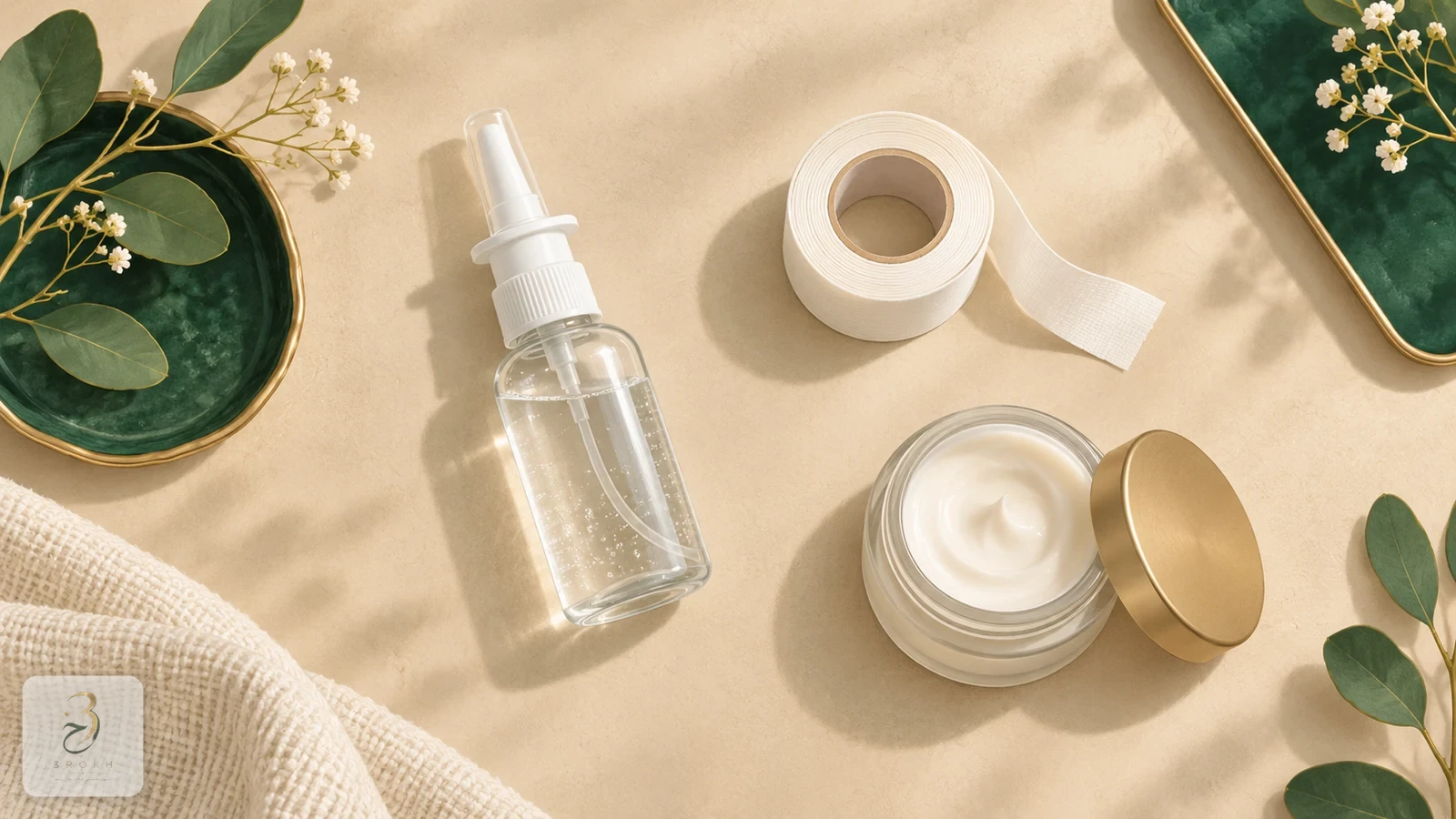
- Nasal rinses: 3 to 4 times daily with saline or sterile salt water. Avoid high-pressure sprays — gentle pressure is enough.
- Taping: Per surgeon's instructions — usually full-time in early weeks.
- Sleep: Keep head elevated (two to three pillows) for 2 weeks after splint removal. This speeds swelling reduction.
- Activity: Walking and light activity are fine. Delay heavy exercise, weightlifting, and prolonged bending for 4 weeks after splint removal.
- Sun: Use SPF 30 or higher sunscreen for 3 months — direct UV can darken pigment in swollen skin.
- Glasses: If you wear prescription or sunglasses, they must not rest on the bridge for 6 weeks post-op. Use adhesive supports that transfer weight to the forehead, or wear contacts.
What to avoid
- Blowing your nose — if you feel congestion, rinse with saline only. Blowing creates too much pressure.
- Rubbing or pressing the nose with your finger.
- Sleeping on your side or stomach — lateral pressure can alter nasal shape.
- Pools, saunas, and steam baths for 4 weeks — excess heat and humidity worsen swelling.
When to contact your surgeon
Call your surgeon immediately if you notice:
- Heavy bleeding that doesn't stop after 10 minutes of gentle pressure
- Sudden severe swelling on one side (may indicate septal hematoma)
- Fever above 38°C or foul-smelling purulent discharge
- Severe pain not controlled by prescribed medication
- Sudden change in nasal shape — such as one side collapsing or shifting
These signs are rare (under 2% of patients), but early intervention preserves final results.
Realistic expectations: your nose is still changing

One of the biggest challenges after splint removal is unrealistic expectations. Patients think removal day is final-result day — the reality is that it's just the start of the next healing phase.
| Time | Swelling remaining | What you see |
|---|---|---|
| Removal day | 100% | Nose swollen, red, bruised; tip may be upturned |
| Weeks 2–4 | 50–70% | Nose slightly larger than final; tip more swollen than bridge |
| Months 2–3 | 20–30% | Overall shape clear; details still shifting |
| Month 6 | 10–15% | Close to final form; tip still slightly thick |
| Month 12 | 5–10% | Final result — refined lines and definition |
In thick-skinned noses, this timeline may extend to 18 months. Patience is part of a good result.
Can I speed it up?
Regular taping, nasal rinses, sleeping elevated, and avoiding direct sun can shorten healing time — but none work miracles. The body needs time for tissues to heal and skin to adhere to the new framework. No supplement, massage, or laser can short-circuit this biological process overnight.
References
Frequently asked questions
Is nasal splint removal painful?
Removing the external splint feels like mild pressure, and peeling the tape on both sides is usually more uncomfortable than the splint itself. Internal splints take 5 to 10 seconds to remove and feel like something sliding out — unpleasant but not sharp pain.
How many weeks should I tape?
Usually 3 to 6 weeks — full-time in the early weeks, then nights-only. Your surgeon will decide when you can stop based on your swelling and skin type.
Does the nose reach its final shape after splint removal?
No. The nose is still swollen and the final shape takes 6 to 12 months (up to 18 months for thick-skinned noses). Splint removal day is just the start of the next healing phase.
Can I wear glasses immediately after splint removal?
No. Glasses must not rest on the bridge for 6 weeks post-op. Use adhesive supports that transfer the weight to your forehead, or wear contact lenses.
When should I contact my surgeon?
Call immediately if you have heavy bleeding that won't stop, sudden swelling on one side, fever above 38°C, foul-smelling discharge, or sudden change in nasal shape.
Is taping really necessary?
Yes. Studies show regular taping reduces persistent swelling by up to 30% and shortens time to final contour — especially in thick-skinned noses.
Related services
Comments
No comments yet. Be the first to write one.
Related articles
Overprojected Nose After Rhinoplasty: Is It Swelling or the Final Result?
The nasal tip holds swelling longer than any other part of the face, so mid-recovery it often looks more projected than it will end up. This article covers the real timeline, why the delay happens, and the rare polly-beak pattern worth flagging to your surgeon.
Read moreTouching Your Nose After Rhinoplasty: When Is It Actually Safe?
Why touching or inserting a finger into the nose after surgery is risky, when the external and internal splints actually come off, and how much taping really helps.
Read moreAppetite-Stimulant Pills After Rhinoplasty: Are They Safe?
Temporary appetite loss after rhinoplasty is normal and usually resolves on its own. This article explains what appetite-stimulant pills typically contain, why they don't fit the recovery period well, and when weight loss genuinely needs evaluation.
Read more