

سلامت گوش
Ruptured Eardrum: Symptoms, Otoscopy and Care Before Your Visit
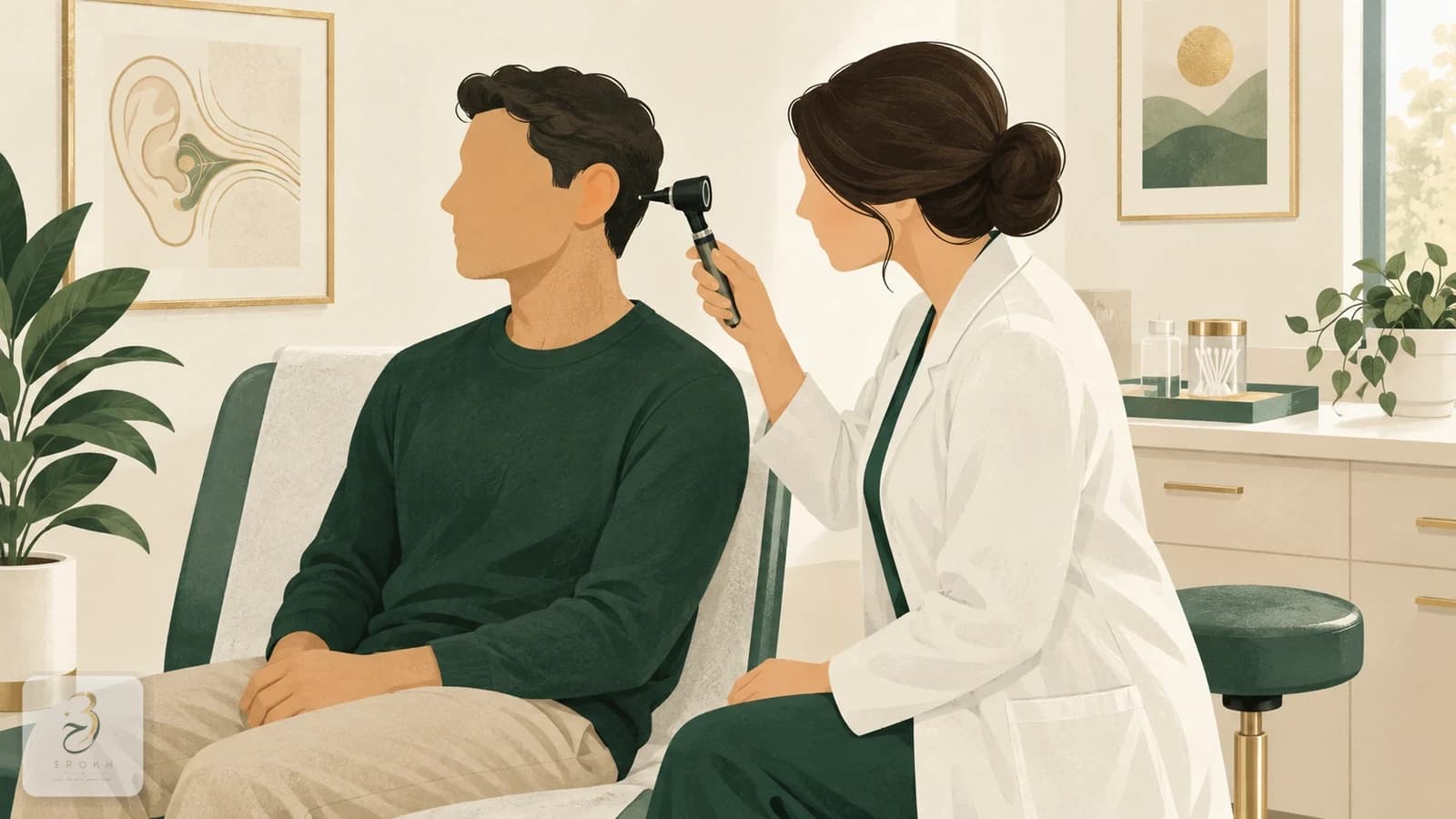
Quick answer
A ruptured eardrum may cause pain, hearing loss, tinnitus or discharge and is usually confirmed by viewing the membrane with an otoscope. Until assessment, keep the ear dry and avoid drops, irrigation or inserting anything.
- Main examination
- Otoscopy
- Immediate care
- Keep the ear dry
- Service page
- /services/otoscopy
Sudden hearing loss, severe vertigo, facial weakness or major head injury needs urgent assessment.
Key points
- A ruptured eardrum is usually diagnosed by directly viewing the membrane with an otoscope.
- Keep the ear dry and avoid unprescribed drops or irrigation until the visit.
- Sudden hearing loss, severe vertigo or facial weakness requires urgent assessment.
What should you do if you suspect a ruptured eardrum?
A ruptured eardrum is a hole or tear in the thin membrane between the ear canal and middle ear. Sudden pain, muffled hearing, tinnitus or discharge after an infection, injury, blast or pressure change can raise suspicion, but these symptoms are not specific. A clinician usually confirms the diagnosis by viewing the eardrum with an otoscope.
Until you are examined, keep the ear dry, insert nothing into it and do not start ear drops unless a clinician who knows a perforation is possible recommends them. Sudden hearing loss, severe vertigo, facial weakness, major head trauma or clear watery drainage after a head injury requires urgent assessment rather than a routine appointment. This guide is general education, not an individual diagnosis.
What can cause an eardrum perforation?
A middle-ear infection can increase pressure behind the eardrum until it tears; pain may then ease suddenly as discharge begins. Other causes include a direct blow, a cotton bud or other object entering the canal, an explosion or very loud impulse noise, and an abrupt pressure change during diving or air travel.
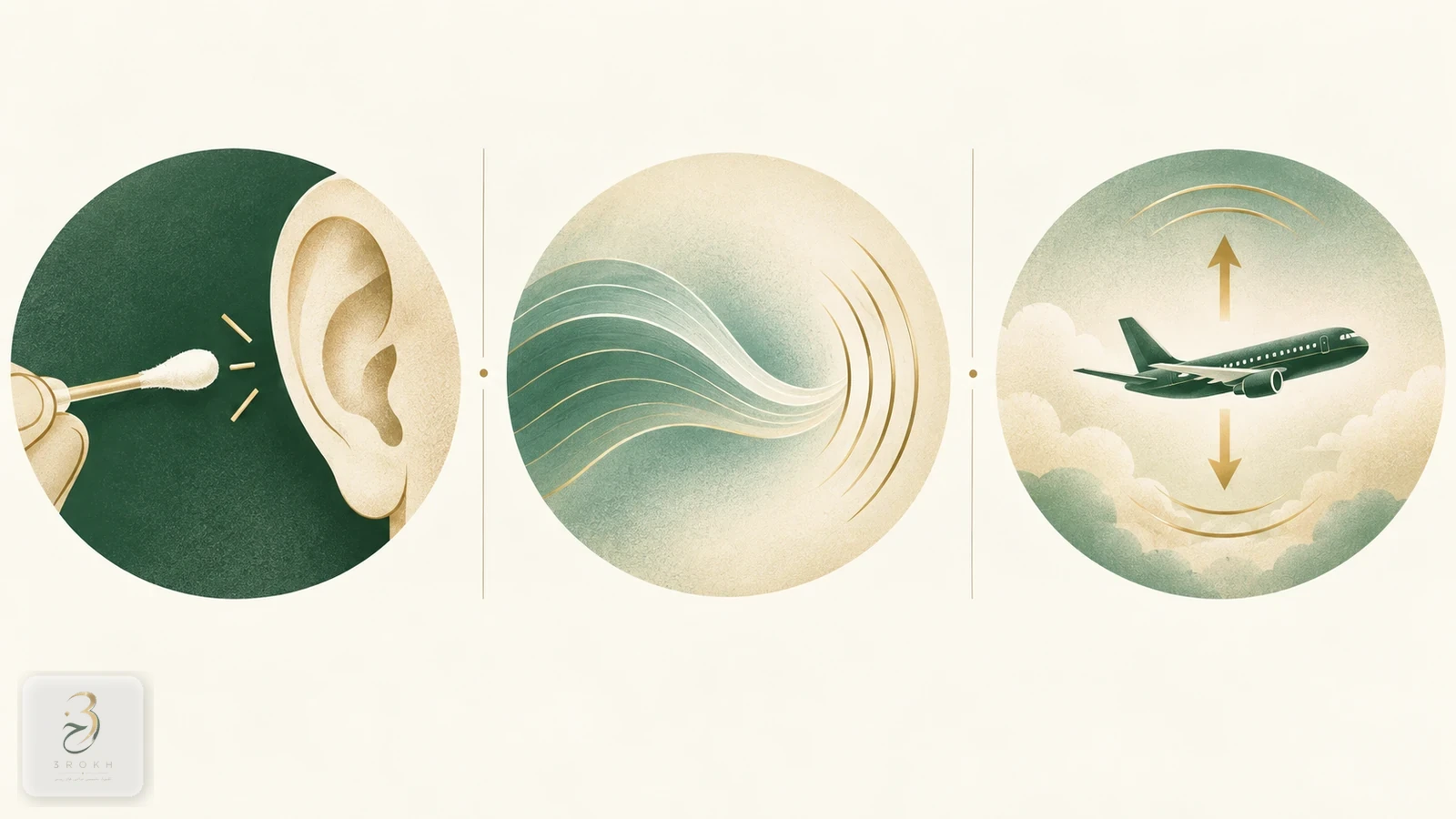
Tell the clinician exactly what happened and when. Symptoms after fever and a respiratory infection lead to different questions from symptoms after a slap, inserted object, dive or head injury. This history helps determine how urgently hearing and possible middle- or inner-ear damage should be assessed.
What symptoms can occur?
Possible symptoms include ear pain, reduced or muffled hearing, tinnitus, itching, dizziness, fever, or clear, bloody or pus-like drainage. A perforation can be painless, and pain intensity does not reveal the size of the opening. With infection, a sudden reduction in pain after drainage starts does not prove that the infection has resolved.

Wax impaction, an inflamed canal, middle-ear fluid and inner-ear conditions can cause overlapping symptoms. A phone light, consumer ear camera or online photograph cannot reliably confirm a perforation. The guide to ear symptoms that need urgent examination explains urgency in more detail.
How does otoscopy confirm the diagnosis?
An otoscope provides light and magnification so the clinician can inspect the canal and visible eardrum. A visible opening, its approximate size and position, blood or discharge, inflammation and the condition of the canal are documented. Wax, swelling or drainage may obstruct the view, so safe cleaning or specialist examination may be needed before the eardrum can be assessed fully.
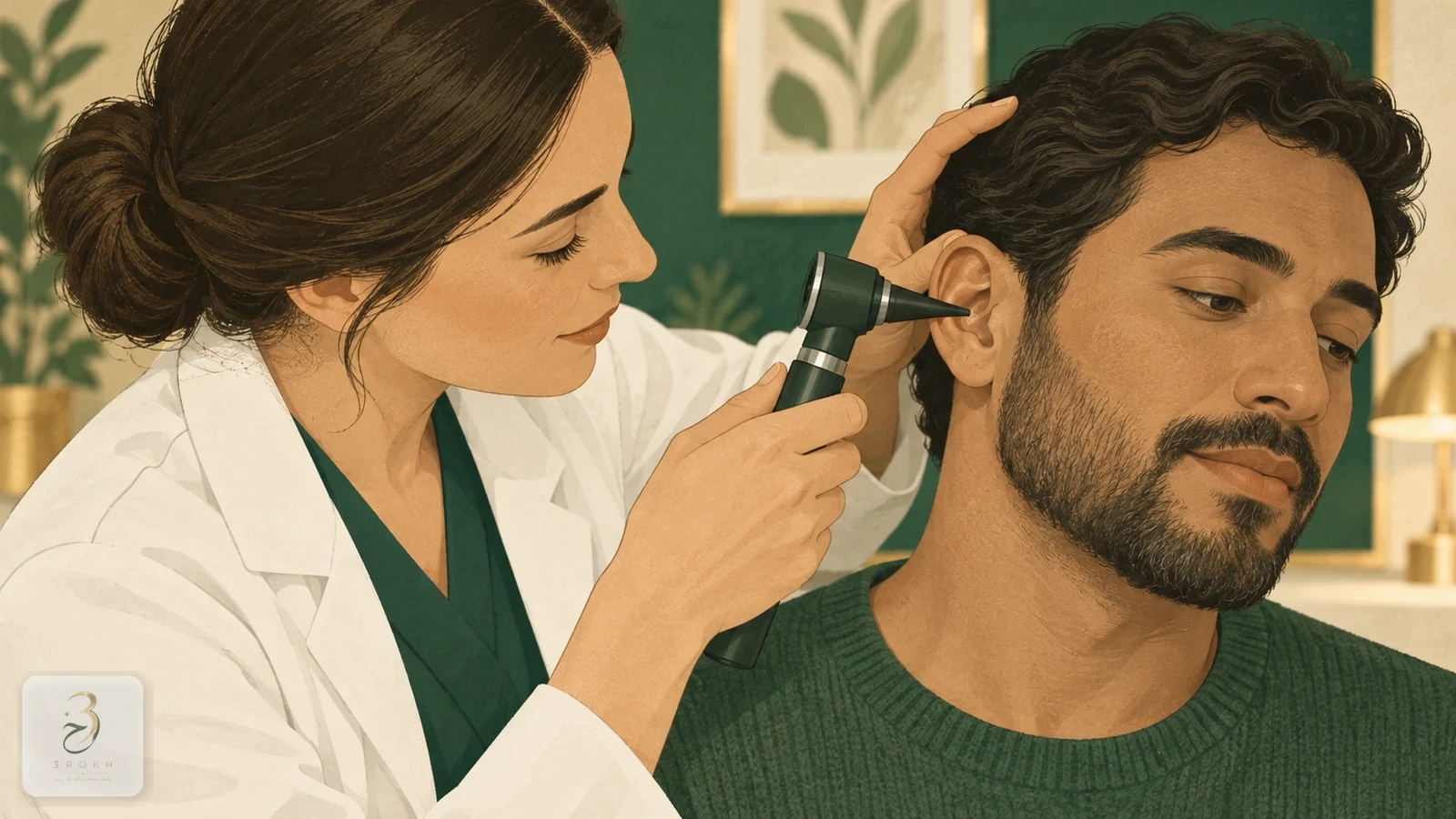
Home irrigation is unsafe when a perforation is possible and should not be used to improve the view. The exam should be gentle; report pain or dizziness immediately. See the otoscopy service and the guide to what happens during otoscopy for practical details.
Is otoscopy enough?
Otoscopy is usually the main way to see the opening, but it does not measure hearing. Depending on the cause, symptoms and appearance, the clinician may use tuning-fork tests, audiometry or, when appropriate, tympanometry.
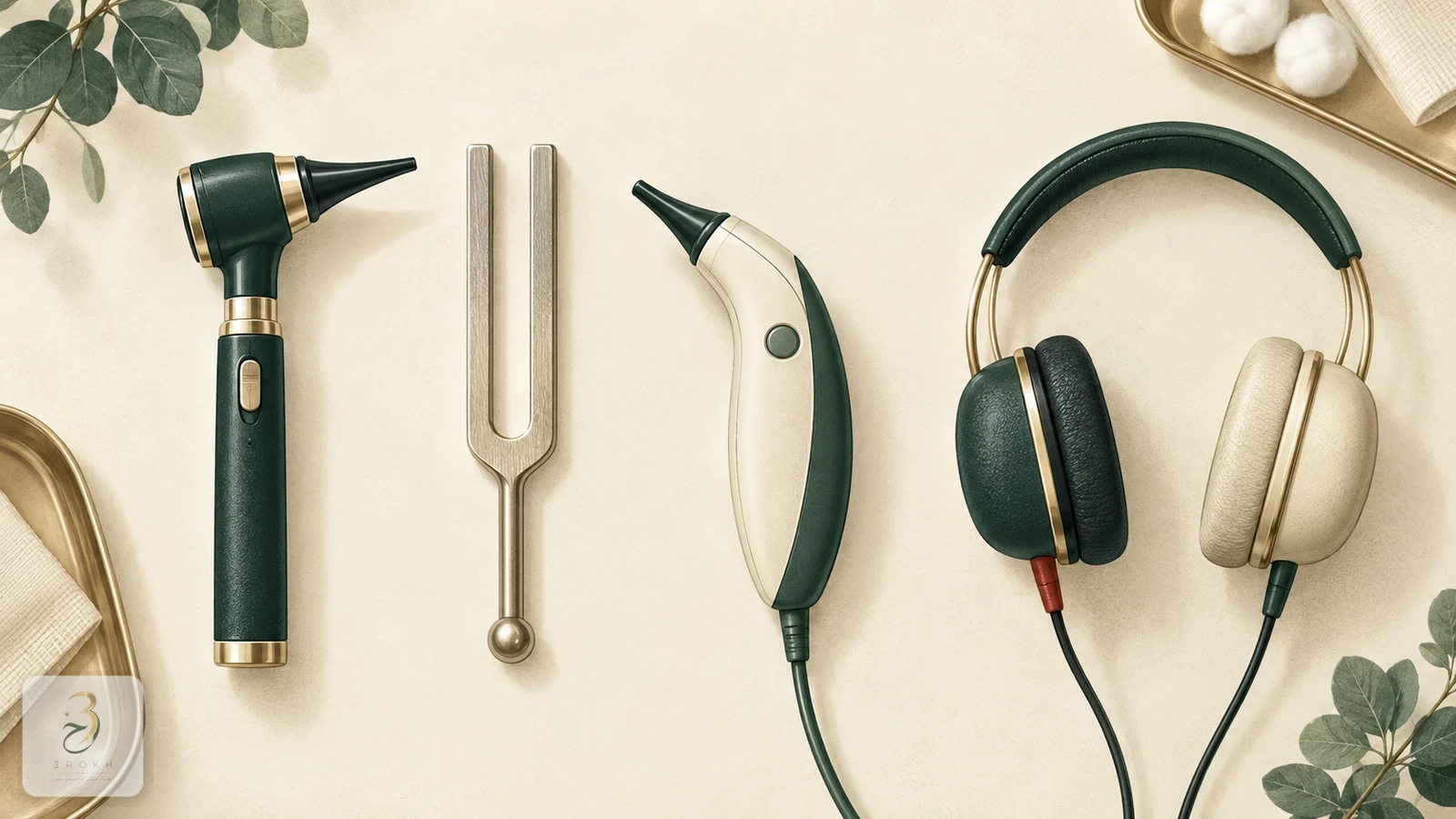
Hearing loss that seems greater than expected, substantial tinnitus, or severe or persistent vertigo can prompt assessment for additional middle- or inner-ear injury. One normal test does not replace another; our comparison of otoscopy, tympanometry and audiometry explains their different roles.
How do you keep the ear dry before the visit?
Water passing through a perforation can increase the risk of middle-ear infection. Avoid swimming and direct shower water until a clinician confirms that the eardrum has healed. For bathing, a clean cotton ball lightly coated with petroleum jelly may be placed only at the outer entrance, never pushed down the canal, and removed afterward.

Avoid creating extra pressure: do not blow your nose forcefully, and sneeze with your mouth open. Ask a clinician about flying or diving after a fresh injury, particularly when pain, infection or vertigo is present.
What should you avoid?
Do not insert cotton buds, pins or a home camera, irrigate the canal, or try to remove blood or drainage. Ear drops are not interchangeable; some are unsuitable when the eardrum is open. Use only a product recommended by a clinician who knows a perforation is suspected. Antibiotics are not automatically required, and leftovers from an earlier prescription are not appropriate.
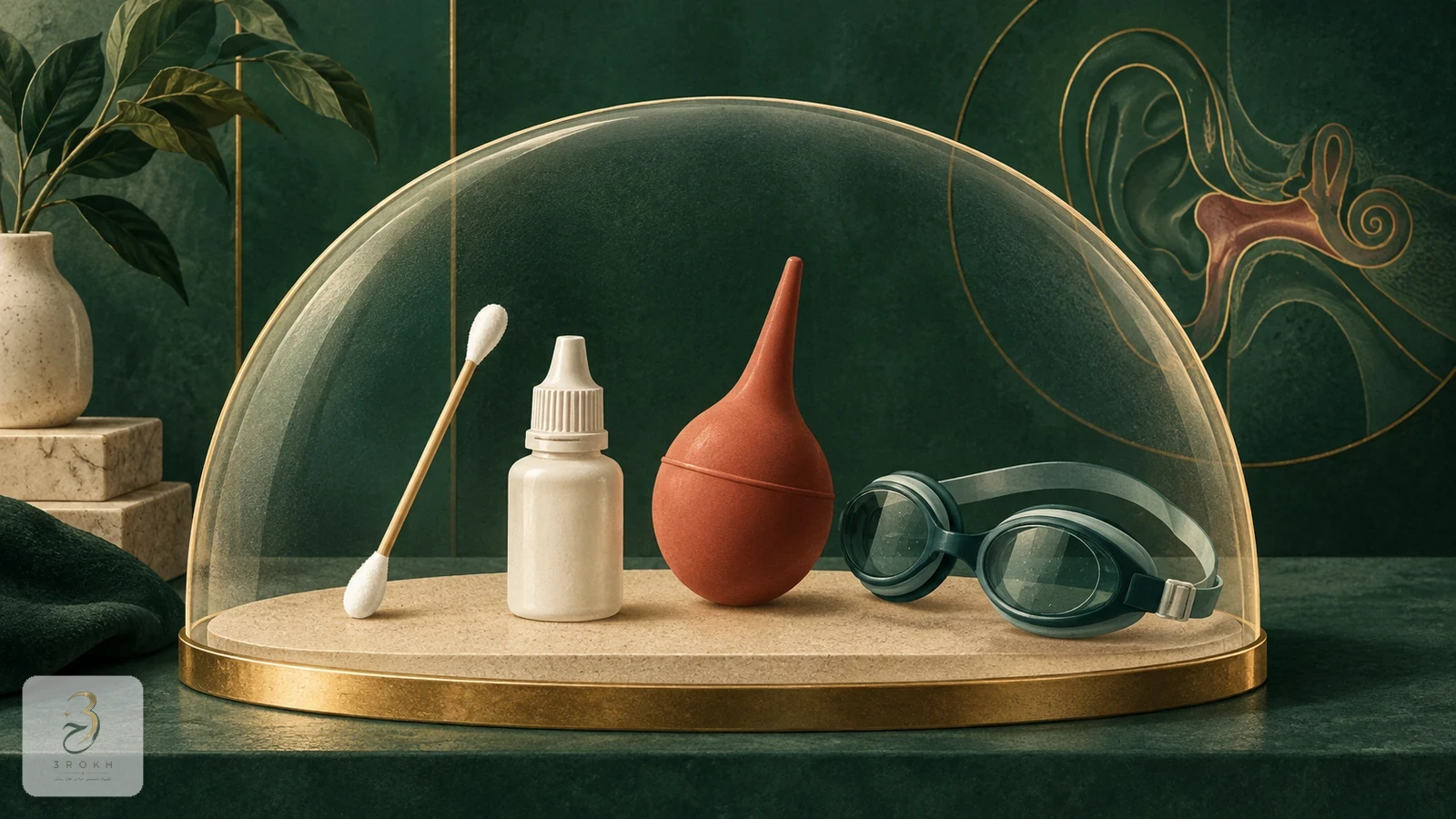
Pain-relief choices depend on age, pregnancy, health conditions and other medicines, so ask a clinician or pharmacist if uncertain. Do not pour numbing remedies into the ear, and do not stop prescribed medicines without advice.
Which warning signs require urgent care?
Sudden hearing loss needs prompt assessment because it is not always caused by wax or a perforation; some inner-ear causes are time-sensitive. Severe vertigo, inability to walk steadily, facial weakness, severe pain or headache, repeated vomiting, high fever, marked illness or significant head trauma also requires urgent medical evaluation.
After head trauma, clear watery fluid from the ear or nose should not be treated as ordinary discharge. Do not remove a sharp object, battery or deeply lodged foreign body yourself. Young children, immunocompromised people and anyone with previous ear surgery merit a lower threshold for medical contact.
Will it heal on its own?
Many uncomplicated perforations close spontaneously, but healing depends on the cause, size and location, infection and the health of the ear. The NHS notes that many heal within about two months, but this is not a guaranteed deadline. A persistent opening, recurrent drainage or ongoing hearing loss may require ENT follow-up, a patch procedure or surgical repair.
Prepare for the visit by recording when symptoms began, the likely trigger, pain, discharge, hearing change, tinnitus and dizziness. Bring the names of drops and medicines, details of previous ventilation tubes or ear surgery, and any earlier hearing-test results.

Sources
Frequently asked questions
Does a ruptured eardrum always hurt?
No. Pain may be sudden, may ease when drainage begins, or may be absent. Symptoms alone cannot confirm a perforation; the eardrum needs examination.
Can I use ear drops before the appointment?
Not without advice. Some drops are unsuitable when the eardrum is open. Use only a product recommended by a clinician who knows a perforation is possible.
How do I keep the ear dry in the shower?
Keep direct water out. Place petroleum-jelly-coated clean cotton only at the outer entrance, never deep in the canal, and remove it afterward. Avoid swimming until healing is confirmed.
Can an otoscope measure hearing loss?
No. It shows the canal and eardrum. Audiometry or other tests may be needed to measure hearing.
How long does an eardrum perforation take to heal?
Many uncomplicated perforations close over several weeks to about two months, but cause, size, location and infection matter. Follow-up determines whether healing is progressing.
Comments
No comments yet. Be the first to write one.
Related articles
Otoscopy vs Tympanometry vs Audiometry: What Does Each Test Check?
Otoscopy looks at the ear canal and eardrum, tympanometry assesses middle-ear mechanics, and audiometry measures hearing sensitivity. This guide explains how the results complement one another.
Read moreWhat Is Otoscopy? Pain, Procedure and Ear Exam Results
Otoscopy uses light and magnification to inspect the ear canal and eardrum. Learn what happens during the exam, whether it hurts, what common findings may mean, and when another test is needed.
Read more