Decision Guides
Signs of an Untrustworthy Rhinoplasty Ad

Quick answer
An unreliable rhinoplasty ad usually combines several signals: a guaranteed result, a non-surgical method sold as a substitute for real surgery, an edited or cherry-picked before/after photo, an unrealistically low price with urgency, and a celebrity or overnight-clinic endorsement.
- Sign 1
- Guaranteed result or "zero complications"
- Sign 2
- Non-surgical method sold as a substitute
- Sign 3
- Manipulated or cherry-picked before/after photo
- Service page
- Rhinoplasty (Nose Surgery)
This article is educational; a final decision needs independent verification and an in-person consultation.
Key points
- No rhinoplasty can guarantee an exact result or a completely complication-free recovery.
- Filler injections, external molds and claims of a nose job in minutes are not real substitutes for rhinoplasty.
- A trustworthy before/after photo pair keeps lighting, angle and camera distance identical.
- An unrealistically low price with urgent discount language usually signals hidden costs or an unlicensed provider.
What are the warning signs of an untrustworthy rhinoplasty ad?
An unreliable rhinoplasty ad usually shows a cluster of the same signals: a guaranteed result or a promise of "zero complications," non-surgical treatments marketed as a substitute for real surgery, edited or cherry-picked before/after photos, an unrealistically low price paired with urgency, and a celebrity or influencer endorsement for a clinic that seemingly appeared overnight. Any one of these alone is worth pausing on; several together deserve real caution.
This article is educational and does not replace an in-person consultation or your own independent check of a specific clinic. The goal is to help you read an ad's text and images critically before you ever reach out.
Rhinoplasty is consistently one of the most requested cosmetic procedures worldwide — ISAPS global survey data has repeatedly placed it among the highest-volume aesthetic surgeries year after year. That popularity has created a crowded, competitive advertising market, and competition is exactly where exaggerated or misleading claims tend to appear.
Why is a "guaranteed" or "zero complication" promise a red flag?
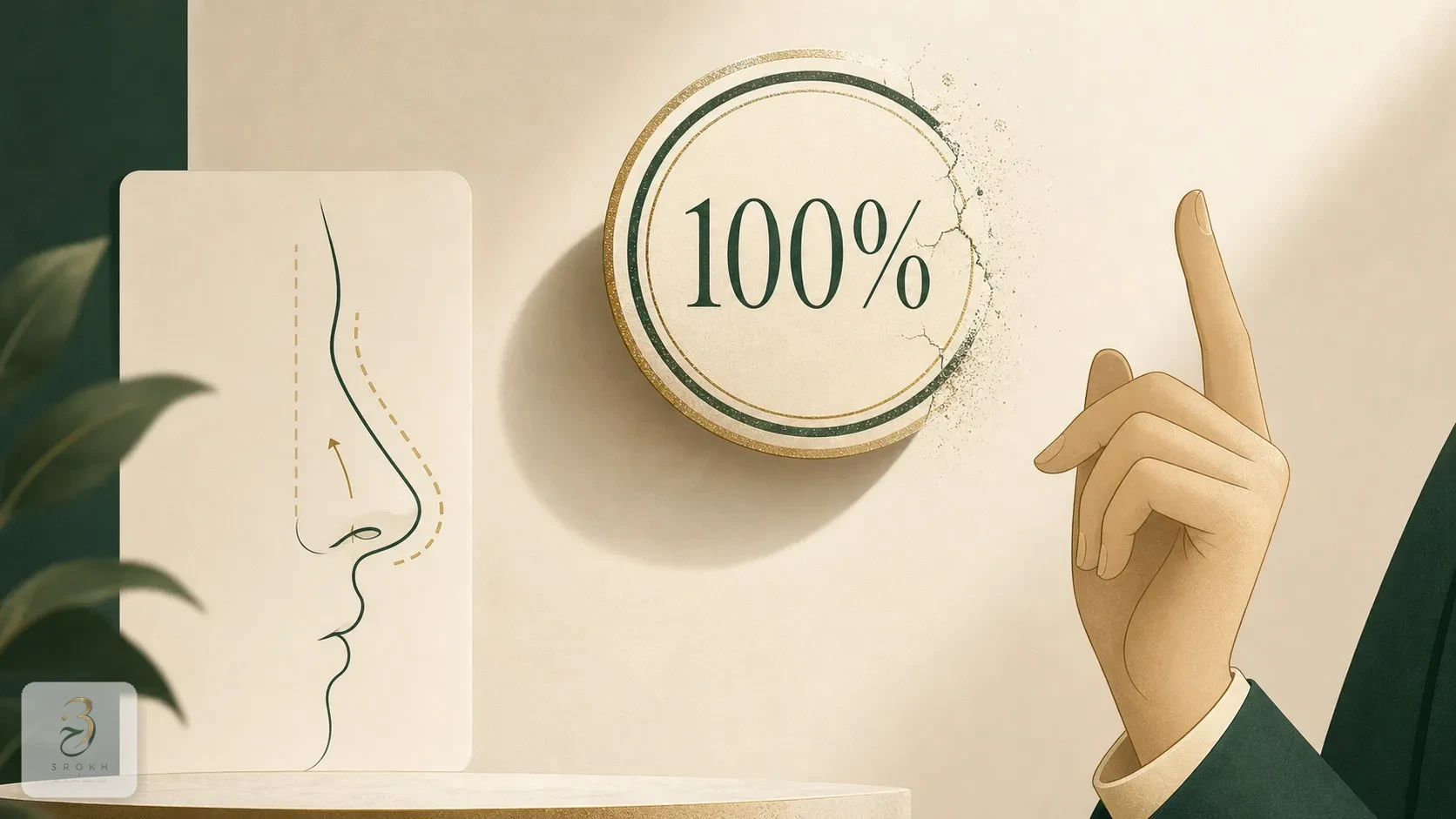
No surgery, rhinoplasty included, can guarantee an exact aesthetic outcome or a complication-free recovery for every patient; the final result depends on the patient's anatomy, skin thickness, surgical technique and individual healing. An ad that uses words like "guaranteed" or "no complications at all" is either unaware of that medical reality or choosing to leave it out.
- Honest phrasing: "The final shape is usually visible after 12 to 18 months, and it varies by anatomy."
- Red-flag phrasing: "Guaranteed result exactly like the photo, with zero complications."
- The gap between "most patients report satisfaction" and "100% guaranteed satisfaction" is exactly this: one states a likelihood honestly, the other sells a certainty medicine cannot provide.
According to ASPS patient guidance, even a highly skilled surgeon cannot eliminate some baseline chance of temporary numbness, asymmetric swelling, or the need for a minor touch-up; removing that possibility entirely from marketing copy does not make the outcome safer, it just makes the description less accurate.
Non-surgical treatments advertised as a substitute for real rhinoplasty
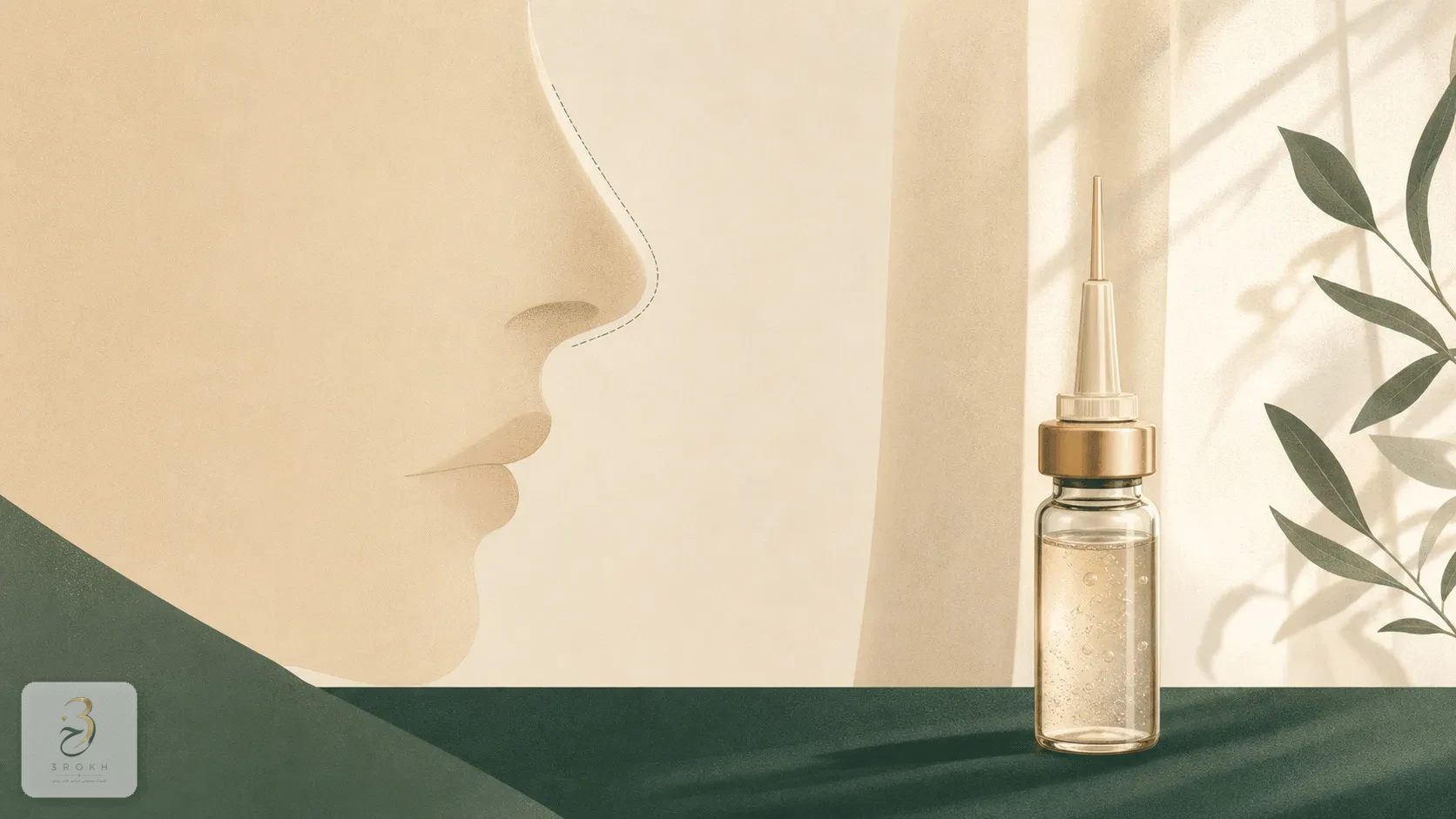
Some ads present filler or fat injections, an external "mold," or a "3D/laser nose job in minutes" as an alternative to actual rhinoplasty. None of these change the underlying bone and cartilage, so they cannot correct a dorsal hump, a deviated septum, or a genuine change to the tip's structure. Plastic surgery specialists have repeatedly flagged these specific claims as false in consumer-facing reporting.
- Injectable filler or fat: Adds temporary surface volume only; it resorbs over months and never touches bone or cartilage.
- External mold surgery: Pressure applied to the skin from outside has no mechanism for reshaping the structure underneath — the claim does not hold up anatomically.
- "Nose job in minutes" or 3D laser claims: Real rhinoplasty requires anesthesia, surgical access to bone and cartilage, and enough time to work on them; an ad that compresses all of that into minutes is not being honest about what the procedure actually involves.
If your goal is a structural change — a hump, a deviation, a tip that is genuinely too large — surgical rhinoplasty is the only route; the rhinoplasty service page covers the actual techniques used.
How do you spot a photoshopped or cherry-picked before/after photo?

A trustworthy before/after pair keeps the camera angle, distance, lighting and head position identical in both shots, and it should be something you can verify directly rather than only see in a single social post. A lighting or angle mismatch between the two photos, an obviously edited background, or the total absence of any traceable detail about when and how the photos were taken all raise the odds that the pair was manipulated or simply the single best result cherry-picked out of hundreds of patients.
- Compare light and angle first: side lighting in the "before" shot against flat, even lighting in the "after" shot is a common way to exaggerate the visible difference.
- Ask how many cases the gallery represents, not just the best one: a handful of average results says more than dozens of only the most flattering outcomes.
- Ask for a traceable portfolio: a set of photos maintained directly on the clinic's own site or in-office records tends to be more accountable than a photo living only in a temporary ad post.
Rhinology specialists have publicly warned that people should not be fooled by photoshopped cosmetic-surgery photos — a sign that this specific kind of manipulation is a recognized industry problem, not a theoretical concern. For a reference set with consistent shooting conditions, the clinic's own photo gallery is a useful comparison point.
What does an unrealistically low price or an urgent discount usually signal?

Real rhinoplasty pricing is built from several separate components — surgeon's fee, anesthesia, operating room or hospital charges, pre-operative tests and follow-up visits. A single flat number well below the local average, especially paired with urgency language like "today only" or "limited spots," usually means either part of the real cost is billed separately later, or the person performing the procedure is not a fully licensed specialist.
- A price with no breakdown: an ad quoting one number without saying whether anesthesia and facility fees are included.
- A discount tied to an immediate decision: pressure to book "right now" removes the room to compare options or discuss with family — which is precisely the tactic's purpose.
- A price implausibly under the city average: in many documented cases, the person actually performing the procedure at that price turns out to be a technician or an unlicensed operator, not a specialist surgeon.
A full breakdown of what real rhinoplasty pricing includes — and what ads typically leave out — is covered in hidden costs of rhinoplasty.
Celebrity or influencer endorsements, and clinics that appear overnight

When a public figure or influencer with no medical background endorses a rhinoplasty outcome, that endorsement is not by itself a reason for more trust. The FTC's Endorsement Guides require any material financial relationship between an endorser and a business to be clearly disclosed — an undisclosed paid endorsement is itself considered a deceptive ad. Medical council members and plastic surgery associations have separately and repeatedly warned the public about deceptive rhinoplasty advertising circulating on social media.
- A celebrity endorsement with no disclosed payment: assume it is a paid placement rather than a neutral recommendation unless stated otherwise.
- A clinic that suddenly appears with a heavy ad blitz: centers that surface within weeks accompanied by a large volume of social ads often lack a track record you can actually verify.
- A page showing only the clinic's logo, never the surgeon's name: the absence of the surgeon's name, specialty and medical license number in the ad itself is worth questioning.
Parliamentary health officials and medical council representatives have independently raised the same pattern as a public concern — a sign that this is a recognized market pattern, not a personal impression.
How do you screen a rhinoplasty ad before making any contact?

Before contacting a clinic or booking a consultation, line up four things directly inside the ad itself: the result claim, price transparency, the before/after photo conditions, and how the surgeon is presented. The table below contrasts a red-flag version of each against a trustworthy one.
| Criterion | Red flag in the ad | Trustworthy signal |
|---|---|---|
| Result claim | 100% guarantee or "zero complications" | States a timeframe and individual variation |
| Price | Flat number with urgent discount, no breakdown | Refers to an in-person consultation for an exact estimate |
| Before/after photos | Mismatched light and angle, not traceable | Matched angle and light, directly verifiable case |
| Surgeon presentation | Only the clinic logo, no name or specialty | Name, specialty and medical license number shown |
This table does not replace verifying the surgeon's actual credentials; it only helps you decide which ad is worth following up on at all. The next step is always a direct credential check, not taking the ad copy at its word.
When should you walk away from an ad and go straight to an in-person consultation?

If an ad combines even two items from the list above — a guaranteed result plus an urgent discount, or a celebrity endorsement with no named surgeon — it is worth skipping that ad entirely and going straight to an in-person consultation instead. A real consultation lets a surgeon explain your specific anatomical limits, state a realistic outcome range, and show their actual credentials — none of which fits inside a short ad post. For the next step, verifying the surgeon's credentials directly, see this guide.
Sources
Frequently asked questions
Does a matched-lighting, matched-angle before/after photo always mean the ad is fully genuine?
Not necessarily — matched lighting and angle only rules out that one specific type of manipulation. You still need to independently verify the surgeon's credentials and medical license number before trusting the ad fully.
Why do some ads use phrases like "no pain and no swelling"?
Because that phrasing lowers the perceived risk in the reader's mind, even though mild swelling and discomfort are a normal part of recovery after any rhinoplasty. An ad that erases this stage entirely is not showing an accurate picture of recovery.
Is the price quoted in an ad binding?
No. The final price is usually set after an in-person exam, depending on case complexity, anesthesia type and hospital. A number seen only in an ad post is a starting estimate, not a final quote.
Why is a celebrity endorsement considered a warning sign for a rhinoplasty ad?
Because a public figure's endorsement with no medical background tells you nothing about the surgeon's actual skill, and it is usually a paid arrangement. If the financial relationship is not disclosed, international advertising guidelines treat the ad itself as deceptive.
If an ad passes every item on this checklist, is further research still needed?
Yes. Passing this checklist only means the ad is worth following up on, not that the clinic is automatically legitimate. The next step is always verifying the surgeon's license number and specialty directly in an in-person consultation.
How can I check whether a license number shown in an ad is real?
Ask the clinic to display the number on the office signage or official letterhead, and search the surgeon's full name together with their specialty in sources independent of the clinic's own page. Reluctance to show this number is itself a separate warning sign.
Related services
Comments
No comments yet. Be the first to write one.
Related articles
How to Read Before-and-After Cosmetic Surgery Photos Correctly
Lighting, camera angle, distance and timing can change how a result looks without any editing. This guide shows how to critically read before-and-after photos for rhinoplasty, blepharoplasty and otoplasty.
Read more12 Questions to Ask Your Surgeon During the Consultation
A focused checklist of 12 precise questions for the consultation room — from surgeon experience to the exact revision policy — and what a reassuring answer sounds like versus a warning sign.
Read moreThe Complete Consultation Guide: What Actually Happens, Step by Step
From medical history intake to the physical exam, photography and the closing discussion — a step-by-step walkthrough of exactly what happens in a cosmetic surgery consultation, and how long each part takes.
Read moreENT Surgeon vs Plastic Surgeon for Rhinoplasty: What's the Real Difference?
A grounded comparison of ENT surgeons and plastic surgeons for rhinoplasty, based on your actual situation rather than a title alone — which specialty fits a cosmetic-only concern, a breathing problem, or revision surgery.
Read moreHow to Choose a Trustworthy Cosmetic Surgeon
Four concrete checks for choosing a trustworthy surgeon: how to verify a credential, which specialty fits which procedure, how to spot an edited before-and-after photo, and what to ask in a consultation.
Read moreHow to Know a Rhinoplasty Surgeon Is Truly a Specialist (License, Board, Fellowship)
A medical license, a specialty, board certification, and a fellowship are four different things. This article breaks down the rhinoplasty surgeon credential ladder and how to verify each layer.
Read more